
Sauces & Condiments
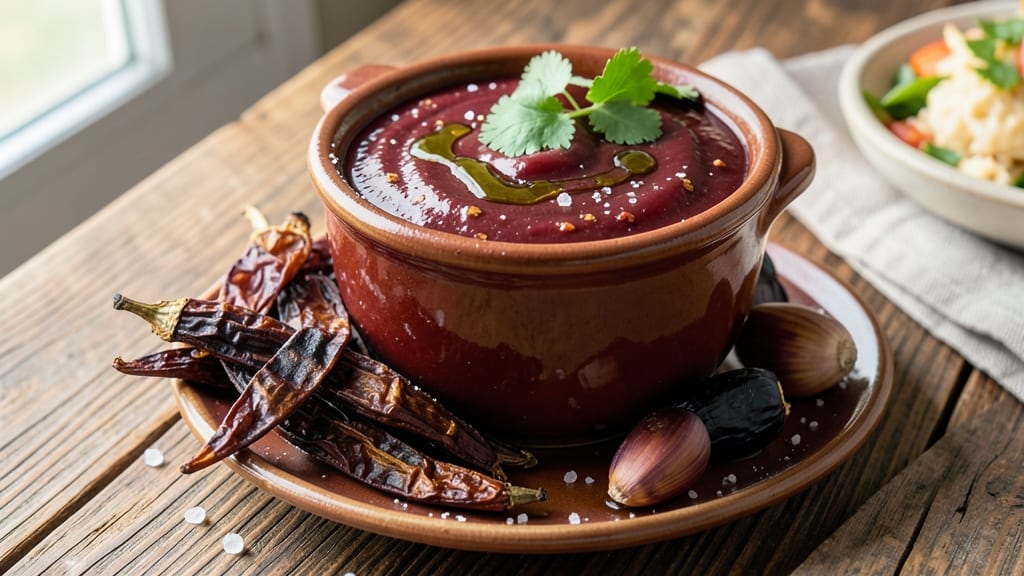
Arbol chile hot sauce transforms simple ingredients into a smoky, fiery condiment that elevates everything from tacos to grilled meats. The key lies in balancing the pepper's intense heat with tangy vinegar and a touch of garlic for depth—no blender required. This recipe delivers restaurant-quality heat in just 15 minutes of active time, with flavors that develop even more over a week of aging.
What sets this sauce apart is the arbol chile's unique smoky profile, which pairs perfectly with apple cider vinegar for brightness. We'll use a simple straining method to remove seeds and skins, ensuring a smooth yet vibrant red sauce.
The optional garlic and salt enhance the complexity without overpowering the pepper's natural fire.
By the time you're done, you'll have a versatile hot sauce that's bold enough for spicy food lovers but balanced enough for everyday use. The smoky depth lingers on the tongue, while the vinegar's tang cuts through the heat—ideal for drizzling, dipping, or mixing into marinades.
This isn't just another hot sauce; it's a flavor multiplier.
The best part? You can make a big batch and store it for months, perfecting the heat and depth with each passing week. Whether you're cooking for a crowd or stocking your pantry, this sauce will become an essential in your kitchen. Let's get started on creating something truly special.
Ingredients for arbol chile hot sauce
Four core ingredients plus optional garlic create this smoky, fiery sauce that's restaurant-quality easy.
| Ingredient | Amount | Notes |
|---|---|---|
| Dried Arbol Chile Peppers 🌶️ | ½ oz | Whole, seeds removed |
| Apple Cider Vinegar 🍎 | 1 cup | Raw, unfiltered preferred |
| Garlic Cloves 🧄 | 2 cloves | Optional, peeled and smashed |
| Granulated Sugar 🍬 | 1 tbsp | Balances heat and acidity |
| Kosher Salt 🧂 | ½ tsp | Diamond Crystal preferred |
| Extra-Virgin Olive Oil 🫒 | 2 tbsp | For emulsifying |
| Water 💧 | ¼ cup | For thinning if needed |
The arbol chile is the star—look for whole dried peppers at Latin markets or specialty stores like Penzeys. They should be deep red and smell intensely smoky. If you can't find them, guajillo or ancho peppers work in a pinch, but arbol's heat is unmatched. The apple cider vinegar matters too: raw, unfiltered adds complexity, while filtered vinegar tastes flat. I always grab a bottle labeled 'raw' at Whole Foods or Trader Joe's—their organic version has great depth.
No garlic? No problem—skip it, the sauce still shines. Want extra heat? Add 1/4 tsp cayenne pepper to the finished sauce. The sugar is key here: it's not sweet, it's about balancing the acid and heat. Coconut sugar works too if you're avoiding refined sugar. For straining, a fine-mesh sieve or cheesecloth gives the smoothest texture. If your sauce is too thick after straining, add water 1 tbsp at a time—it should coat the back of a spoon but still drizzle.
This sauce only gets better with time—1 week in the fridge lets flavors meld beautifully. For long-term storage, sterilized glass jars keep it fresh for 6-12 months. I always make a double batch: one jar for immediate use, one to age. The heat mellows slightly over time, but the smoky depth intensifies. Freeze extras in ice cube trays for perfect single-serving portions—just thaw and drizzle.
Why You'll Love This Recipe
- No-Simmer Struggle: I just toss dried arbol peppers and vinegar into a jar, let them steep overnight—no stove, no fuss. Honestly, the hardest part is deciding whether to strain the peppers or leave them in for extra texture.
- Garlic-Sugar Magic: That little pinch of sugar isn’t just for balance—it caramelizes just enough to make the heat sing with a bright, almost fruity edge. The garlic? Crushed fresh, then steeped—no charring, no overpowering, just pure, mellow punch.
- Taco Night’s Secret Weapon: Drizzle it over grilled chicken, fold it into deviled eggs, or toss it with roasted potatoes. Between us, it’s the only hot sauce that doesn’t fight with avocado—it enhances it. (Yes, even on a Tuesday night.)
- Pantry Goldmine: A single batch lasts me months, and I’m not exaggerating. The vinegar preserves it, the salt keeps it stable, and the cost? Less than $5 for a jar that replaces three store-bought bottles. My wallet thanks me weekly.
Step-by-step instructions for arbol chile hot sauce
This smoky, fiery hot sauce comes together in minutes with just a few simple ingredients.
Toast the Dried Arbol Chile Peppers
Heat a small dry skillet over medium heat. Add the 0.5 oz dried arbol chile peppers and toast them for 1-2 minutes, stirring constantly, until they darken slightly and become fragrant. You'll see them puff up and smell deeply aromatic—this step unlocks their smoky depth without burning them.
Watch closely—they toast quickly. Remove them from the heat as soon as they darken and smell intense. Let them cool for 2 minutes before handling. This brief toasting removes some of their natural moisture, which helps prevent a watery sauce later. If you skip this step, your sauce will taste flat and one-dimensional.
Blend the Base Ingredients
Transfer the toasted peppers to a blender along with the 1 cup apple cider vinegar, 2 cloves garlic cloves, 1 tbsp granulated sugar, and 0.5 tsp kosher salt. The vinegar should cover everything by about an inch. Seal the blender with a lid and blend on high speed for 1-2 minutes until completely smooth.
You want a completely homogeneous mixture—no visible pepper pieces or garlic chunks. If you're using raw garlic cloves, they'll need more blending time. Taste the mixture now—it should be intensely spicy with a bright acidity. The sugar balances the heat while the vinegar preserves the sauce. If it tastes too harsh, add another ½ tsp of sugar before proceeding.
Emulsify with Olive Oil
With the blender running on low speed, slowly pour in the 2 tbsp extra-virgin olive oil through the feed tube. This gradual addition creates a stable emulsion that prevents separation. Blend for another 30-45 seconds until the sauce thickens slightly and becomes silky smooth.
The olive oil carries the heat and adds richness, while the vinegar keeps everything suspended. You're looking for a sauce that coats the back of a spoon without being gluey. If it's too thick after blending, add the 0.25 cup water a few drops at a time until it reaches your desired consistency. The sauce should be pourable but still cling to ingredients.
Strain and Bottle
Line a fine-mesh strainer with cheesecloth or a coffee filter and place it over a clean jar. Pour the blended sauce through the strainer, pressing gently with a spoon to extract all the liquid. This step removes any remaining pepper skins or garlic bits, giving you a perfectly smooth sauce. Discard the solids in the strainer.
Transfer the strained sauce to sterilized glass bottles or jars. Seal tightly and let it rest at room temperature for 24 hours before using. This resting period allows the flavors to meld and the sauce to develop its characteristic depth. The longer it sits, the more complex it becomes—up to 2 weeks in the refrigerator for maximum flavor development.
Pro Tips For Making Arbol Chile Hot Sauce
- Toast the Peppers: Spread dried arbol peppers on a baking sheet and toast them at 350°F for 3-4 minutes until fragrant and slightly darkened. This step unlocks their natural oils and depth—skipping it leaves the sauce tasting flat and one-dimensional.
- Use Raw Vinegar: Don’t heat the apple cider vinegar—add it cold to the hot peppers and garlic. The temperature shock helps extract more color and flavor from the peppers without turning the sauce murky. Trust me, it’s worth the slight shock factor.
- Mince Garlic Fine: Pulse garlic cloves in a food processor for 10 seconds before adding them to the vinegar. This prevents clumps and ensures even distribution, so every spoonful of sauce has that consistent, bright garlic punch.
- Strain Twice: After simmering, strain the sauce through a fine-mesh sieve, then press the solids with a spoon. For an ultra-smooth finish, strain it again through a cheesecloth—it’s extra work, but the result is silky and professional.
Essential equipment for arbol chile hot sauce
Blender Essentials
You don’t need a high-end blender for this sauce—I’ve made it successfully in a $20 basic immersion blender or a Ninja 750-watt countertop model. The key is using a tall, narrow container (like a mason jar) to ensure the peppers and vinegar blend thoroughly.
Avoid wide-mouth jars—they trap air and make blending uneven. 🌶️
If you’re using a high-speed blender like a Vitamix, set it to low speed when adding olive oil to prevent splattering. For immersion blenders, pulse in 10-second bursts to avoid overheating the sauce.
I’ve even made this in a mini food processor (like the Cuisinart 3-cup) by blending in batches—just strain each batch separately.
Straining Tools
A fine-mesh sieve lined with cheesecloth or a coffee filter gives the smoothest texture, but don’t stress if you don’t have either. A clean kitchen towel or even double-layered paper towels work in a pinch—just press gently to extract all the liquid.
For larger batches, a nut milk bag (like those for homemade almond milk) speeds up straining significantly. 💫
If your sauce is too thick after straining, add water 1 tbsp at a time until it reaches a pourable consistency (like honey). Too thin? Simmer it uncovered on low heat for 5-7 minutes to reduce.
I keep a small saucepan and wooden spoon handy for adjustments—these tools are kitchen staples you likely already own.
Storage Containers
For short-term use (up to 2 weeks), amber glass bottles with airtight lids preserve the sauce best—they block light, which can degrade flavor over time. I prefer 8-ounce flip-top bottles (like Ball or Le Parfait) for easy pouring.
For long-term storage (6-12 months), sterilized glass jars with vacuum-sealed lids (like Mason jars) prevent contamination and oxidation. 💧
Label your containers with the date and heat level (e.g., “Medium-Hot, Made 5/2024”). A permanent marker works, but I like printable labels from Etsy for a polished look. Freeze extras in ice cube trays—thawed cubes are perfect for single-serving drizzles.
Just remember: glass is non-reactive, so it won’t alter the sauce’s flavor like metal can over time.
Optional Upgrades
A mortar and pestle can replace the blender entirely if you prefer a rustic texture—crush the toasted peppers and garlic into a paste with vinegar, then strain. For extra smokiness, add 1 tsp smoked paprika or ½ tsp chipotle powder to the blend.
I’ve also experimented with 1 tsp honey instead of sugar for a slightly floral note—adjust to taste. 🔥
If you love garlicky heat, infuse the olive oil with 2 extra garlic cloves by heating them in the oil on low heat for 2 minutes before blending. For a fruitier twist, add 1 tsp orange zest to the blend—it brightens the smoky depth.
These tweaks let you customize the sauce without sacrificing the core arbol chile flavor.
Nutrition facts
Frequently asked questions
Why toast the arbol chile peppers before blending?
Toasting enhances their natural smoky flavor and removes excess moisture, which prevents a watery sauce. The brief heat treatment also helps break down the pepper's cell structure, making it easier to extract all the fiery oils during blending. Skip this step, and your sauce will taste flat and less aromatic.
Can I adjust the heat level in this hot sauce?
For milder heat, reduce the pepper quantity to 0.25 oz or add 1 extra tbsp of sugar to balance the spice. For extra fire, increase peppers to 0.75 oz or add ¼ tsp cayenne after straining. Always taste before bottling—you can't remove heat once it's in!
How do I know when my homemade hot sauce is ready?
Your sauce is ready when it's smooth, pourable, and has developed a deep red color with no visible particles. Let it rest 24 hours before tasting—flavors meld during this time. The texture should coat the back of a spoon but still drizzle easily. If it separates, stir gently before using.
What's the best way to use this hot sauce?
Drizzle over tacos, grilled meats, or seafood for instant heat. Mix 1 tbsp into marinades for chicken or steak, or stir into soups and stews. For dipping, try it with queso fresco or avocado slices. The smoky depth works especially well with charred vegetables or spicy seafood dishes.
Why did my hot sauce turn cloudy after straining?
Cloudiness usually means residual pepper oils or vinegar separation. Fix it by gently reheating the sauce on low heat for 2-3 minutes while stirring constantly, then let it cool. For prevention, strain through double-layered cheesecloth and avoid over-blending the oil. If cloudiness persists, it's still safe to use!