
Sauces & Condiments
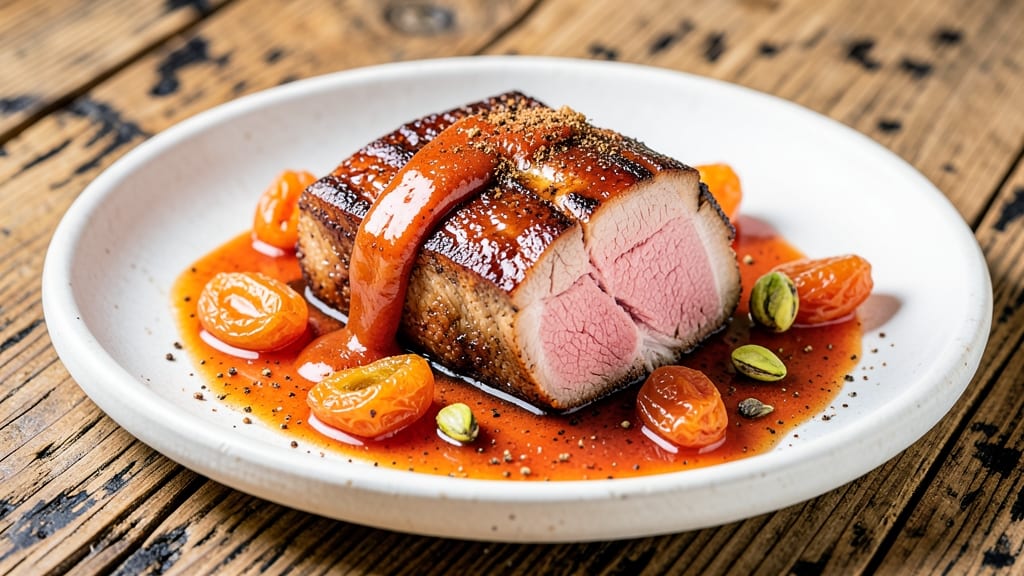
This apricot sauce recipe for pork transforms simple ingredients into a rich, caramelized glaze that elevates any pork dish from ordinary to extraordinary. ✨ The secret lies in simmering dried apricots with vinegar and spices until they break down into a velvety, sweet-tangy sauce that clings beautifully to ribs, chops, or pulled pork.
I developed this recipe during a particularly busy season at The Smoky Pig when we needed a sauce that could caramelize quickly while delivering deep, complex flavor—no fancy techniques required, just patience and a few key ingredients.
The magic happens when apricots melt into a thick, glossy sauce with just the right balance of sweetness and acidity. A touch of cinnamon and cloves adds warmth, while a splash of vinegar brightens the flavor and helps the sauce cut through rich pork.
This isn’t just a glaze—it’s a versatile sauce that works as a finishing drizzle, a marinade, or even a dip for fresh fruit. The beauty of this recipe is its flexibility; you can adjust the sweetness to suit your taste or the cut of pork you’re cooking.
What you’ll end up with is a deep amber glaze that caramelizes effortlessly, creating a sticky, flavorful crust on pork while keeping the meat tender underneath. The aroma alone will have everyone gathered around the table, and the taste?
Pure comfort—sweet, tangy, and just a hint of spice that lingers on the palate. This sauce keeps well in the fridge for up to two weeks, making it perfect for meal prep or gifting to fellow pork enthusiasts.
Whether you’re slow-cooking ribs, searing chops, or serving pulled pork, this apricot sauce will take your dish to the next level. It’s the kind of recipe that makes you feel like a pitmaster without the hours of smoking. Let’s get started—your taste buds (and your pork) will thank you.
Ingredients for apricot sauce recipe for pork
Nine simple ingredients transform into a velvety glaze that makes pork shine.
| Ingredient | Amount | Notes |
|---|---|---|
| Dried Apricots 🍑 | 1 cup | Pitted, chopped into small pieces |
| Red Wine Vinegar 🍷 | ½ cup | For tangy brightness |
| Brown Sugar 🍚 | ½ cup | Light or dark variety |
| Water 💧 | ½ cup | For thinning if needed |
| Ground Cinnamon 🌿 | 1 tsp | For warm depth |
| Ground Cloves 🌶️ | ¼ tsp | Freshly ground preferred |
| Salt 🧂 | ½ tsp | Kosher or sea salt |
| Unsalted Butter 🧈 | 2 tbsp | For richness and gloss |
| Honey 🍯 | 1 tbsp | Optional for extra sweetness |
The apricots are the star—look for plump, leathery ones at the grocery store, not the shriveled kind. Trader Joe's and Whole Foods usually carry the best quality, but any bulk bin will do. Pitting them yourself (just a knife and a little patience) gives you more control over the texture. If you're short on time, grab the pre-pitted ones, but they're pricier. The vinegar is non-negotiable for that bright tang—Bragg or Annie's are my go-tos, but any good red wine vinegar works. For the spices, Penzeys or the bulk section at Sprouts have the freshest ground cinnamon and cloves—those little jars at the grocery store lose their punch fast.
No dried apricots? Dried plums or dates work in a pinch, but the flavor will be different. Short on vinegar? Apple cider vinegar is a solid swap, though it's slightly sweeter. The brown sugar can be swapped for maple syrup if you're avoiding refined sugar—just reduce the water slightly since maple syrup is thinner. Want more depth? Add a pinch of smoked paprika or a dash of orange zest. The butter is what gives this sauce that luxurious finish—Plugrá or Land O'Lakes are reliable choices. If you're making this ahead, the sauce thickens as it cools, so you might need to thin it with a splash of water or broth when reheating.
This sauce keeps beautifully—2 weeks in the fridge in an airtight jar. The flavors actually deepen over time, so it's perfect for meal prep. For gifting, pour it into small jars with a ribbon and a note. Freezes for up to 3 months if you want to prep ahead for holidays. Pro tip: If the sauce crystallizes slightly when refrigerated, just give it a quick stir and warm it gently on the stove. It'll come back together like magic. Store any leftovers in the fridge, and if it thickens too much, a splash of water or apple juice will bring it back to perfection.
Why You'll Love This Recipe
- Five-Ingredient Magic: I swear by this recipe because it’s that simple—just dried apricots, vinegar, sugar, water, and cinnamon. No chopping, no peeling, no fussing with fresh fruit that bruises at the worst moment.
- Sweet-Savory Balance: The dried apricots caramelize into a jammy richness while the red wine vinegar cuts through the sweetness just enough to make your taste buds dance. Honestly, the first time I tasted it, I nearly licked the pan.
- Weeknight to Dinner Party: This sauce works for everything—glazing pork chops on a Tuesday, drizzling over roasted pork belly for guests, or even spooning over yogurt for a weird-but-delicious breakfast. (Yes, I’ve tried it.)
- Pantry Staple Power: Between us, this is the kind of recipe that turns cheap cuts of pork into something special without breaking the bank. And the leftovers? They keep for weeks in the fridge, ready to jazz up whatever’s in your fridge.
Step-by-step instructions for apricot sauce that caramelizes perfectly
This sweet-tangy glaze comes together in one pot with minimal effort.
🍳 Step 1: Sauté the Apricots Until Soft and Fragrant
In a medium saucepan over medium heat, add the 1 cup dried apricots and let them toast for 2-3 minutes until they release their aroma. You'll smell that warm, fruity scent—this is your cue they're ready for the next step.
I like to give them a gentle stir every minute to prevent burning. The apricots should soften slightly but not brown yet. This initial toasting builds the foundation for the sauce's rich flavor. If you notice any pieces sticking, add a splash of 0.25 cup water right away to keep them moving.
🍳 Step 2: Build the Spiced Base with Vinegar and Sugar
Pour in the 0.5 cup red wine vinegar and 0.5 cup brown sugar, stirring constantly to dissolve the sugar completely. Increase heat to medium-high and bring the mixture to a gentle boil. This should take about 3-4 minutes—you'll see bubbles forming around the edges of the pan.
Once boiling, reduce heat to medium-low and let it simmer for 5-6 minutes until the liquid reduces by about half. You're looking for a thickened consistency that coats the back of a spoon. This reduction process intensifies the flavors and creates that perfect glaze texture we want.
👨🍳 Step 3: Add Spices and Butter for Depth
Lower heat to low and stir in the 1 tsp ground cinnamon, 0.25 tsp ground cloves, and 0.5 tsp salt. Let the spices warm through for 1 minute, stirring constantly. The cloves will release their warm, aromatic essence—this is where the sauce gets its sophisticated depth.
Add the 2 tbsp unsalted butter and the remaining 0.25 cup water, stirring until the butter melts completely. The sauce should now have a glossy sheen. This butter adds richness that perfectly balances the tangy-sweet profile. If the sauce looks too thick at this point, add a splash more water—just enough to reach a spoonable consistency.
🔥 Step 4: Finish with Honey and Caramelize
Return heat to medium-high and add the 1 tbsp honey. Stir well and let the sauce bubble vigorously for 3-4 minutes until it thickens and begins to caramelize. You'll see it darken slightly and develop a beautiful gloss—this is when the magic happens!
Watch closely during these final minutes. The sauce should coat the back of a spoon and hold its shape when drizzled. If it's not thick enough yet, simmer uncovered for another 1-2 minutes. For extra shine, you can swirl the pan occasionally to help the sauce cling to the sides and caramelize evenly.
⏰ Step 5: Rest and Adjust Before Serving
Remove from heat and let the sauce rest for 5 minutes. This resting period allows the flavors to meld completely and the sauce to thicken slightly as it cools. Taste and adjust seasoning if needed—you might want to add a pinch more salt or a splash of vinegar to balance the sweetness.
The sauce should now have a perfect consistency—thick enough to cling beautifully to pork but still pourable. It will keep well in the refrigerator for up to 1 week, though I find it's best used within 3-4 days for maximum freshness. This sauce pairs perfectly with roasted pork chops, pulled pork, or even as a drizzle over grilled pork tenderloin.
Pro Tips For Making Apricot Sauce Recipe For Pork
- SOAK THE APRICOTS FIRST: Dried apricots are stubborn—toss them in hot water (not boiling) for 10 minutes before adding to the sauce. This softens them properly and prevents a gritty texture that ruins the smoothness, especially when blending later.
- STIR CONSTANTLY AT FIRST: The moment you add brown sugar and vinegar, the sauce can seize up or burn. Keep the heat medium and stir like you’re stirring oatmeal—nonstop for the first 3-4 minutes. I’ve seen this sauce curdle when left unattended, and it’s not coming back.
- USE A SPLASH OF WATER: If the sauce thickens too fast (it will), don’t panic—just add 1-2 tablespoons of water. The dried apricots release starch, and without a little liquid, it turns into glue. A quick splash keeps it glossy and pours like it should.
- SWEETEN WITH CAUTION: Brown sugar adds depth, but too much overpowers the tartness of the vinegar. Start with 2 tablespoons and taste as you go—adjust in ½-teaspoon increments. The sauce should balance sweet, tangy, and spiced, not taste like a dessert.
Storing and reheating this recipe
Refrigerator Storage
Let your apricot sauce cool completely before transferring it to an airtight glass jar—I prefer Le Parfait 16-ounce jars for their tight seals. Store in the fridge at 40°F or below for up to 2 weeks, though I’ve found the flavors peak within 5-7 days.
The sauce thickens naturally as it cools, so you may need to thin it with 1-2 teaspoons water when reheating. Always leave ½-inch headspace to prevent spills when the sauce expands slightly. 🧊
Freezing for Later
For long-term storage, portion the sauce into silicone ice cube trays or small jars. Freeze for up to 3 months—this works perfectly for holiday prep or gifting. When ready to use, thaw overnight in the fridge, then reheat gently.
If the sauce crystallizes, stir in 1 teaspoon water while warming to restore its silky texture. I avoid freezing in large batches because the sauce can separate slightly upon thawing. ❄️
Reheating Like a Pro
For stovetop reheating, transfer the sauce to a small saucepan and warm over low heat with 1 tablespoon water or apple juice to prevent scorching. Stir constantly until fully heated—about 3-4 minutes.
If the sauce thickens too much, add 1 teaspoon at a time until it reaches a pourable consistency. For microwave reheating, use 30-second intervals on 50% power, stirring between each interval to avoid hot spots. 🔥
Gift-Worthy Packaging
This sauce makes an incredible homemade gift! Pour it into amber glass bottles (like Ball 8-ounce jars) and tie with a linen ribbon. Add a handwritten tag with reheating instructions—it’s a crowd-pleaser at holiday gatherings.
For extra flair, drizzle a thin layer over pork tenderloin slices and present it on a platter with fresh rosemary. The aroma alone will make your gift stand out. ✨
Reviving Stale Sauce
If your refrigerated sauce has thickened too much, don’t toss it! Warm it gently on the stove with 1 tablespoon water and stir until smooth. For extra shine, whisk in ½ teaspoon butter—this restores the glossy finish.
If the flavors seem muted, add a pinch of cinnamon or a splash of vinegar to brighten them. I’ve revived sauce this way up to 3 weeks old with great results. 💡
Pork Pairing Tips
Use this sauce as a finishing glaze for pork chops, brushing it on during the last 5 minutes of cooking. For pulled pork, toss it with the shredded meat and serve with pickles to cut the sweetness.
The sauce also works as a dipping sauce for spring rolls or as a marinade—simmer it with pork tenderloin for 1 hour before grilling. Trust me, your pork will thank you. 🐷
Nutrition facts
Frequently asked questions
Can I use fresh apricots instead of dried?
Fresh apricots won't work in this recipe—they contain too much water and won't develop the same rich, caramelized texture. The dried fruit breaks down beautifully into a velvety sauce when simmered. If you're set on fresh, consider making a compote instead with added pectin and longer cooking time.
How do I adjust the sweetness for different pork cuts?
For lean cuts like pork tenderloin, use the full recipe as written. For richer cuts like ribs or pork shoulder, reduce the brown sugar to ¼ cup and add 1 extra tablespoon vinegar to balance the fat. Taste as you go—you can always add more sugar if needed.
What if my sauce turns out too thick?
Simply thin it with 1-2 teaspoons water or apple juice while warming on low heat, stirring constantly. For extra shine, whisk in ½ teaspoon butter. If the sauce separates, stir vigorously—it should come back together smoothly. This happens when cooling too quickly.
Can I make this sauce in a slow cooker?
Yes! Combine all ingredients in your slow cooker and cook on Low for 3-4 hours, stirring occasionally. The texture will be slightly different but still delicious. For extra caramelization, transfer to a saucepan and reduce on the stove for 5-10 minutes at the end.
What's the best way to use leftover sauce?
Drizzle over grilled pork chops, use as a dip for spring rolls, or mix with 1 teaspoon soy sauce for a glaze. It also makes an excellent topping for pancakes or waffles—just warm it gently. The sauce keeps well for 2 weeks refrigerated, so don't hesitate to make extra!