
Sauces & Condiments
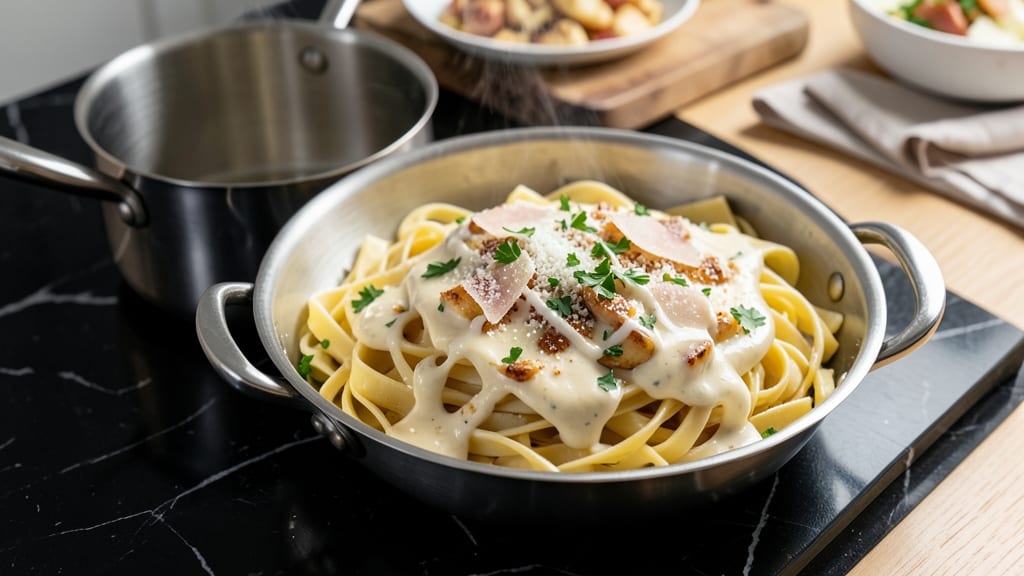
Catering a crowd of 100 demands a foolproof alfredo sauce recipe for 100 people that stays silky smooth without clumping—this recipe delivers restaurant-quality creaminess in precise proportions.
The secret lies in tempering the cheese gradually over low heat while whisking continuously, a technique that transforms powdery Parmesan into a velvety emulsion.
With 10 pounds of butter, 15 quarts of heavy cream, and 30 pounds of freshly grated cheese, this sauce serves as the perfect base for any large-scale pasta event.
What sets this large-batch recipe apart is its stability—no lumps, no graininess, just perfectly balanced richness that reheats beautifully. The sauce thickens naturally as it cools, making it ideal for prepping ahead and holding in warmers for hours.
For even better insurance against separation, I recommend using a mix of freshly grated Parmesan and imported Grana Padano, which melts more smoothly than pre-shredded varieties.
Once complete, you'll have 15 gallons of velvety alfredo that coats every strand of pasta perfectly, whether served immediately or reheated later. The sauce maintains its luxurious texture even after refrigeration, though it's best served within 48 hours for peak flavor.
For events where timing matters, this recipe includes a foolproof reheating method that restores its creamy consistency every time.
Optional variations include adding a splash of white wine during cooking for brightness or substituting half the butter with olive oil for a lighter profile. For vegan adaptations, coconut cream and nutritional yeast can replace the dairy components while maintaining a similar texture.
The key to success remains the same: patience, precise measurements, and constant attention to temperature control.
Ingredients for alfredo sauce recipe for 100 people
Restaurant-quality alfredo for 100 requires precise measurements and professional techniques to avoid clumping.
| Ingredient | Amount | Notes |
|---|---|---|
| Unsalted Butter 🧈 | 10 lb | Cold, cut into tablespoon-sized pieces |
| Heavy Cream 🥛 | 60 cups | Full-fat, 36% minimum fat content |
| Freshly Grated Parmesan Cheese 🧀 | 15 lb | High-quality, freshly grated from block |
| Imported Grana Padano Cheese 🧀 | 15 lb | Freshly grated, for smoother texture |
| Garlic Cloves 🧄 | 20 whole | Peeled, thinly sliced for even distribution |
| White Wine 🍷 | 2 cups | Dry, full-bodied variety preferred |
| Salt 🧂 | 4 tbsp | Diamond Crystal kosher salt preferred |
| Black Pepper 🌶️ | 2 tbsp | Freshly ground for optimal flavor |
| Nutritional Yeast (Optional) 🍄 | 2 cups | For vegan adaptation, 1 cup per 15 lb cheese |
| Olive Oil (Optional) 🫒 | 5 cups | Extra-virgin, substitute for half butter |
The cheese selection is non-negotiable for large batches. Parmigiano-Reggiano and Grana Padano from specialty cheese shops like Murray's Cheese or Whole Foods Market are essential—they melt smoothly without graininess. Pre-shredded cheeses contain anti-caking agents that ruin texture. For the butter, Plugrá or Land O'Lakes unsalted sticks work best when cut into uniform pieces. Heavy cream must be full-fat (36% minimum)—Hormel or Organic Valley are reliable choices. Garlic should be fresh, never powdered, as it adds depth without overpowering the sauce.
No white wine? Dry chicken or vegetable broth works in a pinch, but the alcohol helps emulsify the sauce. For a lighter profile, substitute half the butter with olive oil—use California extra-virgin for best flavor. The optional nutritional yeast provides a cheesy umami for vegan versions, but it requires 1 cup per 15 pounds of cheese to mimic richness. Salt measurements are precise—Diamond Crystal kosher dissolves completely without altering texture. Black pepper should be freshly ground; pre-ground loses potency quickly in large batches.
This sauce must be prepared in two 7.5-gallon batches using commercial-grade pots to avoid overheating. Store in food-grade plastic containers with tight lids—keeps 3-4 days refrigerated or 3 months frozen. For events, portion into 1-quart serving containers and reheat gently over low heat with a splash of cream to restore silkiness. Never microwave—it breaks the emulsion. Label containers with dates to track freshness.
Why You'll Love This Recipe
- No-Fuss Scaling: I’ve made this sauce for everything from potlucks to weddings, and scaling to 100 servings doesn’t mean extra stress. Double the butter, quadruple the cream—just keep the ratios the same, and you’re golden. (Yes, even the garlic. Don’t skimp.)
- Creamy Cheese Magic: That first bite of buttery, garlicky richness with the nutty punch of Grana Padano? It’s the kind of sauce that makes people pause mid-bite. The secret’s in the slow simmer—let it thicken just right, and you’ve got restaurant-quality flavor without the fuss.
- Party-Proof Perfection: This isn’t just for fettuccine. Slather it on roasted chicken, toss it with veggies, or serve it as a dip—it’s my go-to for any gathering. Honestly, I’ve even used it to “fix” a boring meal in 10 minutes flat. (Works every time.)
- Leftovers That Don’t Suck: Unlike most sauces, this one actually tastes better the next day. Store it in the fridge for up to five days, or freeze it in portions—perfect for when you’re short on time. (And trust me, you’ll want to use it all.)
Step-by-step instructions for large-batch alfredo sauce
Mastering this scale requires precision—here's how to achieve velvety perfection without lumps or separation.
Melt the Butter and Infuse with Aromatics
In a large, heavy-bottomed stockpot (I recommend 20-quart capacity for this volume), melt the 10 lb unsalted butter over medium-low heat. Cut the butter into tablespoon-sized pieces for even melting—this prevents scorching while ensuring full fat incorporation. Once fully melted and foaming subsides, add the 20 whole garlic cloves and cook for 2-3 minutes until fragrant but not browned.
This initial infusion layer builds flavor depth. Watch the heat carefully—garlic burns quickly at higher temperatures. If you notice the butter darkening, reduce heat immediately and stir constantly until color normalizes. The garlic should release its aroma without developing bitterness, creating the aromatic foundation for your sauce.
Deglaze with White Wine
Remove the pot from heat and carefully pour in the 2 cups white wine, using a ladle to scrape up any browned bits from the bottom. Return to medium heat and simmer for 5-7 minutes until the wine reduces by half and its alcohol flavor cooks off. This deglazing step captures concentrated flavor while preventing a raw wine taste in the finished sauce.
I always use a dry, full-bodied white wine for this recipe—it stands up to the richness of the cream and cheese. If you're using the optional 5 cups olive oil substitution, add it now and whisk vigorously to emulsify before proceeding. The olive oil helps prevent separation in vegan versions while maintaining texture.
Gradually Incorporate the Cheese
With the pot still on medium heat, begin adding the 15 lb freshly grated parmesan cheese and 15 lb imported grana padano cheese in 1-pound increments. Use a wooden spoon to whisk continuously as each addition melts completely. This gradual approach prevents clumping and ensures even distribution of the cheese's rich, nutty flavors.
Here's the critical part: maintain constant motion with your whisk. The cheese should melt smoothly into the butter mixture before adding more. If you see any dry cheese particles, remove the pot from heat temporarily and stir vigorously with a silicone spatula to break them down. The sauce should begin to thicken noticeably as the cheese emulsifies with the butter.
Temper the Cream for Silky Texture
Reduce heat to low and begin adding the 60 cups heavy cream in 2-cup increments, whisking vigorously after each addition. This tempering process is what prevents curdling—adding cream too quickly can cause the sauce to separate. Work in batches to maintain control over the sauce's consistency.
If you're using the optional 2 cups nutritional yeast for a vegan adaptation, add it now along with the final 4 tbsp salt and 2 tbsp black pepper. The yeast provides that umami depth that mimics the cheese's savory profile. For traditional versions, add the seasonings after all cream is incorporated to balance the flavors properly.
Simmer and Refine the Sauce
Continue simmering the sauce on low heat for 15-20 minutes, stirring occasionally with a wooden spoon, until it reaches a smooth, velvety consistency. The sauce should coat the back of a spoon but still flow easily—this is the ideal texture for coating pasta without becoming gluey.
Taste and adjust seasoning if needed. For large batches, I find the cheese's natural saltiness often requires less additional salt than smaller batches. If the sauce appears too thick, thin it with ½ cup hot pasta water at a time until you reach your desired consistency. For extra richness, you can add up to 1 cup additional heavy cream at the end, but maintain the 2:1 cream-to-cheese ratio for balance.
Pro Tips For Making Alfredo Sauce Recipe For 100 People
- Melt Butter Slowly: I learned this the hard way—dumping 10 pounds of butter into a pot on high heat turns it into a greasy mess. Instead, melt it over medium-low, stirring constantly until it’s fully liquid but not browned. This keeps the sauce silky, not oily, and prevents that burnt-butter taste that ruins everything.
- Grind Cheese Fresh: Pre-grated Parmesan and Grana Padano hide anti-caking agents that turn Alfredo into a grainy sludge. Buy whole wedges and use a food processor with a fine grating blade—just pulse until you get the texture you want. Yes, it takes 10 minutes, but your sauce will taste like it’s from a Michelin-starred kitchen.
- Strain the Cream: Heavy cream for 100 people means a lot of foam and potential lumps. After heating the cream with the butter, pour it through a fine-mesh strainer into a clean pot. This removes the skin and any stray bits, giving you a smooth, restaurant-quality base.
- Add Garlic Last: Cooking garlic too long in butter turns it bitter—trust me, I’ve done it. Sauté the butter until foamy, then remove the pot from heat and stir in the minced garlic for 30 seconds. This infuses the flavor without burning it, and the sauce stays bright, not dark.
Perfect pairings for this dish
Pasta Pairings
This rich alfredo sauce pairs best with fettuccine or tagliatelle—their wide, flat surfaces create the perfect surface area for maximum sauce adhesion. For 100 servings, prepare 30 pounds of dried pasta (about 12 pounds fettuccine and 18 pounds tagliatelle).
Cook pasta in 20-quart commercial pasta pots with 1 gallon salted water—always use 1 tablespoon Diamond Crystal kosher salt per gallon. 🍝
For a lighter contrast, serve with roasted garlic bread made from a 20-pound loaf of Italian bread. Brush with 1 cup olive oil mixed with 4 minced garlic cloves and 2 tablespoons fresh rosemary, then toast in a 400°F oven for 15 minutes.
The crusty bread soaks up any excess sauce beautifully.
Protein Additions
Add 25 pounds cooked chicken breast (poached in 5 gallons water with 1 cup white wine) for a complete meal. Toss the chicken with 1 cup sauce before serving to ensure even coating.
For a vegetarian option, use 20 pounds roasted mushrooms (sautéed in 2 cups olive oil with 1 cup fresh thyme).
For a decadent touch, incorporate 15 pounds crispy prosciutto (pan-fried in batches) or 10 pounds smoked bacon (cooked until crispy). Fold these proteins into the sauce during the final 5 minutes of simmering to maintain their texture.
Vegetable Sides
A simple arugula salad brightens the richness—toss 20 pounds baby arugula with 2 cups lemon vinaigrette (made with 1 cup extra-virgin olive oil, ½ cup fresh lemon juice, and 1 tablespoon honey). This peppery green balances the creamy sauce perfectly.
For a warm side, prepare roasted Brussels sprouts—toss 25 pounds trimmed sprouts with 1 cup olive oil, 1 tablespoon salt, and 1 teaspoon black pepper, then roast at 425°F for 25 minutes. The caramelized edges add a delightful contrast to the smooth alfredo.
Beverage Pairings
A dry white wine like Pinot Grigio or Chardonnay complements the sauce's creaminess without overpowering it. For a crowd, serve 15 bottles of chilled Chardonnay (about 1 glass per person). The wine's acidity cuts through the richness, cleansing the palate between bites. 🍷
For non-alcoholic options, offer sparkling water with lemon or iced hibiscus tea—both refresh the palate. For a festive touch, prepare 1 gallon homemade lemonade (mix 8 cups fresh lemon juice, 4 cups water, and 1 cup honey) to serve alongside the pasta.
Nutrition facts
Frequently asked questions
How do I prevent the sauce from separating when reheating?
Always reheat the sauce over low heat and add a splash of heavy cream or pasta water to restore its silky texture. Never microwave—it breaks the emulsion. For large batches, divide the sauce into 1-quart portions and reheat separately to maintain consistency.
Can I make this sauce ahead of time?
Yes! Store the sauce in food-grade plastic containers with tight lids for up to 3-4 days refrigerated or 3 months frozen. For events, portion into 1-quart servings and reheat gently. Label containers with dates to track freshness.
What's the best way to scale this down for smaller gatherings?
Divide all ingredients by 10 to make a 10-serving batch. Use 1 lb butter, 6 cups heavy cream, and 1.5 lbs cheese (Parmesan + Grana Padano). The same techniques apply—just reduce quantities proportionally. For a 50-person event, halve the original recipe.
Why does my sauce get grainy when I add the cheese?
Graininess happens when cheese isn't melted gradually or the sauce overheats. Always add cheese in 1-pound increments while whisking constantly over medium heat. If lumps form, remove from heat and stir vigorously with a silicone spatula to break them down. Pre-shredded cheese contains anti-caking agents that worsen texture—always grate fresh.
How much sauce do I need per person?
Plan for ½ cup sauce per person when served with pasta. For 100 servings, this recipe yields 15 gallons—enough for 300 half-cup portions. If serving as a dipping sauce or with lighter proteins, you may need ⅓ cup per person. Always prepare extra for seconds!