
Sauces & Condiments
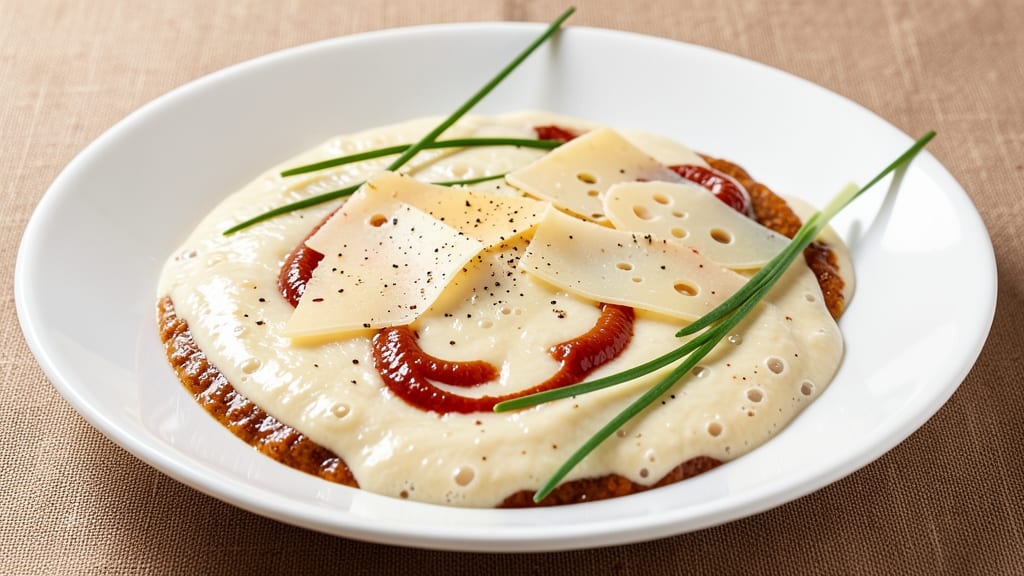
Sauce Mornay transforms ordinary dishes into restaurant-quality creations with its velvety, lump-free texture and rich cheese flavor. This classic French sauce builds on béchamel's creamy foundation, elevated by sharp Gruyère and nutty Emmental—my go-to for mac and cheese or gratin dishes. The secret lies in tempering the cheese properly and stirring constantly to prevent clumping, a technique I perfected after years of kitchen experiments (and a few failed attempts).
The process starts with a smooth white roux, then gradually incorporates warm milk to create the béchamel base. Once the sauce reaches a gentle simmer, we whisk in grated cheese in stages, allowing each addition to melt completely before adding more.
This method ensures a silky, velvety consistency without the dreaded lumps that ruin so many cheese sauces. The result? A sauce so luxurious it makes even simple baked potatoes feel like a gourmet meal.
What sets this recipe apart is its versatility—use it to elevate creamy soups, drizzle over grilled fish, or layer in lasagnas. The sauce keeps beautifully in the refrigerator for up to 5 days, or you can freeze it for longer storage.
Each batch delivers that perfect balance of rich, cheesy goodness with just enough tang from the mustard and lemon zest to keep it from becoming too heavy.
For those who love New England comfort food, this sauce pairs perfectly with my family's classic baked mac and cheese. The key is patience—letting the cheese melt gradually creates that signature velvety texture that makes all the difference.
Trust me on this one: once you try homemade Mornay, store-bought versions will never satisfy again.
Ingredients for sauce mornay
Nine ingredients, one smooth sauce. The secret to velvety perfection starts with butter and flour.
| Ingredient | Amount | Notes |
|---|---|---|
| Unsalted Butter 🧈 | ½ cup | Cold, cubed for roux |
| All-Purpose Flour 🌾 | ½ cup | Sifted for smooth texture |
| Whole Milk 🥛 | 2 cups | Warmed to 160°F |
| Gruyère Cheese 🧀 | 1 ½ cups | Freshly grated, sharp |
| Emmental Cheese 🧀 | 1 cup | Freshly grated, nutty |
| Dijon Mustard 🌶️ | 1 tbsp | For subtle tang |
| Lemon Zest 🍋 | 1 tsp | Brightens flavor |
| Salt 🧂 | ½ tsp | Kosher or sea salt |
| White Pepper 🌶️ | ¼ tsp | Freshly ground preferred |
| Nutmeg 🌿 | ¼ tsp | Freshly grated |
The cheese is non-negotiable here—Gruyère and Emmental give that signature French flavor. Grab a block of each from the cheese counter (pre-grated gets clumpy and lacks richness). If you can't find Emmental, swap in mild cheddar, but Gruyère is essential. For the butter, unsalted is a must—salted throws off the balance. The flour? King Arthur or Gold Medal brands blend smoothly. And don't skip warming the milk—it helps the cheese melt completely without lumps. I always use a thermometer to hit 160°F—that's when the roux really shines.
No Gruyère? Comté or sharp white cheddar works in a pinch, but the flavor won't be the same. Short on Emmental? Swiss cheese at half the amount gives a similar mildness. The mustard and lemon zest might seem small, but they're what keeps this sauce from being too heavy—Dijon mustard adds depth, lemon zest cuts through the richness. The nutmeg is optional but worth it for that classic French touch. If you're making this ahead, omit the nutmeg until reheating so it stays fresh. And if you're worried about lumps, whisk constantly over low heat—that's the real secret.
This sauce keeps beautifully—5 days in the fridge sealed tightly, or 3 months frozen in airtight containers. I always make a double batch because it disappears fast. For freezing, let it cool completely first. The texture stays perfect when reheated gently—just add a splash of milk if it thickens too much. And trust me, the first time you drizzle this over baked potatoes, you'll never go back to store-bought again.
Why You'll Love This Recipe
- Just Four Ingredients: I swear, this sauce is the kind of recipe where you almost feel guilty for how simple it is. Butter, flour, milk, and cheese—that’s it. No fancy reductions, no last-minute shopping runs. Honestly, I’ve made it at 7 AM with one hand tied behind my back.
- Nutty, Melty Magic: That moment when the Gruyère and Emmental start melting into a glossy, golden blanket? Pure satisfaction. The flour-to-butter ratio creates this perfect balance—creamy but not heavy, with just enough nutty depth to make you want to eat it with a spoon. (Yes, even on a Tuesday night.)
- Weeknight Superhero: Slap this on chicken, toss it with pasta, or drizzle it over roasted veggies—it’s the ultimate flavor multiplier. I keep a block of Gruyère in the fridge just for this, because it turns even the simplest protein into something restaurant-worthy. No stress, no fuss.
- Leftovers That Don’t Suck: Between us, most sauces turn into a sad, watery mess after day two. Not this one. It reheats like a dream, and the cheese actually gets better as it sits, developing that rich, caramelized edge. I’ve frozen it for months—just thaw and stir. My lazy future self thanks me.
Step-by-step instructions for sauce Mornay
Here's how to make a perfectly smooth, velvety cheese sauce every time—no lumps in sight.
Create a Smooth Roux
In a medium saucepan, melt the 0.5 cup unsalted butter over medium-low heat. Let it bubble gently for about 1 minute until it stops bubbling and becomes foamy. This ensures the butter is fully melted and ready for the next step.
Immediately whisk in the 0.5 cup all-purpose flour all at once. Stir constantly with a wooden spoon or whisk for 2-3 minutes until the mixture turns a light golden color and smells nutty. You're creating a roux—the foundation of your sauce. If it darkens too quickly, reduce the heat slightly. The roux should be smooth with no visible flour specks.
Gradually Add Warm Milk
Slowly pour in the 2 cups whole milk while whisking continuously. Add it very gradually—about ¼ cup at a time—to prevent lumps from forming. Keep whisking vigorously for 3-5 minutes until the sauce thickens enough to coat the back of a spoon.
Here's the thing—if you add the milk too quickly, you'll get lumps. If you see any, immediately whisk harder or strain the sauce through a fine-mesh sieve. The sauce should be smooth, thick, and creamy at this stage. If it's too thick, whisk in a splash of warm milk to reach your desired consistency.
Incorporate the Cheese Mixture
In a separate bowl, combine the 1.5 cups Gruyère cheese, 1 cup Emmental cheese, 1 tbsp Dijon mustard, 1 tsp lemon zest, 0.5 tsp salt, 0.25 tsp white pepper, and 0.25 tsp nutmeg. Mix well to ensure all the spices are evenly distributed throughout the cheese.
Temper the cheese mixture by slowly adding small spoonfuls to the warm sauce while whisking constantly. This gradual addition prevents the cheese from clumping and ensures a silky texture. Once all the cheese is incorporated, stir the sauce over low heat for 3-5 minutes until it's fully melted and smooth. The sauce should be thick, glossy, and velvety.
Simmer and Finish
Continue cooking the sauce over low heat for 2-3 minutes until it reaches a temperature of 160°F. This ensures the cheese is fully melted and the sauce is ready to use. If the sauce starts to separate or looks too thick, whisk in 1-2 tablespoons of warm milk to loosen it.
Taste and adjust the seasoning if needed. The sauce should be rich, slightly tangy from the mustard and lemon zest, and perfectly balanced with nutmeg and white pepper. Remove from heat immediately to prevent curdling. This sauce is best used immediately, but you can keep it warm in a double boiler for up to 30 minutes if needed.
Pro Tips For Making Sauce Mornay
- Whisk Like You Mean It: Your roux is the foundation—don’t let it turn to glue. Start with butter melting slowly over medium-low heat (yes, even if you’re eager), then whisk in flour constantly for at least 3-4 minutes until it’s a deep, nutty blond. I used to rush this, and the sauce would taste raw. Patience here means a richer flavor later.
- Grate Cheese Fresh: Pre-shredded cheese is coated with anti-caking agents that make your sauce grainy. Use a box grater or food processor for Gruyère and Emmental, and add the cheese off-heat—just as the sauce finishes. If you’re lazy (like me sometimes), at least pick the "freshly grated" option at the store. The texture difference is night and day.
- Temper the Milk: Dumping cold milk into hot butter will shock the fat and break the emulsion, giving you a split sauce. Warm the milk in a separate saucepan until it’s steaming (not boiling), then whisk it into the roux gradually. I learned this after making a lumpy disaster—now I keep a thermometer handy (or just test with my finger).
- Strain for Smoothness: Even with fresh grated cheese, tiny bits sneak in. After melting the cheese into the sauce, strain it through a fine-mesh sieve into a clean bowl. It’s extra work, but the result is silky, not gritty. (Yes, I know—you could just leave it, but your sauce will thank you.)
Essential equipment for perfect results
Essential Sauce Pan
You don't need fancy equipment—just a heavy-bottomed saucepan (I use my trusty All-Clad 3-quart) to prevent scorching. The pan should be medium-sized (2-3 quarts) to allow room for whisking without splattering.
A nonstick saucepan works too, but stainless steel gives better heat control for that perfect roux. If your pan is too shallow, the sauce might boil over when adding milk. 🔥
Whisk Like a Pro
A balloon whisk or French whisk is my go-to for smooth Mornay—it cuts through the sauce better than a spoon. The OXO Good Grips whisk has rubberized handles that prevent hand fatigue during those crucial 5 minutes of whisking.
For extra insurance against lumps, I keep a fine-mesh sieve nearby to strain any stubborn clumps if needed. A wooden spoon works in a pinch, but it won't give you that professional-level smoothness.
Thermometer Matters
An instant-read thermometer (like the Thermoworks Thermapen) is worth its weight in gold for this recipe. You'll need it to check both the milk temperature (160°F) before adding it to the roux and the final sauce temperature (160°F) to ensure the cheese melts completely.
Without precise temperature control, you risk either a grainy sauce or one that separates. I also keep a small ladle handy for gradually adding the warm milk to the roux.
Cheese Grater Upgrade
Skip the pre-shredded cheese—it's full of anti-caking agents that create lumps. Instead, invest in a box grater (I love the Microplane) for freshly grated Gruyère and Emmental. The fine, even shreds melt smoothly into the sauce.
For storage, I keep a small airtight container with a lid to prep cheese ahead of time, saving steps during cooking. A cheese plane works too if you prefer a smoother texture.
Double Boiler Setup
To keep your sauce warm without curdling, a double boiler is ideal. You can make one with two saucepans (place a heatproof bowl over simmering water) or buy a dedicated double boiler (like the OXO Good Grips).
This is especially useful if you're making the sauce ahead for a big dinner. Just
Nutrition facts
Frequently asked questions
Why does my cheese sauce get lumpy?
Lumps happen when cheese melts too quickly or you add it all at once. The key is to whisk constantly over low heat and add cheese in small spoonfuls, letting each batch melt completely before adding more. If lumps appear, strain the sauce through a fine-mesh sieve immediately. Also, make sure your milk is warm (160°F) before combining with the roux.
Can I substitute Gruyère with another cheese?
Gruyère is essential for authentic flavor, but you can use Comté or sharp white cheddar in a pinch. For Emmental, Swiss cheese works well at half the amount. Avoid pre-shredded cheese—it contains anti-caking agents that create lumps. Freshly grated cheese melts smoothly and gives the best texture.
How do I keep the sauce warm without curdling?
Use a double boiler to maintain even heat—place your sauce in a heatproof bowl over simmering water. Never let it boil, and stir occasionally. For short-term keeping, transfer to a slow cooker on the "warm" setting. If the sauce thickens too much, whisk in 1-2 tablespoons of warm milk to restore smoothness.
What's the best way to reheat leftover sauce?
Reheat gently over low heat on the stovetop, stirring constantly. For best results, add 1-2 tablespoons of warm milk or cream to prevent thickening. Microwaving can cause separation, so always use stovetop heat. If the sauce looks grainy, strain it through a fine-mesh sieve before serving.
Can I make this sauce ahead of time?
Store in an airtight container in the fridge for up to 5 days or freeze for 3 months. When ready to use, reheat gently over low heat, adding milk as needed. The texture remains perfect—just avoid reheating too quickly. For parties, make it the day before and reheat in a double boiler before serving.