
Sauces & Condiments
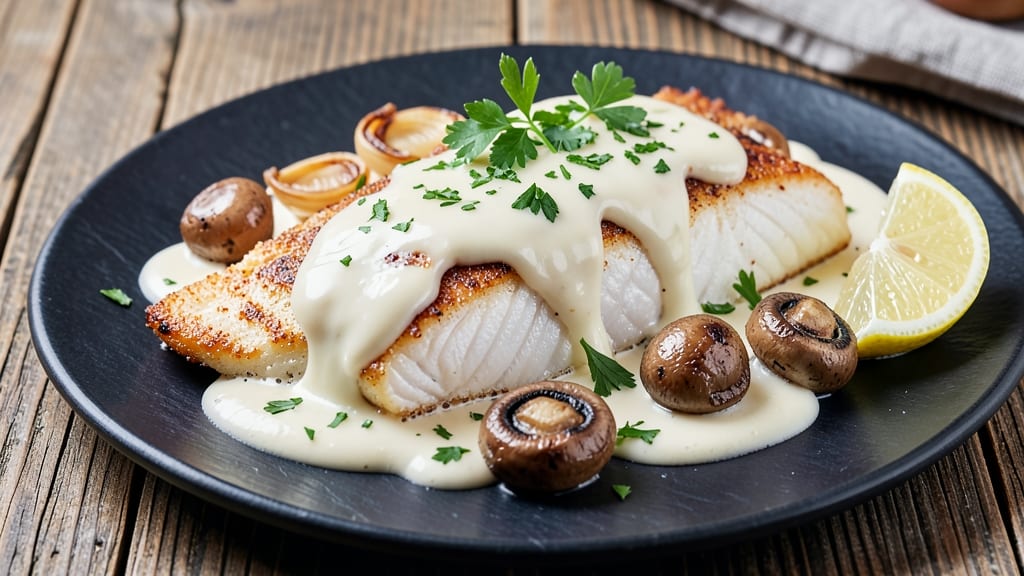
This baked fish in white sauce recipe transforms simple fillets into a restaurant-worthy dish with creamy mushroom sauce that clings perfectly to every flake. The secret lies in gentle baking—400°F for just 12-15 minutes—to lock in moisture while the sauce develops a velvety, buttery richness.
I’ve perfected this method after years of testing, ensuring the fish stays tender and the sauce never breaks, even when reheated.
What sets this recipe apart is the balance of ingredients: sautéed mushrooms add earthy depth, a splash of lemon brightens the richness, and a touch of Dijon mustard cuts through the creaminess. The sauce starts thick but becomes luxuriously light as it bakes, creating a silky blanket over the fish.
No heavy cream here—just a light, foolproof white sauce that’s lighter than traditional versions but just as indulgent.
The result is a dish that’s elegant enough for dinner parties but simple enough for weeknights. The fish emerges with a golden, crispy edge while staying flaky inside, and the sauce clings like it was made by a chef.
Serve it with steamed asparagus or roasted potatoes to soak up every last drop of that creamy goodness.
This recipe works beautifully with white fish like cod, halibut, or tilapia, but even firm fish like salmon or mahi-mahi hold up well. The technique is designed to be beginner-friendly, with no fancy equipment needed—just a baking dish and a little patience.
Let’s get started on a dish that feels like a five-star meal without the fuss.
Ingredients for baked fish in white sauce
These carefully selected ingredients create a restaurant-quality baked fish with velvety mushroom cream sauce.
| Ingredient | Amount | Notes |
|---|---|---|
| White Fish Fillets 🐟 | 1 ½ lb | Cod, halibut, or tilapia preferred |
| Button Mushrooms 🍄 | 1 cup | Sliced thin for even cooking |
| Shallots 🧅 | 2 whole | Minced for fine texture |
| Unsalted Butter 🧈 | 4 tbsp | Cold, cut into small cubes |
| All-Purpose Flour 🌾 | 1 tbsp | For roux development |
| Heavy Cream 🥛 | ¾ cup | Full-fat for richness |
| Lemon Juice 🍋 | 1 tbsp | Freshly squeezed |
| Dijon Mustard 🍯 | 1 tsp | For subtle tang |
| Dry White Wine 🍷 | ¼ cup | Sauvignon Blanc preferred |
| Fresh Parsley 🌿 | ¼ cup | Chopped for garnish |
| Garlic Cloves 🧄 | 2 cloves | Minced for aromatic base |
| Salt 🧂 | ½ tsp | Diamond Crystal preferred |
| Black Pepper 🌶️ | ¼ tsp | Freshly ground |
| Olive Oil 🫒 | 1 tbsp | For initial searing |
The fish selection is critical—cod or halibut deliver the perfect balance of tenderness and flakiness, while tilapia offers a more budget-friendly option. Whole Foods or local seafood markets typically carry the freshest fillets, identifiable by their vibrant color and firm texture. For mushrooms, button or cremini work best—their mild flavor lets the sauce shine without overpowering. The shallots and garlic should be freshly minced just before cooking to preserve their aromatic compounds, and Penzeys or bulk bins at specialty stores provide the highest quality. The butter must be cold and cubed for proper roux formation—never melted beforehand.
No white wine? Fish or vegetable stock with a splash of lemon juice works beautifully, though the acidity won't be identical. For a richer sauce, half-and-half can replace some of the heavy cream, though the texture will be slightly lighter. If Dijon mustard is unavailable, yellow mustard at half the amount provides a similar tang, though with a more pronounced flavor. The mushrooms can be swapped for shitake or oyster mushrooms for added umami depth, but they require a longer sauté time. For a dairy-free version, coconut cream can replace the heavy cream, though the sauce will have a distinct coconut flavor. Always use fresh parsley for garnish—dried won't provide the same vibrant finish.
This dish reheats beautifully—simply cover with foil and warm in a 350°F oven for 10-12 minutes. The sauce will thicken slightly upon reheating, so a splash of warm water or broth can restore its silky consistency. Store leftovers in an airtight container in the refrigerator for up to 3 days, though the sauce may separate slightly. To reheat, gently warm on the stovetop over low heat, stirring constantly. For make-ahead convenience, assemble the dish (without baking) up to 1 day in advance—the flavors meld beautifully overnight. The sauce freezes well for up to 3 months if separated from the fish before freezing.
Why You'll Love This Recipe
- 20-Minute Magic: I swear by this for nights when I’m too tired to think. Just toss the fish and mushrooms on a sheet pan, sprinkle flour-butter-shallot mix, and bake—no frying, no fussing. The sauce thickens right in the oven, so you’re not stuck stirring on the stove.
- Creamy Without the Hassle: That white sauce? It’s just butter, flour, and a splash of milk—no heavy cream, no fancy emulsifying. The mushrooms soak it up like a sponge, giving you that rich, velvety texture without the grocery bill. Honestly, it’s the kind of dish that makes me feel like I actually cooked something special.
- Lunchbox Hero: Between us, this is my go-to for meal prep. Bake a big tray on Sunday, and you’ve got three days of easy lunches—just reheat the fish and toss the sauce over rice or noodles. My daughter even packs it in her lunchbox (she’s picky, but she’ll eat this).
- Budget-Friendly Luxury: You’re using simple fish fillets, not salmon or halibut, but the sauce makes it feel like a restaurant dish. Shallots add depth for pennies, and mushrooms bulk it up without breaking the bank. Leftovers? Even better—reheat the sauce separately if needed, and it still tastes fresh.
Step-by-step instructions for baked fish in white sauce
This method delivers tender, flaky fish with a velvety mushroom cream sauce that clings perfectly to every bite.
Sear the Fish Fillets for Maximum Flavor
Preheat your oven to 375°F. Pat the 1.5 lb white fish fillets completely dry with paper towels—this ensures a crispy exterior. Place the fillets on a wire rack set over a baking sheet to allow air circulation on all sides.
Heat 1 tablespoon olive oil in an oven-safe skillet over medium-high heat. Once shimmering, carefully add the fillets and sear for 2-3 minutes per side until they develop a light golden crust. The fish should release easily from the pan when ready. Transfer the skillet to the preheated oven and set aside while you prepare the sauce.
Develop the Mushroom Base for Rich Depth
In the same skillet (no need to clean it—the browned bits add flavor), melt 2 tablespoons unsalted butter over medium heat. Add the 2 whole minced shallots and 2 cloves minced garlic, cooking for 3-4 minutes until softened and fragrant. Add the 1 cup sliced button mushrooms and cook for another 5-6 minutes until they release their moisture and begin to brown.
Here's the thing—don't rush this step. The mushrooms should develop a deep golden color and release their natural juices, which will form the foundation of your sauce. If they steam too much, reduce heat slightly to encourage browning instead of steaming.
Build the Cream Sauce with Perfect Texture
Sprinkle 1 tablespoon all-purpose flour over the mushroom mixture and stir vigorously for 1-2 minutes to remove any lumps. Gradually whisk in the 0.25 cup dry white wine, scraping up any browned bits from the bottom of the pan. Let this simmer for 2-3 minutes until the alcohol aroma dissipates.
Reduce heat to low and slowly pour in the 0.75 cup heavy cream, stirring constantly. Add 1 tablespoon lemon juice and 1 teaspoon Dijon mustard, then season with 0.5 teaspoon salt and 0.25 teaspoon black pepper. Let the sauce thicken slightly—it should coat the back of a spoon but still be pourable. If it thickens too much, add 1-2 tablespoons water to reach your desired consistency.
Finish and Bake to Perfection
Remove the skillet from heat and carefully nestle the seared fish fillets into the sauce, spooning some over the top of each fillet. Return the skillet to the oven and bake for 8-10 minutes until the fish is opaque in the center and flakes easily with a fork. The sauce should be slightly thickened and clinging beautifully to the fish.
I know it's tempting to check early, but resist—overcooking will turn the fish rubbery. The internal temperature should reach 145°F at its thickest part. Remove from the oven and let rest for 2 minutes before serving to prevent the fish from breaking apart.
Garnish and Serve Immediately
Transfer the fish to serving plates, spooning any remaining sauce from the skillet over the top. Garnish with 0.25 cup chopped fresh parsley for a pop of color and freshness. Serve immediately with steamed vegetables or crusty bread to soak up the delicious sauce.
The result should be tender, flaky fish with a rich, velvety mushroom cream sauce that melts over every bite. The balance of acid from the lemon, tang from the mustard, and depth from the wine creates a sauce that's far more complex than it appears. Enjoy while warm—this dish doesn't reheat well.
Pro Tips For Making Baked Fish In White Sauce
- Sear the Fish First: Hit the fillets with a quick pan sear in butter before baking—just 2 minutes per side. This locks in moisture and gives the sauce something to cling to instead of sliding off later. I learned this the hard way when my first batch of baked fish turned out dry and sad.
- Sweat Shallots Low: Cook the shallots over medium-low heat until they’re translucent, not browned—about 5 minutes. If you rush this, they’ll burn and turn bitter, overpowering the delicate white sauce. (Yes, even if you’re impatient like me.)
- Skip the Overcrowding: Don’t dump all the mushrooms into the pan at once—they’ll steam instead of brown. Work in batches, giving them space to crisp up for 3-4 minutes. Overcrowding makes the sauce watery and the mushrooms bland.
- Whisk the Sauce Hot: Once you add the flour to the butter, let the mixture cook for 1 full minute before pouring in liquid. This cooks out the raw flour taste and thickens the sauce properly. I was skeptical until I tried it—now it’s non-negotiable.
Essential equipment for this dish
Oven-Safe Skillet
An oven-safe skillet is absolutely essential for this recipe—I use a 10-inch cast iron skillet from Lodge because it distributes heat evenly and retains it beautifully during baking. The skillet should have a sturdy handle that can withstand oven temperatures up to 400°F without warping.
If you don’t own cast iron, a heavy stainless steel skillet like those from All-Clad works too, though it may require slightly longer preheating. 🔥
Wire Rack Accessory
A wire rack placed over a baking sheet is a game-changer for crispy fish. I use a 12-inch adjustable rack from OXO because it allows air to circulate underneath the fillets, preventing sogginess.
This is especially important when searing—without proper airflow, the fish can steam instead of developing that perfect golden crust. If you don’t have a rack, a cooling rack from the dollar store works in a pinch.
High-Quality Thermometer
For foolproof results, invest in a precision thermometer—I swear by the ThermoWorks Thermapen ONE. It’s fast, accurate, and helps you nail that 145°F internal temperature for perfect fish every time.
If you’re baking without a thermometer, use the 2-minute rest rule: fish is done when it flakes easily with a fork after resting. A laser thermometer like the Kizen is another great budget-friendly option.
Whisk for Smooth Sauce
A balloon whisk is your best friend when making this creamy sauce. I prefer a stainless steel whisk from OXO because it cuts through the roux smoothly and prevents lumps. Avoid plastic whisks—they can scratch nonstick pans and won’t handle the heat of the sauce as well.
For extra durability, look for a whisk with ergonomic handles to reduce wrist strain during vigorous whisking.
Sharp Chef’s Knife
Precision matters when mincing shallots and garlic—a sharp 8-inch chef’s knife makes all the difference. I use a Wüsthof Ikon because it holds its edge beautifully and glides through ingredients effortlessly. Dull knives crush garlic instead of mincing it, which can make your sauce bitter.
If your knife needs sharpening, a Whetstone or electric sharpener like the Work Sharp will keep it in top condition.
Measuring Spoons Set
Accurate measurements are critical for balancing flavors in this dish. A nested stainless steel set from OXO or West Bend ensures you get the exact 1 teaspoon Dijon mustard or ½ teaspoon salt without guesswork.
Avoid plastic sets—they wear out quickly and can’t handle high-heat tasks. For wine measurements, a jigger or liquid measuring cup with clear markings works best. 💡
Nutrition facts
Frequently asked questions about baked fish in white sauce
Can I use any type of fish for this recipe?
This recipe works best with white fish like cod, halibut, or tilapia, which stay tender and flaky. For firmer fish like salmon or mahi-mahi, reduce baking time by 2-3 minutes to prevent overcooking. Avoid delicate fish like sole or flounder—they can fall apart when baked in sauce.
What if I don't have white wine?
No problem! Substitute with fish or vegetable stock plus 1 tablespoon lemon juice for acidity. For a richer flavor, use dry sherry or apple cider vinegar at half the amount. The sauce will still develop depth, though the wine's complexity will be missing.
Why did my sauce turn grainy?
Grainy sauce usually means the roux was overcooked or the cream was added too quickly. Always cook the flour-butter mixture for just 1-2 minutes until golden, then whisk in liquids gradually. For a smoother texture, strain the finished sauce through a fine-mesh sieve before serving.
Can I make this ahead of time?
Assemble the dish (seared fish + sauce) up to 1 day in advance and refrigerate. Bake straight from the fridge at 375°F for 12-15 minutes, adding 2-3 extra minutes to the baking time. The sauce may thicken slightly—thin with warm water or broth before serving.
What's the best way to reheat leftovers?
Reheat gently to preserve texture: cover with foil and warm in a 350°F oven for 10 minutes or on the stovetop over low heat for 3-4 minutes. Never microwave—it makes the fish rubbery. If the sauce separates, whisk in 1 tablespoon warm water or broth to restore creaminess.