
Sauces & Condiments
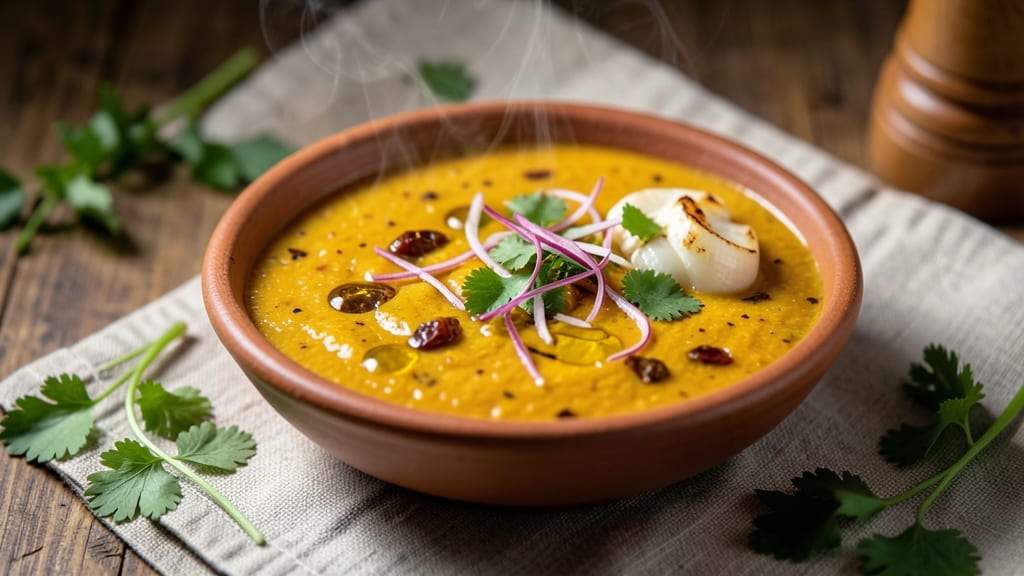
This authentic Peruvian aji sauce delivers the fiery, tangy complexity that defines Peruvian cuisine. Crafted with fermented aji peppers, garlic, and vinegar, it creates a bold condiment that transforms simple dishes into vibrant, flavor-packed meals. The fermentation process develops deep, umami-rich notes that set it apart from ordinary hot sauces.
The key to authentic flavor lies in balancing heat, acidity, and umami through precise simmering and blending. This sauce works as a marinade for meats, a topping for ceviche, or a finishing touch on grilled vegetables.
The recipe preserves traditional techniques while adapting to home kitchens, ensuring restaurant-quality results every time.
What makes this sauce truly special is its ability to elevate any dish with its complex, layered flavors. The fermented peppers provide a unique depth that's impossible to replicate with fresh peppers alone.
When properly balanced, the sauce offers a perfect harmony of heat, tang, and richness that Peruvian cuisine is famous for.
Ready in about 30 minutes with minimal active time, this sauce keeps well in the refrigerator for up to 2 weeks. The process is straightforward but requires attention to detail during the simmering stage to develop those signature flavors. Perfect for adding authentic Peruvian flair to your cooking repertoire.
Ingredients for authentic peruvian aji sauce
Fermented peppers, garlic, and vinegar create this restaurant-quality Peruvian sauce with bold heat and tang.
| Ingredient | Amount | Notes |
|---|---|---|
| Fermented Aji Amarillo Peppers 🌶️ | ½ cup | Freshly fermented or high-quality paste |
| Fresh Garlic Cloves 🧄 | 6 cloves | Peeled and lightly crushed |
| White Vinegar 💧 | ½ cup | Distilled white preferred |
| Extra-Virgin Olive Oil 🫒 | ¼ cup | Light fruity variety |
| Red Onion 🧅 | 1 whole | Medium size, finely diced |
| Fresh Cilantro 🌿 | ¼ cup | Stems removed, loosely packed |
| Lime Juice 🍋 | 2 tbsp | Freshly squeezed |
| Ground Cumin 🌿 | ½ tsp | Toasted for depth |
| Salt 🧂 | 1 tsp | Diamond Crystal preferred |
| Water 💧 | ¼ cup | Filtered preferred |
The fermented aji amarillo peppers are the heart of this sauce—look for authentic Peruvian brands at Latin markets or use a high-quality paste from specialty stores. If unavailable, ferment your own by soaking fresh peppers in saltwater for 3-5 days, but the flavor won't be identical. Fresh garlic should be vibrant and firm, with no green sprouts. For the vinegar, distilled white provides the cleanest acidity without overpowering the sauce's complexity. The cumin should be toasted briefly in a dry pan to deepen its earthy notes before grinding.
No fermented peppers? Fresh aji peppers blended with lime juice can mimic some of the tang, though the umami depth will differ. Substitute red wine vinegar for apple cider vinegar if needed, but adjust to taste—apple cider adds subtle sweetness. The cilantro can be swapped for flat-leaf parsley at half the amount if you dislike its brightness. For a smoother texture, blend the sauce longer, but traditional versions retain some texture for authenticity. The red onion adds sweetness—yellow onion works but lacks depth.
This sauce develops best when refrigerated for at least 4 hours before serving, allowing flavors to meld. Store in an airtight glass jar for up to 2 weeks, with the olive oil forming a protective layer on top. For longer storage, freeze in ice cube trays—thaw quickly under warm water before use. The sauce intensifies over time, so start with less heat if you're new to fermented peppers.
Why You'll Love This Recipe
- No-Fuss Blend: I swear by this sauce because it’s just pulse, strain, taste—no simmering, no peeling endless peppers. The fermented Aji Amarillo paste does all the work; I just add garlic, vinegar, and a quick whirl in the blender. Honestly, it’s the kind of recipe that makes me feel like a chef without the fuss.
- Umami Bomb: That first taste—sweet, tangy, with a slow-building heat—is chef’s kiss. The fermented peppers bring this deep, funky richness, while the vinegar cuts through the richness perfectly. It’s the kind of flavor that makes you reach for seconds, even if you’re not hungry.
- Every Meal Upgrade: I drizzle this on everything—grilled chicken, fried rice, even scrambled eggs. My kids ask for it on their plain pasta, and my partner slathers it on avocado toast. Between us, it’s the one sauce that turns ordinary meals into something special without trying too hard.
- Pantry Goldmine: A little goes a long way, and it keeps for weeks in the fridge. I make a big batch once a month, stash it in jars, and use it like ketchup—except way better. The vinegar and olive oil preserve it, so I never waste money on takeout when this does the trick. (Yes, even on a Tuesday night.)
Step-by-step instructions for authentic Peruvian aji amarillo sauce
This traditional Peruvian sauce delivers vibrant color, tangy depth, and complex heat that transforms any dish.
Blend the Fermented Aji Base
Combine the 0.5 cup fermented aji amarillo peppers, 6 cloves fresh garlic cloves, 0.5 cup white vinegar, and 0.25 cup water in a high-speed blender. The fermented peppers should be smooth but retain their natural color—this is your flavor foundation. Blend until completely homogeneous, scraping down the sides as needed to ensure all ingredients are fully incorporated.
Here's the thing—aji amarillo has a unique, slightly sweet and tangy profile that sets it apart from other peppers. The fermentation process enhances its depth, so don't rush this blending step. You want the mixture to be smooth enough to strain later but still capture all those vibrant pigments. The vinegar and water help balance the intensity while preserving the sauce's signature brightness.
Cook the Aromatic Base
Heat the 0.25 cup extra-virgin olive oil in a medium saucepan over medium-low heat. Add the 1 whole red onion and cook until softened and translucent, about 5-7 minutes. This gentle cooking prevents the onion from browning while developing its natural sweetness—a crucial step for authentic flavor.
Once the onion is tender, add the 0.5 tsp ground cumin and stir for 30 seconds until fragrant. The cumin should dissolve completely into the oil, releasing its earthy aroma. This is where the sauce's complexity begins to develop. Keep the heat low—cumin burns quickly, and you want to preserve its delicate flavor rather than let it turn bitter.
Combine and Simmer
Pour the blended aji mixture into the saucepan with the onion and cumin. Stir in the 1 tsp salt and bring to a gentle simmer over medium heat. Let it cook uncovered for 10-12 minutes, stirring occasionally, until the sauce thickens slightly. You're looking for a consistency that coats the back of a spoon but remains pourable—this balance is key for both texture and flavor development.
During this time, the acidity from the vinegar will mellow slightly while the heat from the peppers intensifies. The sauce should smell rich, with notes of garlic, onion, and a subtle sweetness from the fermented peppers. If it reduces too quickly, add 1 tablespoon water at a time to maintain the proper consistency. The goal is a sauce that's vibrant, balanced, and ready to incorporate the fresh elements.
Finish with Fresh Elements
Remove the sauce from heat and stir in the 2 tbsp lime juice and 0.25 cup fresh cilantro. The lime juice brightens the sauce with a citrusy tang that cuts through the richness, while the cilantro adds freshness and a pop of color. Let the mixture sit for 5 minutes to allow the flavors to meld completely—this resting period is essential for developing the sauce's full character.
Here's where it gets interesting: the lime juice should make the sauce glisten slightly, indicating proper acidity balance. The cilantro will soften slightly but retain its vibrant green hue. Taste and adjust seasoning if needed—you might want to add a pinch more salt or a splash of lime juice to achieve the perfect equilibrium between heat, tang, and freshness.
Strain and Serve
Strain the sauce through a fine-mesh sieve into a clean bowl, pressing gently on the solids to extract all the flavorful liquid. Discard the solids—this step ensures a smooth, velvety texture without any fibrous bits. The strained sauce should be a vibrant yellow-orange color with a glossy sheen, indicating proper emulsification.
Transfer the sauce to a serving bowl or jar and let it cool to room temperature. This sauce keeps beautifully in the refrigerator for up to 1 week, allowing the flavors to deepen over time. Serve it warm over grilled meats, drizzled on roasted vegetables, or mixed into soups—its bold, tangy heat will elevate any dish with authentic Peruvian character.
Pro Tips For Making Authentic Peruvian Aji Sauce
- STRAIN TWICE: Fermented aji amarillo paste is sneaky—it hides tiny bits that turn your sauce gritty. After the first strain through a fine-mesh sieve, press the pulp with a spoon and strain again. I learned this the hard way when my first batch looked smooth but tasted like sandpaper.
- COOK GARLIC LOW: Cranking the heat for garlic turns it bitter fast. Simmer those cloves in the oil on low until they’re golden, not brown—about 5 minutes. My grandmother swore by this, and she was right: rushed garlic ruins the whole sauce.
- VINEGAR FIRST: Add the white vinegar before the onion. It softens the sharpness and lets the flavors meld better. Skip this, and you’ll end up with a sauce that tastes like vinegar fought with everything else.
- SKIP THE RAW ONION: Sauté the red onion until it’s translucent and just starting to caramelize—about 3 minutes. Raw onion adds bite, but cooked onion makes the sauce smoother and deeper. (Yes, even if you’re impatient like me.)
Essential equipment for this recipe
Blender Essentials
A high-speed blender is your best friend for this sauce—look for one with at least 1,000 watts like the Ninja BN601 or Vitamix 5200. The motor power ensures the fermented aji peppers and garlic blend smoothly without overheating.
I've found that a stainless steel blade handles the fibrous peppers better than plastic. 💫
Saucepan Selection
Use a medium-sized stainless steel saucepan with a 2-3 quart capacity—I recommend All-Clad Stainless for even heat distribution. The saucepan should have sloped sides to prevent spills during simmering. Avoid non-stick pans, as they can't handle the sauce's acidity without degrading over time.
Fine-Mesh Sieve
A fine-mesh stainless steel sieve (like the OXO Good Grips) is crucial for straining the sauce. The tight weave captures all the flavorful liquid while filtering out solids.
I press the pulp with a silicone spatula to extract every last drop of vibrant color and heat. For larger batches, consider a nut milk bag for easier pressing.
Measuring Tools
Precision matters with this sauce—use a liquid measuring cup for vinegar and water, and a digital kitchen scale for fermented peppers if available. I keep a small microplane handy for zesting lime rinds if I want extra brightness.
A garlic press saves time over mincing by hand, though I still crush the cloves lightly first for better flavor extraction.
Storage Containers
Transfer the finished sauce to an airtight glass jar with a wide mouth—I prefer Le Parfait jars for easy pouring. The glass preserves the sauce's vibrant color and prevents absorption of odors.
For longer storage, use freezer-safe silicone molds to portion the sauce before freezing, making it easy to thaw exactly what you need.
Nutrition facts
Frequently asked questions
Can I substitute fermented aji amarillo peppers with fresh ones?
The fermented peppers are essential for authentic flavor—they provide a unique tangy depth that fresh peppers can't replicate. If you must substitute, blend 1-2 fresh aji amarillo peppers with 1 tablespoon lime juice and let sit for 30 minutes before using. The heat will be sharper but less complex. For a milder version, use red jalapeños with extra vinegar to balance the flavor.
How do I adjust the heat level in this sauce?
Start with the full 0.5 cup fermented peppers for authentic heat. For milder sauce, reduce to 0.25 cup and add 1 extra tablespoon lime juice to balance. If you love spice, increase to 0.75 cup fermented peppers and add 1 teaspoon sugar to mellow the intensity. Always taste before serving—heat builds as the sauce rests.
What are the best dishes to serve with this aji sauce?
This versatile sauce shines on ceviche, lomo saltado, and grilled fish as a topping. Drizzle it over roasted potatoes or use as a marinade for chicken skewers. The tangy heat also pairs beautifully with corn-based dishes like chicha morada or even as a condiment for Peruvian-style burgers. For extra richness, mix it into mayonnaise for a creamy sauce.
Why does my aji sauce look watery after straining?
This happens when the sauce isn't simmered long enough or if too much water was added during blending. To fix it, return the strained sauce to the pan and simmer uncovered for 5-7 minutes until slightly thickened. For prevention, reduce heat to low-medium during simmering and stir frequently. If needed, mix 1 teaspoon cornstarch with 1 tablespoon water and stir in at the end.
Can I make this sauce without a blender?
Yes, but texture will differ. Finely chop fermented peppers and garlic with a knife, then pound in a mortar with vinegar and water for 5 minutes to break down fibers. Strain through a cheesecloth for a smoother result. Expect slightly more texture but still delicious flavor! The key is thorough mixing to distribute all ingredients evenly before simmering.