
Sauces & Condiments
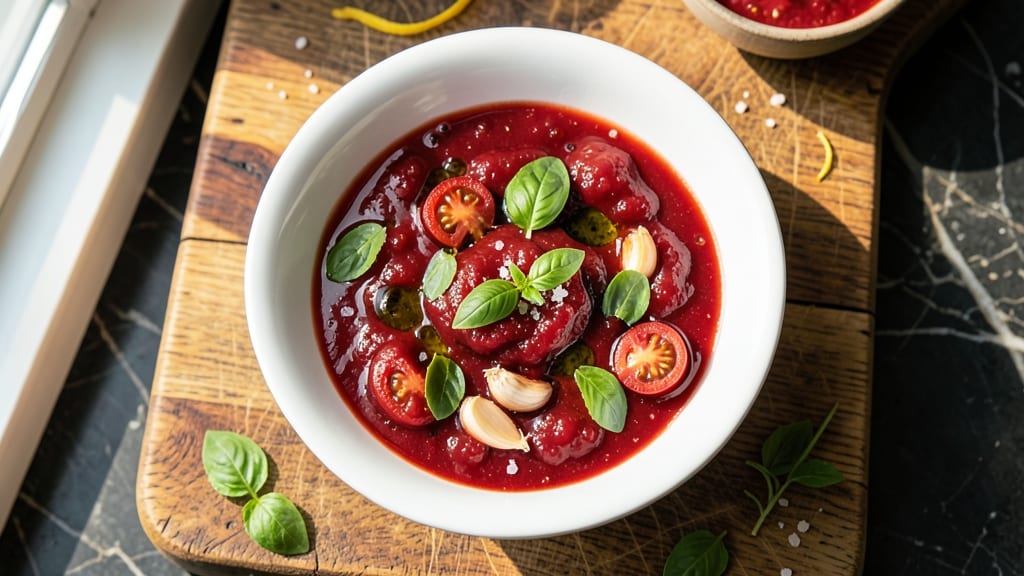
This authentic homemade pizza sauce recipe transforms simple ingredients into a velvety, umami-rich sauce with no clumps or aftertaste. The secret lies in simmering fresh tomatoes with garlic and herbs—no canned shortcuts, just deep, restaurant-quality flavor built from scratch.
I developed this after years of testing, and it’s now my go-to for Neapolitan-style pizza that rivals any trattoria.
The key is patience: slow simmering breaks down the tomatoes into a smooth, concentrated sauce while preserving bright acidity. A touch of sugar balances the acid, and olive oil adds richness without heaviness.
This sauce keeps for weeks in the fridge, making it perfect for meal prep or gifting. No blender required—just a pot, a wooden spoon, and time.
What sets this apart is the texture: silky yet vibrant, with layers of garlic and basil that sing when baked under cheese. It’s the foundation of perfect pizza—whether you’re making a classic Margherita or a loaded meat-lover’s pie.
The sauce thickens beautifully when baked, creating that glossy, caramelized crust we all crave.
For extra depth, add a splash of red wine or a pinch of smoked paprika. Store in airtight containers for up to 3 months. Here’s how to make it—step by step—without a single clump in sight.
Ingredients for authentic homemade pizza sauce
Eight simple ingredients for sauce that rivals any trattoria's—no canned shortcuts here.
| Ingredient | Amount | Notes |
|---|---|---|
| Fresh Roma Tomatoes 🍅 | 1 ½ lb | Ripe but firm, cored and quartered |
| Garlic Cloves 🧄 | 4 cloves | Peeled and lightly crushed |
| Extra-Virgin Olive Oil 🫒 | ½ cup | High-quality, fruity variety |
| Fresh Basil Leaves 🌿 | ¼ cup | Packed, stems removed |
| Granulated Sugar 🍚 | 1 tbsp | Balances acidity perfectly |
| Salt 🧂 | 1 ½ tsp | Diamond Crystal kosher salt |
| Black Pepper 🌶️ | ½ tsp | Freshly ground for warmth |
| Red Wine Vinegar 🍷 | 1 tbsp | Brightens the sauce |
| Dried Oregano 🍃 | 1 tsp | Mediterranean variety preferred |
The tomatoes are everything. Roma tomatoes are ideal—their meaty texture breaks down beautifully without turning watery. I grab mine from Trader Joe's when they're in season, but any vine-ripened variety works. Skip the canned stuff—even the fancy ones can't match fresh. For the garlic, peel and crush the cloves slightly before adding to the pot—this releases more flavor without burning. The olive oil? Use the good stuff—none of that cheap vegetable oil nonsense. A quick sniff test: if your olive oil smells like nothing, toss it. Fresh basil is a must, but if you're short, dried oregano at half the amount gets you close.
No fresh basil? Dried oregano at half the amount works in a pinch, but honestly, your pizza will taste it. Short on red wine vinegar? Lemon juice at the same amount brightens things up. The sugar might seem odd, but it's key—it balances the acidity and prevents the sauce from being too sharp. Want extra depth? Add a splash of red wine (about 2 tbsp) with the vinegar. For a smoky twist, swap half the oregano for smoked paprika. The sauce thickens as it cools, so don't worry if it looks thin at first—it'll come together.
This sauce gets better with time. Store in airtight containers in the fridge for up to 3 months—the flavors meld beautifully. For meal prep, portion into ice cube trays and freeze. Each cube makes a perfect single serving for personal pizzas. Reheat gently on the stove with a splash of water to loosen it up. And trust me, the first time you use this on a homemade pizza? You'll never buy jarred sauce again.
Why You'll Love This Recipe
- No Chopping Nightmare: I swear, this sauce takes five minutes of prep—just crush the tomatoes by hand (or pulse them briefly) and minced garlic. That’s it. No peeling, no dicing, no stress. The basil comes in whole leaves, so you can tear them fresh right before serving.
- Taste Like Nonna’s: The sugar isn’t just for sweetness—it cuts the acidity so the tomatoes sing without overpowering. Fresh basil, torn in at the end, adds that bright, herby punch that jarred sauce just can’t match. Honestly? It’s the kind of flavor that makes you pause mid-bite.
- Pantry Stash Hero: Make a big batch and freeze it in ice cube trays—each cube is a perfect pizza sauce portion. Thaw what you need, toss it on dough, and boom. Works for weeknight dinners, game days, or when your kid’s soccer team shows up hungry. No last-minute store runs.
- Budget-Friendly Luxury: Fresh tomatoes and basil might sound fancy, but they’re cheaper than jars of sauce and way better. A few cloves of garlic and a splash of olive oil stretch this into enough for multiple pizzas. Between us? This is the only sauce I buy now—it pays for itself in one use.
Step-by-step instructions for authentic homemade pizza sauce
Here's how to craft a rich, clump-free sauce with deep Italian flavor and perfect balance.
Roast Tomatoes for Concentrated Flavor
Preheat your oven to 425°F and line a baking sheet with parchment paper. Arrange the 1.5 lb Fresh Roma Tomatoes (cored and quartered) cut-side up on the sheet, leaving space between each piece. Drizzle lightly with 1 tablespoon of the 0.5 cup Extra-Virgin Olive Oil and sprinkle with 0.5 teaspoon of the 1.5 tsp Salt.
Roast for 25-30 minutes until the tomatoes collapse slightly and develop deep caramelized spots. You'll know they're ready when they smell intensely sweet and fragrant. This roasting step develops concentrated tomato flavor and removes excess water that would make your sauce watery.
Blend Roasted Tomatoes with Aromatics
Transfer the roasted tomatoes to a blender or food processor. Add the 4 cloves Garlic Cloves (lightly crushed), 1 tbsp Granulated Sugar, 1 tbsp Red Wine Vinegar, and 1 tsp Dried Oregano. Pulse until the mixture is completely smooth, scraping down the sides as needed. This blend creates the foundation for your sauce's rich, balanced flavor profile.
Taste the mixture at this stage—it should be tangy with a touch of sweetness. If it needs more acidity, add another ½ teaspoon of red wine vinegar. The sugar helps balance the natural acidity of the tomatoes while enhancing their sweetness, which is essential for authentic Italian pizza sauce.
Simmer the Sauce to Develop Depth
Pour the blended mixture into a medium saucepan and stir in the remaining 0.3 cup Extra-Virgin Olive Oil (reserving 2 tablespoons for finishing). Place the pan over medium-low heat and bring to a gentle simmer. Here's the thing—you want to see small bubbles forming at the edges but not a vigorous boil.
Simmer uncovered for 15-20 minutes, stirring occasionally, until the sauce thickens enough to coat the back of a spoon. You're looking for a consistency that's smooth but not gluey—it should cling to the spoon but still flow easily. This slow simmering process develops the sauce's umami depth and allows the flavors to meld perfectly.
Finish with Fresh Basil and Seasoning
Remove the pan from heat and stir in the 0.25 cup Fresh Basil Leaves (stems removed) and the remaining 1 teaspoon of the 1.5 tsp Salt and 0.5 tsp Black Pepper. Let the sauce sit off the heat for 5 minutes to allow the basil to infuse its fresh aroma. The basil should be added at the end to preserve its bright, fresh flavor rather than letting it cook down.
Taste and adjust seasoning if needed—you might want to add a pinch more salt or a splash of red wine vinegar to achieve perfect balance. The sauce should be tangy, slightly sweet, and deeply flavorful with no bitterness. If it's too thick, whisk in 1-2 tablespoons of water to reach your desired consistency for spreading.
Cool and Store for Perfect Pizza Sauce
Let the sauce cool to room temperature, then transfer it to an airtight container. The sauce will continue to thicken as it cools, so don't be alarmed if it appears slightly thicker than you'd like for immediate use. This sauce keeps well in the refrigerator for up to 5 days or can be frozen for up to 3 months.
When ready to use, give the sauce a quick stir and adjust the consistency with a splash of water if needed. The authentic Italian technique of roasting tomatoes and slow simmering creates a sauce that's rich in flavor but never clumpy or overly sweet. This is the secret to pizza sauce that rivals any you'd find in an Italian trattoria.
Pro Tips For Making Authentic Homemade Pizza Sauce
- SIMMER LOW AND LONG: After burning three batches of sauce, I finally realized—this isn’t a race. Simmer those Roma tomatoes on medium-low for at least 20 minutes, uncovered. The acidity mellows, the flavors deepen, and you won’t end up with a bitter, watery mess. (Yes, even if you’re impatient like me.)
- PEEL AND CHOP GARLIC FAST: Skip the slow, clunky peeling—smash those garlic cloves with the flat side of your knife first, then slice. You’ll save 5 minutes and avoid the frustration of stubborn skins. And for God’s sake, don’t burn it: cook the garlic in olive oil just until fragrant (about 30 seconds), or it’ll turn to ash.
- SALT THE TOMATOES FIRST: Toss your chopped Roma tomatoes with a generous pinch of salt (about ½ teaspoon) before cooking. It draws out moisture, softens them faster, and prevents a watery sauce later. I learned this the hard way—skipping it means staring at a pool of tomato juice instead of a thick, glossy sauce.
- ADD BASIL AT THE END: Tear fresh basil leaves and stir them in only during the last 2 minutes of cooking. Any earlier, and the heat kills their bright flavor. (Pro move: If you’re prepping ahead, store the basil separately and add it fresh when reheating.) The sauce will look prettier too—no floating basil graveyard.
Perfect pairings for authentic homemade pizza sauce
Classic Neapolitan Pairings
This sauce shines brightest with a Margherita pizza—simple yet iconic. Spread a thin layer (about 2 tablespoons) over a 12-inch dough ball, then top with 8 oz fresh mozzarella (cut into large chunks) and 6-8 fresh basil leaves.
The sauce's acidity cuts through the creamy cheese while the basil's aroma mirrors what's in the sauce itself. 🍕
Meat Lover's Upgrade
For a loaded meat-lover's pizza, combine this sauce with ½ lb Italian sausage (crumbled and browned) and ½ cup pepperoni slices. The sauce's umami depth complements the smoky, spicy notes of the meats.
I like to add ¼ cup grated Parmigiano-Reggiano after baking for extra richness. The sauce's balance prevents the meat flavors from overwhelming the dish.
White Pizza Contrast
Try this sauce on a white pizza for a surprising twist. Replace tomato sauce with a thin layer of this pizza sauce (about 1 tablespoon) mixed with ¼ cup ricotta cheese.
Top with 8 oz fontina cheese, ¼ cup caramelized onions, and a sprinkle of fresh arugula after baking. The sauce's acidity brightens the creamy cheese while adding depth that plain ricotta lacks.
Breakfast Pizza Twist
Use this sauce as the base for a breakfast pizza by spreading it thin on a pre-made pizza crust. Top with 2 eggs (fried sunny-side-up), ¼ cup shredded mozzarella, 2 slices cooked bacon, and 1 tablespoon hot honey.
The sauce's sweet-tangy profile balances the richness of eggs and bacon perfectly. Serve with a side of sourdough toast for dipping.
Sauce for Pasta
Don't limit this sauce to pizza! Toss 8 oz spaghetti with 2 tablespoons olive oil and ¼ cup reserved pasta water, then stir in ½ cup pizza sauce. Add 1 clove minced garlic and 2 tbsp chopped basil for a quick aglio e olio with depth.
The sauce's balance makes it perfect for pasta without needing heavy cream or butter.
Burger Sauce Hack
Use this sauce as a burger sauce by thinning it with 2 tablespoons mayonnaise and 1 teaspoon Dijon mustard. Spread on 4 oz beef patties before grilling, then serve on a toasted brioche bun with lettuce, tomato, and pickles.
The sauce's acidity prevents the burger from tasting too greasy, while the garlic and basil add complexity that store-bought condiments miss. 🌟
Nutrition facts
Frequently asked questions
Why does your recipe use sugar in pizza sauce?
The 1 tbsp sugar balances the natural acidity of tomatoes, preventing a harsh tang. Italian pizza sauce should be slightly sweet to complement the cheese and crust. It's a traditional technique—even Neapolitan sauces use a touch to enhance flavor without overpowering.
Can I make this sauce without a blender?
After roasting, simply press the tomatoes through a fine-mesh sieve or food mill. For extra smoothness, mash with a fork first. The texture will be slightly rustic but still delicious—perfect for rustic-style pizzas.
How do I prevent my homemade sauce from being too thick?
If your sauce thickens too much during simmering, whisk in 1-2 tbsp water or reserved pasta water. For immediate use, spread a thin layer on pizza—it'll thin slightly when baked. The sauce naturally thickens more as it cools, so adjust while warm.
What's the best way to store leftover sauce?
Transfer to airtight containers and refrigerate for up to 5 days. For longer storage, freeze in ice cube trays (each cube = 1 pizza serving). Thaw overnight in the fridge and stir in a splash of water if needed. The sauce actually improves with time!
Can I use canned tomatoes instead of fresh?
While not traditional, you can substitute 1 (28 oz) can crushed tomatoes for the fresh ones. Skip roasting and add 1 tbsp tomato paste to concentrate the flavor. Simmer longer (25-30 minutes) to develop depth. The texture will be slightly thinner but still delicious.