
Sauces & Condiments
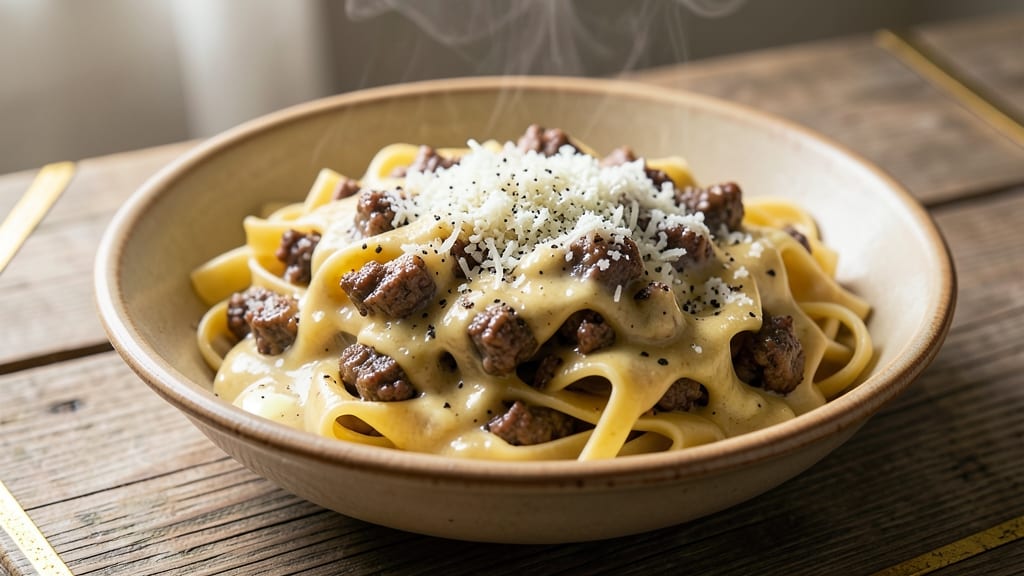
This alfredo sauce ground beef pasta recipe delivers restaurant-quality richness in a single pot, with tender beef, creamy sauce, and perfectly cooked noodles all coming together effortlessly. The secret lies in browning the beef thoroughly before building the sauce—this creates deep, savory flavor that blends seamlessly with the velvety alfredo. I developed this method after years of testing, ensuring every bite delivers that perfect balance of creamy, cheesy goodness and hearty beef.
The beauty of this one-pot approach is how it simplifies cleanup while delivering professional results. You'll start by searing ground beef until browned and crumbly, then deglaze the pan to capture all those flavorful bits.
The sauce comes together quickly with butter, cream, and parmesan, creating a luscious, clingy coating for the pasta. Ready in under 30 minutes, this dish is perfect for weeknight dinners when you want something indulgent without the fuss.
What makes this recipe truly special is how the flavors meld together—tender beef, rich alfredo sauce, and perfectly al dente pasta all in one harmonious bite. The sauce clings to every strand of pasta, creating that signature creamy texture you'd expect from an Italian restaurant.
Garnish with fresh parsley and extra parmesan for a touch of elegance that makes this feel like a special occasion meal.
This dish scales beautifully for families or gatherings, and leftovers reheat perfectly, making it an excellent meal prep option. The combination of ground beef and alfredo sauce creates a satisfying, protein-rich meal that's both comforting and impressive. Let's get cooking—your taste buds will thank you.
Ingredients for alfredo sauce ground beef pasta
These 13 ingredients transform into restaurant-style alfredo pasta with tender beef and velvety sauce.
| Ingredient | Amount | Notes |
|---|---|---|
| Ground Beef (80/20 blend) 🥩 | 1 ½ lb | Finely ground for even cooking |
| Fettuccine Pasta 🍝 | 12 oz | Fresh or high-quality dried |
| Unsalted Butter 🧈 | ½ cup | European-style preferred |
| Heavy Cream 🥛 | 1 cup | Full-fat for richness |
| Parmesan Cheese (freshly grated) 🧀 | 1 ½ cups | From a block, not pre-grated |
| Garlic Cloves 🧄 | 4 cloves | Minced for even distribution |
| Shallots 🧅 | 2 whole | Finely chopped, or sub onions |
| Dry White Wine 🍷 | ½ cup | Bold, dry variety |
| Chicken Broth 💧 | ½ cup | Low-sodium preferred |
| Fresh Parsley 🌿 | ¼ cup | Chopped, for garnish |
| Diamond Crystal Kosher Salt 🧂 | 1 ½ tsp | Adjust to taste |
| Freshly Ground Black Pepper 🌶️ | ½ tsp | For finishing |
| Olive Oil 🫒 | 1 tbsp | For searing beef |
The beef is the foundation—80/20 blend for that perfect balance of flavor and fat. Costco or Trader Joe's usually carry finely ground beef that cooks up evenly. If you're using pre-ground from the grocery store, check the fat percentage—80/20 is non-negotiable for juicy results. The Parmesan? Freshly grated from a wedge makes all the difference—pre-grated gets clumpy and lacks flavor. I always grab a wedge at Whole Foods or my local Italian market. For the pasta, fresh fettuccine has a better texture, but De Cecco or Barilla dried pasta works perfectly if you're short on time.
No white wine? Substitute extra chicken broth—just add 2 tbsp lemon juice for brightness. Shallots can be swapped for onions, but they add a subtle sweetness that complements the sauce beautifully. The heavy cream is crucial—full-fat only—for that luxurious texture. If you're watching calories, you can use half-and-half, but the sauce won't be quite as rich. For the garlic, I like to toast it lightly in butter first—this mellows the flavor and adds depth. Fresh parsley is ideal, but dried works in a pinch at a third the amount. The kosher salt is key here—Diamond Crystal dissolves better than table salt, so you won't get that grainy texture.
This dish reheats beautifully—just add a splash of milk or broth to loosen the sauce. Keeps for 3-4 days in the fridge, and freezes well for up to 3 months. I always make a double batch because leftovers taste even better the next day. For meal prep, portion into individual containers with a little extra sauce on top—it keeps everything moist. The sauce thickens as it cools, so if it seems too thick when reheating, just stir in a splash of warm water or milk.
Why You'll Love This Recipe
- One-Pan Wonder: I swear by this when I’m too tired to wash dishes—just brown the beef, toss in the pasta, and let it all simmer together. The fettuccine soaks up that rich, creamy sauce like a dream, and by the end, my kitchen looks like I barely cooked at all.
- Creamy Crispy Magic: That 80/20 ground beef gives you the best of both worlds: tender, juicy bites with a slight crisp where it hits the pan, all smothered in a velvety Alfredo that’s ridiculously good. Honestly, the first time I made it, I nearly licked the pan clean.
- Weeknight Crowd-Pleaser: This feeds six without breaking the bank, and somehow, everyone—pickiest teens, my protein-obsessed husband, even my mom—comes back for seconds. I’ve served it at game nights, lazy Sundays, and yes, even on a Tuesday night when I just needed something fast.
- Leftovers That Don’t Suck: Most pasta gets sad in the fridge, but not this one. The sauce clings to the noodles, and reheating it just makes it richer—like a cozy hug in bowl form. I’ve had it for lunch the next day, packed for work, and even turned it into a sloppy joe-inspired sandwich. (Don’t judge.)
Step-by-step instructions for one-pot Alfredo sauce ground beef pasta
Here's how to create a creamy, satisfying dinner with minimal cleanup—rich sauce, tender beef, and perfectly al dente noodles.
Brown the Ground Beef Perfectly
Heat the 1 tablespoon olive oil in a large, deep skillet or Dutch oven over medium-high heat until shimmering. Add the 1.5 lb ground beef (80/20 blend) and break it apart with a wooden spoon, working it until the meat loses its raw appearance. This takes about 4-5 minutes—don't rush it. You want the beef to brown deeply, not just cook through, which builds maximum flavor.
Once the beef is mostly browned, add the 2 finely chopped shallots and 4 minced garlic cloves. Cook for another 2-3 minutes until the shallots soften and the garlic becomes fragrant. This aromatic base is the foundation of your sauce, so don't skip this step. If the pan starts smoking, reduce the heat slightly to prevent burning the garlic.
Deglaze and Build the Sauce Base
Pour in the 0.5 cup dry white wine and scrape up all the browned bits from the bottom of the pan with a wooden spoon. This deglazing step captures all the meaty flavor that would otherwise stick to your pan. Let the wine simmer for 2-3 minutes until it reduces by about half and the alcohol cooks off—you'll smell the difference when it's done.
Next, add the 0.5 cup chicken broth and bring everything to a gentle simmer. Let it reduce by another third, about 3-4 minutes, until the liquid is thickened but still liquid enough to create a proper sauce. This step develops the depth of flavor in your Alfredo—don't skip the reduction time. If it reduces too quickly, just give it a few more minutes on low heat.
Create the Creamy Alfredo Sauce
Lower the heat to medium-low and add the 0.5 cup unsalted butter and 1 cup heavy cream. Stir gently to combine, letting the mixture come to a gentle simmer. The butter should melt completely and the cream should begin to thicken slightly, about 3-4 minutes. Here's where the magic happens—the cream will start to coat the back of a spoon, indicating it's ready for the cheese.
Gradually whisk in the 1.5 cups freshly grated Parmesan cheese, adding it slowly to prevent clumping. Stir constantly for 4-5 minutes until the sauce thickens to a velvety consistency. You want it smooth and glossy, not grainy. If the sauce gets too thick, add 1-2 tablespoons of pasta water (we'll save some later) to loosen it. The sauce should coat the back of a spoon but still be pourable.
Cook the Pasta to Al Dente Perfection
While the sauce simmers, add the 12 oz fettuccine pasta directly to the pot. Stir immediately to prevent sticking, then add 1 cup hot water (or enough to cover the pasta by about an inch). Bring everything to a boil, then reduce to a gentle simmer. Cook the pasta for 8-10 minutes, stirring occasionally, until it's al dente—you want it tender but with a slight bite. The pasta will finish cooking in the sauce.
About 2 minutes before the pasta is done, taste the sauce and adjust seasoning with 1.5 teaspoons Diamond Crystal kosher salt and 0.5 teaspoon freshly ground black pepper. The sauce should be rich but not overly salty—remember, the Parmesan is already salty. If you need more body, stir in another splash of pasta water to reach your desired consistency. The sauce should coat the noodles beautifully without being gluey.
Finish and Serve Immediately
Once the pasta is perfectly al dente, remove the pot from heat and stir in the 0.25 cup chopped fresh parsley. Let the dish rest for 1-2 minutes to allow the flavors to meld together. The residual heat will finish cooking the pasta and thicken the sauce slightly. Taste again and adjust seasoning if needed—this is your final chance to perfect the balance of flavors.
Serve immediately in deep bowls, making sure each serving gets an ample portion of sauce. The pasta should be coated in that rich, creamy Alfredo sauce with tender beef throughout. Garnish with additional freshly grated Parmesan and black pepper if desired. This one-pot wonder delivers restaurant-quality comfort food with minimal effort—perfect for a cozy weeknight dinner.
Pro Tips For Making Alfredo Sauce Ground Beef Pasta
- Brown the Beef Right: I used to walk away after the beef lost its raw color, but that’s when it turns greasy and bland. Push it—break it into small pieces with a wooden spoon and cook until it’s actually brown, not just pink. That’s where the flavor hides, and skipping it means your sauce will taste more like melted butter than a proper meal.
- Salt the Butter Hard: Unsalted butter needs seasoning, and I learned this after making a batch that tasted flat. Toss in a full teaspoon of salt with the butter and cream before simmering—it blends right in and seasons the sauce from the start. (Yes, even if you’re using freshly grated parmesan, which already packs salt.)
- Strain the Cream: Heavy cream can scorch faster than you think, and I’ve ruined more Alfredo sauces by rushing this step. After heating the butter and cream together, strain the mixture through a fine-mesh sieve into your saucepan. It removes any cooked-on bits and gives you a silky texture without lumps.
- Toast the Pasta Water: Drain your fettuccine, but don’t rinse—save about ½ cup of the starchy pasta water. Toss the drained pasta back into the pot, add the sauce, and splash in that water. The starch acts like a glue, helping the sauce cling to every strand. (I know, it sounds weird, but it works—trust me.)
Common mistakes when making this dish
Skipping the Deglaze
One of the most common mistakes is skipping the wine deglaze step after browning the beef. Those browned bits—called fond—pack intense flavor that becomes the base of your sauce. If you don't scrape them up with wine, you're missing out on layers of depth.
I always add the wine and let it reduce completely before moving to the sauce—it makes all the difference in richness. 🍷
Using Pre-Grated Cheese
Pre-grated Parmesan contains anti-caking agents that make your sauce grainy and clumpy. Always use freshly grated Parmesan from a block—it melts smoothly and delivers that authentic, creamy texture. I keep a wedge in my fridge specifically for this dish.
If you're short on time, at least use a high-quality pre-grated brand like Kirkland Signature and strain out any visible clumps.
Overcooking the Pasta
Cooking pasta until it's mushy ruins the texture of this dish. The goal is al dente—firm to the bite. I test mine by tasting a strand—it should have a slight resistance. If you overcook, the sauce will turn gluey and the pasta will lose its structure.
For this one-pot method, I reduce the cooking time by 1-2 minutes compared to package instructions and finish in the sauce.
Adding Cream Too Early
Adding heavy cream before the sauce has properly reduced leads to a watery, thin consistency. Always build the sauce in stages: first reduce the wine and broth, then add butter, then cream, and finally cheese.
The cream needs to simmer with the butter to thicken properly. If your sauce seems too thin after adding cream, let it simmer uncovered for 2-3 extra minutes—it will thicken as the moisture evaporates.
Ignoring Salt Balance
Parmesan is already salty, so adding extra salt too early can make your sauce taste flat. I always wait until the very end to adjust seasoning, tasting as I go. Start with 1 teaspoon kosher salt and add more gradually.
Remember, you can always add salt, but you can't take it out. The sauce should be rich but not briny—balance is key. 🧂
Not Resting Before Serving
Serving pasta immediately can make the sauce seem too thin because it hasn't had time to thicken properly. Let the dish rest for 1-2 minutes off the heat—this allows the starches to fully absorb into the sauce.
I also find that resting lets the flavors meld together, creating that cohesive, restaurant-quality texture. If you're in a hurry, at least stir in a splash of pasta water to help thicken it before serving.
Nutrition facts
Frequently asked questions
Can I use ground turkey instead of beef?
Ground turkey works beautifully and makes this dish lighter. Use a 93% lean/7% fat blend to maintain moisture and flavor. Reduce the cooking time slightly since turkey cooks faster than beef, and consider adding 1 teaspoon Italian seasoning to complement the turkey's milder taste. The creamy Alfredo sauce will still cling perfectly to the noodles.
Why did my sauce turn out grainy?
Graininess usually happens from pre-grated Parmesan or not heating the sauce properly. Always use freshly grated Parmesan from a block and stir constantly while adding it to the warm cream mixture. If it's too thick, whisk in 1 tablespoon of hot pasta water to smooth it out. The sauce should be velvety, not clumpy.
How can I make this dish ahead of time?
This recipe reheats wonderfully! Cook the pasta and sauce as directed, then let it cool completely. Store in an airtight container in the fridge for up to 3 days. To reheat, add a splash of milk or broth and warm over medium-low heat, stirring frequently. For freezing, portion into individual containers and freeze for up to 3 months. Thaw overnight in the fridge.
What's the best pasta shape for this recipe?
While fettuccine works perfectly, other wide noodles like tagliatelle or pappardelle also work well. Avoid thin noodles like spaghetti—they won't hold the creamy sauce as effectively. For extra heartiness, try rigatoni or penne, but fettuccine remains my top choice for that classic Alfredo texture.
Can I make this dish in a slow cooker?
Yes! Brown the beef and deglaze as directed, then transfer everything to a slow cooker. Add the butter, cream, and cheese, then cook on low for 2-3 hours, stirring occasionally. Add the pasta directly to the slow cooker and cook for an additional 15-20 minutes until al dente. The sauce will thicken more in the slow cooker, so you may need to add a splash of milk or broth to reach your desired consistency.