
Sauces & Condiments
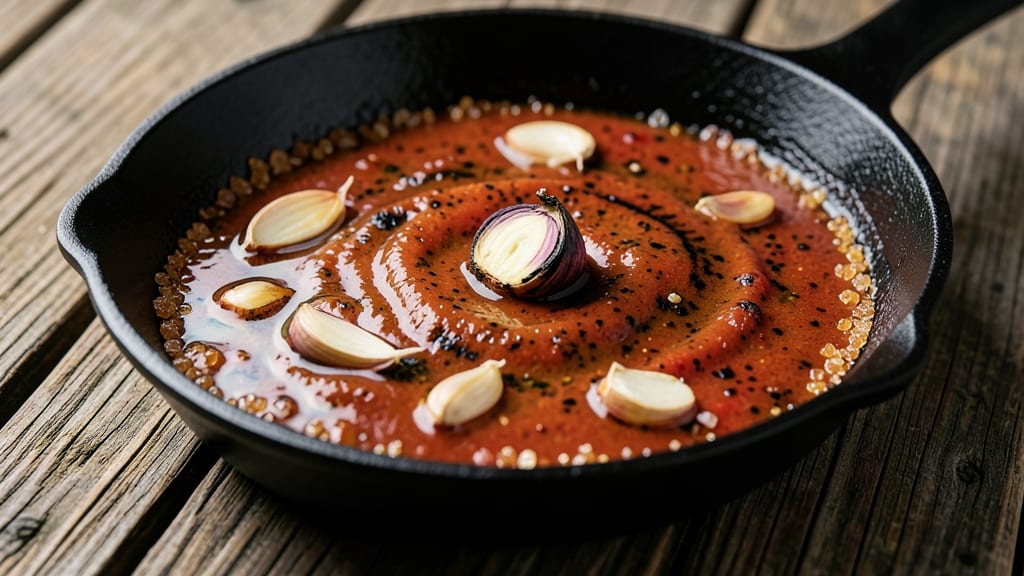
This African BBQ sauce recipe transforms your grill into a flavor gateway—where smoky tomato heat meets the earthy punch of berbere spice. 🔥 I developed it after years of blending African spices with my pitmaster techniques, creating a sauce that's bold enough for ribs but versatile enough to elevate chicken, fish, or even veggies.
The key lies in balancing sweetness, acidity, and that signature African spice complexity without overpowering the meat's natural flavor.
The foundation starts with tomato paste and vinegar for that classic BBQ tang, but it's the berbere spice blend that makes this sauce truly special. This North African chili mixture brings layers of warmth and depth that traditional American BBQ sauces simply can't match.
We'll build the sauce slowly on the stove, letting the spices bloom and meld before blending it to a smooth, glossy consistency that clings beautifully to whatever you're cooking.
What you'll end up with is a sauce that's equally at home on smoky ribs, grilled chicken, or as a marinade for fish. The perfect balance of sweet, spicy, and tangy creates a complex flavor profile that lingers long after the last bite.
It's the kind of sauce that transforms ordinary meals into something extraordinary—with just a few simple ingredients and a little patience.
Best of all, this sauce keeps beautifully in the refrigerator for up to two weeks, so you can make a big batch and have it ready whenever the craving strikes.
Whether you're hosting a backyard cookout or just want to add some serious flavor to your weeknight meals, this African BBQ sauce is your secret weapon. Let's get started on creating something truly special.
Ingredients for african bbq sauce
Nine ingredients, bold flavors—this sauce turns ordinary grilling into something extraordinary.
| Ingredient | Amount | Notes |
|---|---|---|
| Tomato Paste 🍅 | ½ cup | High-quality, no sugar added |
| Apple Cider Vinegar 🍏 | ½ cup | For tangy depth |
| Brown Sugar 🍚 | ½ cup | Light or dark preferred |
| Berbere Spice Blend 🌶️ | 2 tbsp | Authentic African blend (or homemade) |
| Smoked Paprika 🌶️ | 1 tbsp | For smoky richness |
| Garlic Cloves 🧄 | 4 cloves | Freshly minced |
| Ginger Root 🌿 | 1 tbsp | Freshly grated |
| Extra-Virgin Olive Oil 🫒 | ¼ cup | For smooth texture |
| Ground Black Pepper 🌶️ | ½ tsp | Freshly cracked |
| Salt 🧂 | 1 tsp | Kosher or sea salt |
The berbere spice blend is the heart of this sauce, so don't cut corners. Look for authentic African berbere at specialty stores or online—brands like Spicewalla or African & Caribbean Foods Market carry the real deal. If you can't find it, mix your own with chili peppers, fenugreek, coriander, and cardamom. The tomato paste should be high-quality; Muir Glen or Barilla are my go-tos. Fresh ginger and garlic make all the difference here—skip the jarred stuff. For the vinegar, apple cider adds complexity, but balsamic works in a pinch if that's what you've got.
No berbere? Mix 1 tsp each smoked paprika, cayenne, and coriander for a quick substitute. Brown sugar can be swapped for maple syrup or honey (though honey isn't vegan). If you're short on olive oil, avocado oil keeps the same smooth finish. The sauce needs to simmer for 20 minutes—don't rush this part. The flavors develop slowly, and that's what makes it special. For extra depth, add a 1/4 cup of chicken or vegetable broth if the sauce gets too thick while cooking.
This sauce tastes even better the next day as the flavors meld. Store it in an airtight jar in the fridge for up to 2 weeks. For longer storage, freeze in ice cube trays—perfect for single-use portions. The berbere blend loses potency over time, so if you're not using the whole jar within a month, transfer it to a dark glass container to preserve freshness. A little goes a long way—2 tbsp per pound of meat is ideal. It works on everything from ribs to grilled fish, so make a big batch and keep it handy.
Why You'll Love This Recipe
- Pantry Magic: I swear by this sauce because it uses stuff I already have—no special trips to the store. That jar of tomato paste and bottle of apple cider vinegar? Instant upgrade. The berbere spice blend (find it at African markets or online) adds depth without extra effort, and the smoked paprika gives it that smoky kick that takes seconds to stir in.
- Sweet Heat Balance: Here’s what sold me—the brown sugar and berbere blend create this perfect push-and-pull of sweetness and spice that lingers. It’s not just sweet or just spicy; it’s that just-right moment where you take another bite because you know the next one will hit different. (Yes, even on a Tuesday night.)
- Grill or Bowl Buddy: This sauce isn’t just for grilling—it’s my go-to for glazing chicken thighs, drizzling over roasted sweet potatoes, or even mixing into a quick weeknight stew. Honestly, I’ve used it in everything from breakfast hash to slow-cooker pulled pork, and it never lets me down.
- Leftovers That Work Harder: Make a big batch—it keeps for weeks in the fridge—and the flavor only gets better. I’ll be real: I’ve had this sauce sit in my fridge for three weeks, and when I finally use it, it’s still bold and rich. Plus, it’s cheap to make; a little goes a long way, so you’re not wasting money on single-use bottles.
Step-by-step instructions for African BBQ sauce
Here's how to balance smoky heat with sweet complexity using just 10 ingredients.
🍳 Step 1: Bloom the Berbere and Paprika
Heat the 0.25 cup extra-virgin olive oil in a medium saucepan over medium-low heat. Add the 2 tablespoons berbere spice blend and 1 tablespoon smoked paprika, stirring constantly for 1-2 minutes until fragrant and the spices release their deep red oils.
This step is where the magic happens—the spices toast gently, releasing their aromatic compounds without burning. You'll see the mixture darken slightly and smell that unmistakable African warmth. Keep the heat low here; berbere burns quickly and loses its complexity.
🍳 Step 2: Add Aromatics and Brown Sugar
Immediately add the 4 minced garlic cloves, 1 tablespoon grated ginger root, and 0.5 cup brown sugar. Cook for 2-3 minutes, stirring frequently, until the garlic turns golden and the sugar begins to dissolve into the oil.
The ginger and garlic should soften but not brown—you want them to contribute flavor without bitterness. Here's where the sauce starts building its sweet-spicy foundation. If the sugar clumps, stir more vigorously to break it up completely. This ensures even distribution throughout the sauce.
🍳 Step 3: Incorporate Acid and Tomato Base
Pour in the 0.5 cup apple cider vinegar and 0.5 cup tomato paste, stirring constantly. The mixture will bubble vigorously as the acid reacts with the sugars. Let it simmer for 5-7 minutes until thickened slightly and the raw tomato flavor mellows.
This is the moment that matters: the acid cuts through the sweetness while the tomato paste develops its rich, umami depth. You'll see the sauce darken and thicken as the vinegar cooks off. If it gets too thick before the time is up, add 1-2 tablespoons water to maintain proper consistency.
🥘 Step 4: Season and Simmer
Add the 1 teaspoon salt and 0.5 teaspoon ground black pepper, then reduce heat to low. Let the sauce simmer uncovered for 15-20 minutes, stirring occasionally, until it reduces by about 25% and coats the back of a spoon.
The sauce should be glossy with a thick, syrupy consistency—almost like a concentrated paste. This simmering time is crucial for developing the sauce's complex flavor profile. Taste occasionally and adjust seasoning if needed; you might need a touch more salt or vinegar to balance the sweetness.
⏰ Step 5: Cool and Rest
Remove from heat and let cool completely at room temperature for 30 minutes. This resting period allows the flavors to meld and the sauce to thicken further. Once cooled, transfer to a clean jar and store in the refrigerator for up to 2 weeks.
I know it's tempting to use it immediately, but this resting time makes all the difference. The flavors will deepen and harmonize, giving you that perfect balance of smoky, sweet, and tangy notes. The sauce will thicken even more as it cools, so don't be surprised if it looks thicker when you're ready to use it.
Pro Tips For Making African Bbq Sauce
- Bloom the Berbere First: Toss the berbere spice blend into the oil first and let it sizzle for 30 seconds—just until you smell that deep, earthy aroma. I used to add it later and ended up with a sauce that tasted flat; the spices need time to wake up and release their heat.
- Simmer Low and Slow: Once you add the tomato paste and vinegar, reduce the heat to medium-low and let it bubble gently for at least 15 minutes. Rushing this step makes the sauce taste raw and thin; patience here means a richer, thicker finish.
- Balance the Vinegar: Start with half the vinegar called for, taste, then add the rest gradually. Apple cider vinegar is sharp, and too much can overpower the smoky depth of the paprika and berbere—especially if you’re using a strong blend.
- Toast the Sugar: Before adding the brown sugar, sprinkle it into the hot pan and let it caramelize for 1-2 minutes until it turns a deeper amber. It’s a tiny effort that makes the sauce taste less sweet and more complex—like the difference between store-bought and homemade.
Essential equipment for perfect results
Medium Saucepan
This is your workhorse for building the sauce—2-3 quart capacity is ideal for this recipe. I use my Calphalon stainless steel saucepan because it distributes heat evenly and handles the acidity of vinegar without reacting.
Avoid non-stick pans for simmering sauces; they can't handle the prolonged heat needed to develop the berbere flavors properly. 🥘
Immersion Blender
While this recipe doesn't require blending (the sauce is perfect as-is), an immersion blender like the Ninja Foodi comes in handy if you prefer ultra-smooth texture. If you're using one, blend the sauce for 10-15 seconds after simmering to break up any thick bits.
For a rustic finish, skip blending entirely—the natural texture adds depth.
Fine-Mesh Strainer
A fine-mesh strainer (like the OXO Good Grips) is essential if you're using homemade berbere spice blend with seeds or stems. Strain the sauce after simmering to achieve a silky finish.
I strain mine through a cheesecloth-lined colander for the smoothest result—it catches even the finest particles while letting the rich liquid through. 🌶️
Wooden Spoon
Use a heat-resistant wooden spoon (I recommend Oxo Good Grips) for stirring during simmering. Wood prevents scratching your saucepan and gently folds ingredients without scraping the bottom. Avoid metal spoons—they can react with the acidity and leave a metallic taste. A long-handled spoon also helps with even heat distribution.
Measuring Spoons
Precision matters with spices like berbere and smoked paprika. Invest in stainless steel measuring spoons (like Weston) for accurate measurements. The difference between 1 tablespoon and 2 teaspoons can drastically alter the sauce's heat level. I keep my measuring spoons near the stove for quick adjustments during cooking.
Glass Storage Jar
For long-term storage, transfer the cooled sauce to a dark amber glass jar (like Ball Mason jars). The amber glass blocks light, preserving the berbere's potency and preventing flavor degradation.
Label the jar with the date—this sauce tastes best within 2 weeks but keeps for up to 3 months in the fridge if stored properly. 💡
Nutrition facts
Frequently asked questions
Can I substitute berbere spice blend if I can't find it?
Mix 1 teaspoon smoked paprika, 1/2 teaspoon cayenne pepper, 1/2 teaspoon ground coriander, and 1/4 teaspoon ground cardamom for a quick homemade version. For extra depth, add 1/4 teaspoon fenugreek—it's the secret ingredient in traditional berbere. The blend should be about 2 tablespoons total to match the recipe.
How spicy is this African BBQ sauce?
The berbere spice blend provides moderate heat—think medium on the Scoville scale, similar to a jalapeño. For milder heat, reduce the berbere to 1.5 tablespoons and add 1/2 teaspoon extra brown sugar to balance. If you love spice, keep the full 2 tablespoons and add 1/4 teaspoon cayenne for extra kick. Always taste as you go!
What's the best way to use this sauce?
This versatile sauce works on grilled meats, baked chicken, or even as a marinade for fish. For ribs or brisket, brush on during the last 30 minutes of cooking. For chicken, marinate for 2-4 hours before grilling. Try it as a dipping sauce for fried plantains or grilled shrimp—the smoky-sweet balance is perfect with seafood too!
Why does the sauce need to rest before using?
The 30-minute rest lets the flavors meld and the sauce thicken naturally. This prevents a watery finish when you brush it on meat. The berbere spices also need time to fully infuse—they'll taste more complex after resting. Pro tip: Store leftovers in the fridge for 24 hours before using; the flavors develop even more overnight!
Can I make this sauce without vinegar?
While vinegar adds tangy depth, you can substitute with 1/4 cup lemon juice or 1/4 cup orange juice for a fruitier profile. For a richer sauce, use 1/4 cup red wine instead. Just reduce the simmer time to 10-12 minutes—fruit-based acids cook off faster. The sauce will be slightly less tangy but still delicious!