
Sauces & Condiments
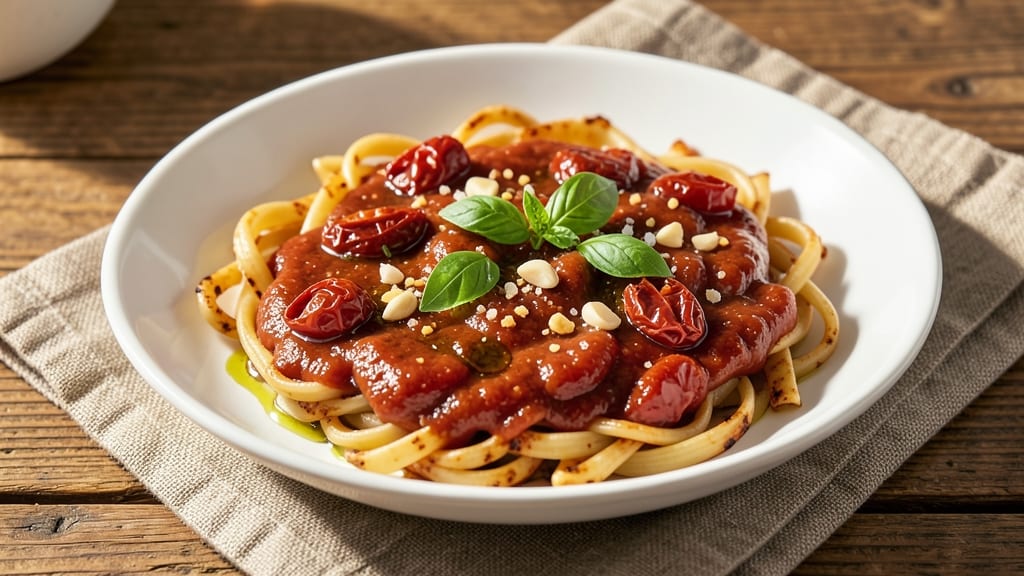
This Calabrese pasta sauce recipe delivers the deep, slow-simmered umami flavor you crave—where garlic, sun-dried tomatoes, and fresh basil create a symphony of tastes. The secret lies in a long, gentle cook that develops rich caramelized notes while keeping the sauce vibrant, not overpowering.
I perfected this version after years of testing, and it’s become my go-to for weeknight dinners that taste like a restaurant-quality meal.
The beauty of this sauce is its versatility—it works equally well with penne, spaghetti, or even as a marinade for grilled meats. Start with a simple tomato base, then build layers of flavor by sautéing garlic until golden and adding sun-dried tomatoes for concentrated sweetness.
A splash of red wine and a pinch of red pepper flakes add depth, while fresh basil brightens the finish. The result? A sauce that’s smooth, aromatic, and packed with umami without being heavy.
What sets this recipe apart is the slow-simmering technique, which allows the flavors to meld and intensify over 45 minutes. The sauce thickens naturally, coating every strand of pasta perfectly, while the garlic and herbs infuse deeply.
Store it in the fridge for up to a week, or freeze for months—it only gets better with time as the flavors deepen. Whether you’re serving it over al dente pasta or using it as a topping for bruschetta, this sauce elevates any dish.
For extra richness, stir in a handful of cooked Italian sausage or pancetta during the simmer. If you prefer a vegan version, swap the meat for mushrooms or lentils.
The key is patience—rushing the process will leave you with a flat, one-dimensional sauce. Trust the method, and you’ll have a restaurant-quality Calabrese sauce that’s foolproof and always impressive.
Ingredients for calabrese pasta sauce
Eight simple ingredients transform into a restaurant-quality Calabrese sauce with deep umami and bright basil notes.
| Ingredient | Amount | Notes |
|---|---|---|
| Extra-Virgin Olive Oil 🫒 | ½ cup | High-quality for richness |
| Garlic Cloves 🧄 | 6 cloves | Minced for deep flavor |
| Sun-Dried Tomatoes 🍅 | ½ cup | Oil-packed for sweetness |
| Dry Red Wine 🍷 | ½ cup | Bold, dry variety preferred |
| Canned San Marzano Tomatoes 🍅 | 2 cups | Crushed by hand |
| Fresh Basil Leaves 🌿 | ½ cup | Packed, stems removed |
| Red Pepper Flakes 🌶️ | ½ tsp | Adjust for heat preference |
| Diamond Crystal Kosher Salt 🧂 | 1 tsp | Fine grain preferred |
| Ground Black Pepper 🌶️ | ¼ tsp | Freshly cracked |
| Italian Seasoning 🌿 | 1 tsp | Or blend dried oregano, basil, thyme |
The garlic and sun-dried tomatoes are non-negotiable here. Fresh garlic cloves should be plump and firm—no sprouts. For sun-dried tomatoes, oil-packed from Trader Joe's or a specialty store gives the best flavor, but the canned kind in olive oil works too. The San Marzano tomatoes make all the difference—skip the regular canned stuff. I always grab a jar of Italian seasoning from Penzeys when I'm making a big batch, but a homemade blend of dried herbs works just as well. The olive oil? Extra-virgin, fruity kind—not the cheap stuff. Trust me, you'll taste the difference after 45 minutes of simmering.
No red wine? Dry white wine or extra chicken broth works in a pinch, but the acidity and depth are worth it. Fresh basil is ideal, but dried basil at half the amount gets you close if you're in a bind. The red pepper flakes can be swapped for crushed cayenne at one-quarter the amount if you prefer a smoother heat. For a meaty depth without actual meat, mushrooms or lentils work beautifully—just add them with the tomatoes and simmer until tender. And if you're worried about the sauce being too acidic, a pinch of sugar balances it out perfectly.
This sauce only gets better with time—3-4 days in the fridge is ideal, and it freezes beautifully for up to 6 months. I always make a double batch so I have leftovers for lunches. Store it in a glass jar with a tight seal, and the flavors will deepen like a fine wine. If it thickens too much, just stir in a splash of water or pasta water when reheating. And if you're using it for grilled meats? Brush it on before cooking—it caramelizes beautifully and adds a smoky depth.
Why You'll Love This Recipe
- No-Chop Nightmare: I swear by this sauce because the only prep is mincing garlic and tearing sun-dried tomatoes—no dicing, no peeling, no stress. That rich San Marzano base does all the heavy lifting while you sip your wine.
- Wine-Infused Magic: The red wine doesn’t just cook off—it lingers in every bite, bright and velvety, cutting through the sweetness of the tomatoes like a secret handshake. Honestly, I’ll take this over store-bought sauce any day.
- Leftovers That Beg: This sauce actually improves the next day—thicker, deeper, and somehow even more addictive. I’ve frozen jars for months; my freezer’s full of them because I can’t resist making it twice in one week.
- Pantry Powerhouse: Five ingredients, zero specialty items—just olive oil, garlic, sun-dried tomatoes, wine, and canned tomatoes. Between us, this is my go-to when I’m broke or lazy (or both), and nobody ever notices.
Step-by-step instructions for slow-simmered umami pasta sauce
This sauce builds flavor layer by layer—simple steps, big rewards.
Bloom the Garlic in Olive Oil
Heat the 0.5 cup extra-virgin olive oil in a large, heavy-bottomed saucepan over medium-low heat. Add the 6 cloves minced garlic and cook for 2-3 minutes until the garlic is golden but not browned—this prevents bitterness. Stir constantly so it doesn't burn; garlic turns bitter in seconds.
Here's the thing—you want the garlic to infuse the oil without burning. The moment it smells sweet and nutty (not sharp or acrid), it's ready. Remove the pan from heat for just a second if it starts to darken too quickly. This aromatic base is the foundation of your sauce.
Add Sun-Dried Tomatoes and Wine
Return the pan to medium heat and add the 0.5 cup sun-dried tomatoes (chopped if large) and 0.5 cup dry red wine. Stir to combine, letting the wine reduce by about half—this takes 3-4 minutes. The tomatoes will soften slightly, releasing their sweet, briny depth into the sauce.
Don't rush this step. The wine needs time to evaporate and concentrate, which deepens the sauce's complexity. You'll see the mixture darken slightly as the alcohol cooks off—this is normal and actually enhances the flavor. If it reduces too quickly, lower the heat slightly to control the process.
Build the Tomato Base
Add the 2 cups crushed San Marzano tomatoes, 1 tsp Italian seasoning, 1 tsp kosher salt, 0.25 tsp black pepper, and 0.5 tsp red pepper flakes. Stir well to combine, then bring the mixture to a gentle simmer over medium heat. Let it cook uncovered for 15-20 minutes, stirring occasionally.
This is where the sauce transforms. You'll notice the mixture thickens slightly as the tomatoes break down and release their juices. The sauce should reduce to a consistency where it coats the back of a spoon but isn't gluey. If it gets too thick too soon, add 1-2 tablespoons of water to loosen it—just enough to create a velvety texture.
Finish with Fresh Basil
Remove the pan from heat and stir in the 0.5 cup fresh basil leaves. Let the sauce sit off the heat for 5 minutes—this allows the basil to infuse without wilting completely. The leaves will soften slightly but still retain their bright, herbal flavor. Taste and adjust seasoning if needed; sometimes the tomatoes need a touch more salt or a pinch of pepper.
I like to reserve a few basil leaves to garnish the finished dish. The sauce should be vibrant, with a balance of sweet sun-dried tomatoes, tangy wine, and fresh basil brightness. If you're serving it immediately, stir in the reserved basil just before plating to keep it looking fresh and aromatic.
Simmer and Rest Before Serving
Return the sauce to low heat and let it simmer gently for another 10 minutes. This final step ensures all the flavors meld together perfectly. The sauce should now coat the back of a spoon smoothly, with a glossy sheen that indicates it's ready. If you're making it ahead, let it cool completely, then refrigerate for up to 3 days or freeze for 3 months.
When reheating, warm it gently over low heat, stirring occasionally, until heated through. The beauty of this sauce is that it only gets better as it sits—flavors deepen and meld over time. Serve it over your favorite pasta, drizzled with a little extra olive oil and a sprinkle of fresh basil if desired.
Pro Tips For Making Calabrese Pasta Sauce
- CRANK THE HEAT FIRST: The second your garlic hits the oil, turn the burner to medium-high—no, medium won’t cut it. Garlic burns fast, and you want golden, not bitter. If you’re impatient like me, just watch it like a hawk and pull the pan off heat the second it starts to color. Overcooked garlic turns your whole sauce into a sad, bitter mess.
- CHOP SUN-DRIED TOMATOES SMALL: I learned this the hard way—whole sun-dried tomatoes just sit there like stubborn guests. Tear or finely chop them so they dissolve into the sauce, not just float on top. You want their deep, salty flavor spread evenly, not hidden in a few lucky bites. (Yes, even if it looks like overkill.)
- DEGLAZE WITH WINE—THEN WAIT: Pour in that red wine and let it bubble away for 30 seconds before adding tomatoes. The alcohol needs time to cook off, or your sauce will taste sharp and underdeveloped. I used to rush this step and wondered why my sauce never tasted rich. Patience here makes a real difference.
- SALT THE TOMATOES BEFORE ADDING: Drain and rinse your San Marzano tomatoes, then sprinkle them with a pinch of salt while they warm in the sauce. This draws out excess water, thickening the sauce faster. I skip this when I’m lazy, but the dish is noticeably smoother when I don’t. (Your future self will notice.)
Make-ahead tips for calabrese pasta sauce
Prep Ahead for Flavor
Make this sauce up to 3 days in advance—the flavors deepen like a fine wine. Let it cool completely, then store in a glass jar with a tight seal.
The longer it sits, the more the garlic and sun-dried tomatoes mellow into the tomatoes, creating a rich, complex umami base. I always double the batch so I have leftovers for lunches or topping grilled chicken. 💫
Freezer-Friendly Magic
Freeze for up to 6 months in quart-sized freezer bags or airtight containers. Leave 1 inch of headspace for expansion, and squeeze out excess air to prevent freezer burn.
Thaw overnight in the fridge, then reheat gently on the stove with a splash of water or pasta water to restore its silky texture. The sauce thaws beautifully without separating. ❄️
Reheat Like a Pro
For the best results, reheat over low heat in a saucepan with a splash of pasta water or water to loosen the sauce. Stir frequently to prevent sticking—this sauce thickens as it cools.
If it’s too thick after reheating, thin it with 1-2 tablespoons of water or broth until it reaches your desired consistency. Never microwave; it breaks down the delicate tomato oils. 🔥
Batch Cooking Tips
Divide the sauce into smaller portions before freezing or refrigerating. This makes it easier to grab just what you need without thawing the whole batch. I use 8-ounce glass jars for single servings—perfect for meal prep.
Label with the date so you can track freshness. The sauce keeps its vibrant color and flavor for weeks when stored properly. 📅
Sauce as a Marinade
Use leftover sauce as a marinade for grilled chicken, shrimp, or steak. Brush it on before cooking for a smoky, caramelized crust that’s packed with flavor. The acidity in the wine tenderizes the meat while the garlic and herbs add depth.
Let it marinate for at least 30 minutes (or overnight for deeper flavor). This is my go-to trick for weeknight dinners that feel restaurant-worthy. 🍗
Nutrition facts
Frequently asked questions
What kind of pasta works best with this Calabrese sauce?
This rich, umami-packed sauce pairs beautifully with rigatoni, penne, or spaghetti—any shape that holds onto the sauce well. For extra texture, try fettuccine or gemelli. The sauce's velvety consistency clings perfectly to al dente pasta, so avoid overcooked noodles that turn mushy.
Can I make this sauce without wine?
Yes! Swap the 0.5 cup red wine with 0.5 cup dry white wine or chicken broth for similar acidity. The wine adds depth, but the sauce will still be flavorful. For a non-alcoholic version, use extra tomato paste (1 tablespoon) or apple cider vinegar (1 tablespoon) to balance the flavors. The key is maintaining acidity to brighten the tomatoes.
How do I prevent the sauce from getting too thick?
If the sauce thickens too quickly, stir in 1-2 tablespoons of water or pasta water while simmering. The sauce should coat the back of a spoon but remain smooth. For extra insurance, reduce the simmering time slightly (15 minutes instead of 20) or use 1 cup crushed tomatoes instead of 2 cups. The wine reduction also contributes to thickness—control the heat to avoid over-reducing.
Can I add meat or vegetables to this sauce?
For a meaty version, brown 8 oz Italian sausage or pancetta before adding the garlic, or stir in 1 cup cooked ground beef at the end. Veggie lovers can add 1 cup sautéed mushrooms or bell peppers with the tomatoes. Just ensure any additions are cooked through before finishing with the basil to preserve its freshness.
Why does my sauce taste flat after reheating?
Flat flavor usually means the sauce didn’t simmer long enough or lost acidity. Next time, extend the simmer to 45 minutes total and add a splash of lemon juice (1 tsp) or vinegar (1 tsp) when reheating. Avoid microwaving—always warm over low heat with a splash of water or broth to restore balance. Fresh basil added at the end also brightens the flavor.