
Sauces & Condiments
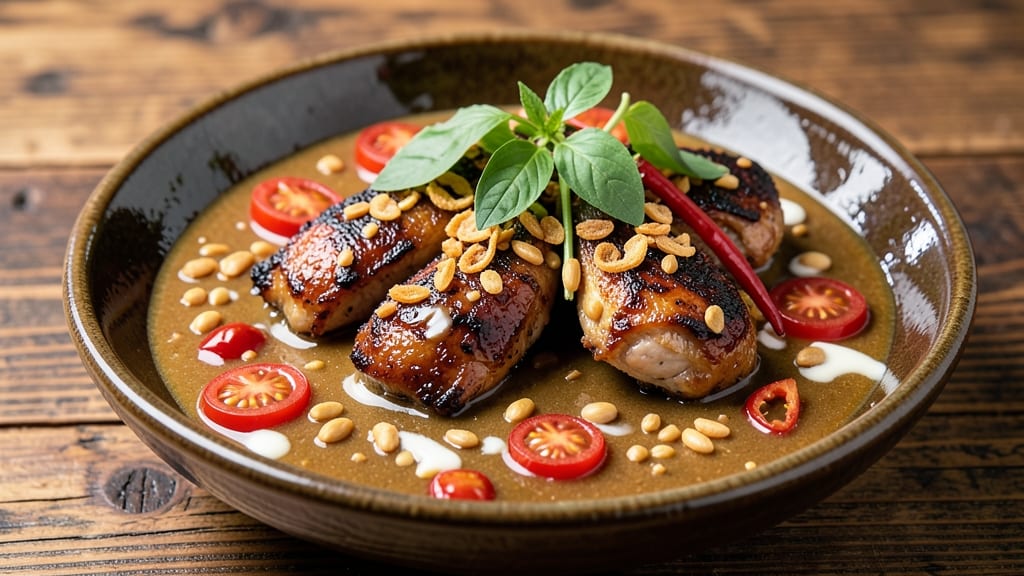
This Balinese peanut sauce recipe delivers the perfect harmony of nutty richness and tangy-sweet depth that elevates everything from satay to grilled vegetables. The secret lies in balancing toasted peanuts, fragrant coconut milk, and a touch of tamarind for that signature Indonesian brightness—without overpowering the natural peanut flavor.
I developed this version after years of testing, ensuring it's smooth yet textured, with just enough heat to wake up your taste buds.
The process begins with dry-toasting the peanuts until fragrant, then grinding them with aromatic spices like garlic, shallots, and chili for maximum depth.
Simmering the mixture with coconut milk creates a velvety base that's thick enough to cling to skewers or drizzle over bowls, yet light enough to balance rich proteins.
What sets this apart is the optional crunchy topping twist—crushed peanuts or fried shallots—adding texture that transforms it from simple sauce to showstopping condiment.
What you'll end up with is a sauce that's versatile enough for traditional satay dipping, modern stir-fries, or even as a glaze for roasted chicken. The tamarind adds a subtle tang that cuts through the richness, while the peanuts provide that unmistakable nutty punch.
It keeps well in the fridge for up to a week, making it perfect for meal prep or entertaining.
Whether you're serving up a Balinese feast or creating a fusion dish, this peanut sauce brings authentic flavor with modern adaptability. The key is patience in simmering—don't rush it—and adjusting the consistency to your preference. Let's make this sauce that'll have everyone asking for seconds.
Ingredients for balinese peanut sauce
Nine essential ingredients transform into a sauce that's nutty, tangy, and packed with texture.
| Ingredient | Amount | Notes |
|---|---|---|
| Raw Peanuts 🥜 | 1 ½ cups | Toasted until fragrant, unsalted preferred |
| Shallots 🧅 | 4 whole | Minced, not chopped too fine |
| Garlic Cloves 🧄 | 4 cloves | Minced, fresh preferred |
| Fresh Chili 🌶️ | 1 piece | Bird's eye or Thai chili, seeds removed |
| Tamarind Paste 🍈 | 2 tbsp | Or 2 tbsp tamarind concentrate |
| Coconut Milk 🥥 | 1 can | Full-fat, 13.5 oz can |
| Peanut Butter 🥜 | ½ cup | Natural, unsweetened preferred |
| Soy Sauce 🍶 | 1 tbsp | Light or dark, to taste |
| Brown Sugar 🍚 | 2 tbsp | Packed, or coconut sugar |
| Lime Juice 🍋 | 1 tbsp | Freshly squeezed |
| Crushed Peanuts 🥜 | ¼ cup | For crunchy topping (optional) |
| Vegetable Oil 🫒 | 1 tbsp | For frying shallots (optional) |
Peanuts are the star here—raw, unsalted peanuts toast up best, but roasted work in a pinch. Trader Joe's or bulk bins usually have the good stuff, though any natural peanut butter will do if you're short on time. The shallots and garlic? Fresh is non-negotiable—dried or powdered won't give that sweet, aromatic punch. For the chili, I grab Thai bird's eye peppers at the Asian market, but any small, hot chili works. Tamarind paste can be tricky to find—look for it in the international aisle or use tamarind concentrate if needed. Coconut milk? Full-fat only—it's what gives this sauce that luscious texture.
No tamarind? Lemon juice plus a pinch of sugar mimics the tang, though it won't be identical. Short on peanuts? Cashew butter works, but the flavor shifts slightly. The peanut butter should be natural—no added oils or sugars. If you're making the optional fried shallots, use a neutral oil like vegetable or avocado oil to keep the flavor clean. For the crunchy topping, toast the crushed peanuts in a dry pan until golden—they add a whole new dimension. And if you're feeling fancy, swap the brown sugar for palm sugar for a more authentic Balinese touch.
This sauce keeps beautifully—up to 1 week in the fridge, sealed tightly. The texture thickens as it cools, so thin with a splash of coconut milk if needed. For the crunchy topping, store the fried shallots or peanuts separately and add fresh before serving. Freezes well for up to 3 months—just thaw in the fridge and stir to smooth out. I always make a double batch because it disappears fast, especially when paired with grilled chicken or veggie skewers.
Why You'll Love This Recipe
- No-Fuss Pantry Magic: I swear by this sauce because it uses exactly what’s already in my cupboard—raw peanuts, shallots, and garlic—no fancy imports. The tamarind paste adds that tangy depth without needing a specialty store.
- Crunchy Creamy Balance: That first bite of toasted peanuts against the smooth, slightly spicy-sweet sauce? Honestly, it’s the kind of contrast that makes you pause mid-bite. The fresh chili brings heat, but the tamarind keeps it from being overpowering.
- Weeknight to Dinner Party: Slather it on grilled chicken for a quick weeknight meal, or drizzle it over satay skewers for guests. Between us, it’s the one sauce that feels equally at home in a takeout container or on a fancy platter.
- Budget-Friendly Stash: A small bag of peanuts and a jar of tamarind paste stretch across multiple meals—this sauce keeps for days in the fridge. I’ll be real: I’ve made it three times this month, and it’s still my go-to for adding flavor without breaking the bank.
Step-by-step instructions for Balinese peanut sauce
Here's how to make this rich, aromatic sauce that balances nutty, sweet, and spicy flavors perfectly.
Toast the Peanuts and Prepare Aromatics
Heat a dry skillet over medium heat and add the 1.5 cups raw peanuts. Toast them for 5-7 minutes, stirring constantly, until they turn a rich golden brown and release their nutty aroma. Remove from heat immediately—they'll continue cooking from residual heat, and you don't want them to burn.
While the peanuts toast, mince the 4 whole shallots and 4 cloves garlic as finely as possible using a sharp knife. Remove the seeds from the 1 piece fresh chili and slice it into thin rings. Set these aside—they'll build the aromatic base of your sauce.
Fry the Shallots and Build the Base
Add 1 tablespoon vegetable oil to the same skillet (no need to clean it—the toasted peanuts add flavor) and heat over medium heat. Add the minced shallots and cook for 3-4 minutes until they turn golden brown and caramelized. This step adds incredible depth to the sauce.
Add the minced garlic and chili slices, cooking for 30 seconds until fragrant but not browned. The garlic should smell pungent and the chili should soften slightly. Immediately pour in the 2 tablespoons tamarind paste and stir to combine. Let this mixture cook for 1 minute to meld the flavors.
Combine Wet Ingredients
Pour in the 1 can coconut milk, scraping up any browned bits from the bottom of the pan. Stir in the 0.5 cup peanut butter, 1 tablespoon soy sauce, and 2 tablespoons brown sugar. Bring the mixture to a gentle simmer over medium heat, stirring constantly for 5-7 minutes until it thickens slightly and becomes smooth.
This is where the magic happens—the peanut butter and coconut milk blend together to create a velvety texture. If the sauce looks too thick, add 1-2 tablespoons water to reach your desired consistency. Taste and adjust seasoning—you might want to add more soy sauce for saltiness or brown sugar for sweetness.
Finish with Lime and Garnish
Remove the sauce from heat and stir in the 1 tablespoon lime juice. This brightens the flavors and balances the richness. The sauce should have a perfect balance of nutty, sweet, and slightly spicy notes. If you're using the 0.25 cup crushed peanuts, sprinkle them on top now for that signature crunchy topping.
Let the sauce sit for 5 minutes before serving—this allows all the flavors to fully meld together. Serve warm over grilled meats, noodles, or vegetables. The crushed peanuts on top add texture contrast that makes this sauce truly special.
Pro Tips For Making Balinese Peanut Sauce
- TOAST PEANUTS LOW AND SLOW: I learned this the hard way—blasting them on high turns them bitter fast. Spread raw peanuts in a single layer on a dry skillet over medium-low heat, stirring every 30 seconds until they’re golden and fragrant (about 8-10 minutes). The goal is nutty aroma, not color—if they darken too quickly, you’ve overdone it.
- MINCE SHALLOTS FINELY: Skip the food processor here—you want them almost paste-like, not chopped. Use a sharp knife and work in batches if needed; the finer the texture, the smoother your sauce. I used to rush this, and the sauce always tasted grainy afterward.
- CONTROL THE TAMARIND HEAT: Tamarind paste is sour, but too much makes the sauce taste like vinegar. Start with 1 tablespoon, taste, then adjust—Balinese versions balance it with a pinch of sugar or a splash of coconut milk. Sounds weird, but it works: the sauce should be tangy, not harsh.
- SAVE TIME WITH CHILI OIL: Instead of raw chili, fry 1-2 sliced chilies in the peanut oil until crispy, then remove them. The infused oil adds heat and depth without bitterness. (Your future self will thank you—no more dealing with raw chili seeds stuck in your teeth.)
Storing and reheating this balinese peanut sauce
Fridge Storage Secrets
Store your Balinese peanut sauce in an airtight glass container—I use Pyrex with a snap-on lid—and refrigerate for up to 7 days. The sauce thickens as it cools, so stir in 1-2 tablespoons coconut milk if it becomes too stiff before serving.
Always let it cool completely before sealing to prevent condensation, which can make the sauce watery. 🥫
Freezer-Friendly Tips
For longer storage, freeze the sauce in 1-cup portions using silicone molds or ice cube trays. Transfer to a freezer bag with all air removed to prevent freezer burn.
Thaw overnight in the fridge and give it a good stir—it may separate slightly, but the texture smooths out with gentle reheating. I freeze extra batches because it disappears so fast! ❄️
Reheating Like a Pro
For stovetop reheating, warm the sauce over low heat with 1-2 tablespoons water or coconut milk to restore its silky texture. Never boil—just gently simmer for 3-5 minutes while stirring constantly.
If you're in a hurry, microwave on 50% power for 1-minute intervals, stirring between each, until heated through. The crunchy peanut topping should be added fresh after reheating. 🔥
Reviving Texture
If your refrigerated sauce has separated, whisk in 1 tablespoon warm water or coconut milk to emulsify it back together. For extra richness, add a pinch of peanut butter while reheating—it helps restore that velvety balance.
I've found that the sauce actually tastes better the second day as the flavors meld further, so don't hesitate to make extra! 💫
Crunchy Topping Care
Store the crushed peanuts or fried shallots separately in a small airtight container at room temperature. Toast fresh peanuts in a dry pan for 2-3 minutes before adding to reheated sauce for maximum crunch.
The fried shallots stay crisp for about 3 days if stored properly, but I usually make them fresh when needed for peak texture. 🥜
Meal Prep Strategy
Make a double batch and store half in the fridge for quick meals. This sauce pairs perfectly with grilled chicken skewers or steamed vegetables—just reheat and serve. For satay night, I prep the sauce ahead and keep it warm in a thermos while grilling.
The key is consistency: always adjust thickness with coconut milk before storing to maintain that perfect dipping texture. ✨
Nutrition facts
Frequently asked questions
Can I make this sauce without tamarind paste?
For a similar tangy flavor, mix 1 tablespoon lemon juice with 1 teaspoon sugar to mimic tamarind's brightness. The sauce will taste slightly different but still delicious. If you're feeling adventurous, try 1/2 teaspoon vinegar (rice or apple cider) for a deeper umami note.
How spicy should the sauce be?
The recipe uses just 1 small chili for mild heat, but you can adjust to taste. For more kick, add 1/2 teaspoon chili flakes or an extra chili slice during cooking. If you prefer no heat, simply omit the chili entirely—the sauce will still be rich and flavorful.
Can I use roasted peanuts instead of raw?
Yes, but toast them for 2-3 minutes in a dry pan to refresh their flavor before grinding. Store-bought roasted peanuts work fine—just skip the initial toasting step. The key is ensuring they're fragrant and slightly crispy for that authentic texture.
What's the best way to use this sauce beyond satay?
This versatile sauce works as a glaze for grilled chicken or fish, a dip for spring rolls or veggie sticks, or a stir-fry sauce base. Try drizzling it over noodles or using it as a marinade for tofu skewers—the peanut flavor adds depth to any dish.
Why did my sauce separate when refrigerated?
This happens when the fat (from peanuts/coconut milk) and liquid separate. Fix it by whisking in 1 tablespoon warm water or coconut milk while reheating. For prevention, stir the sauce well before storing and avoid overcooking it during simmering.