
Sauces & Condiments
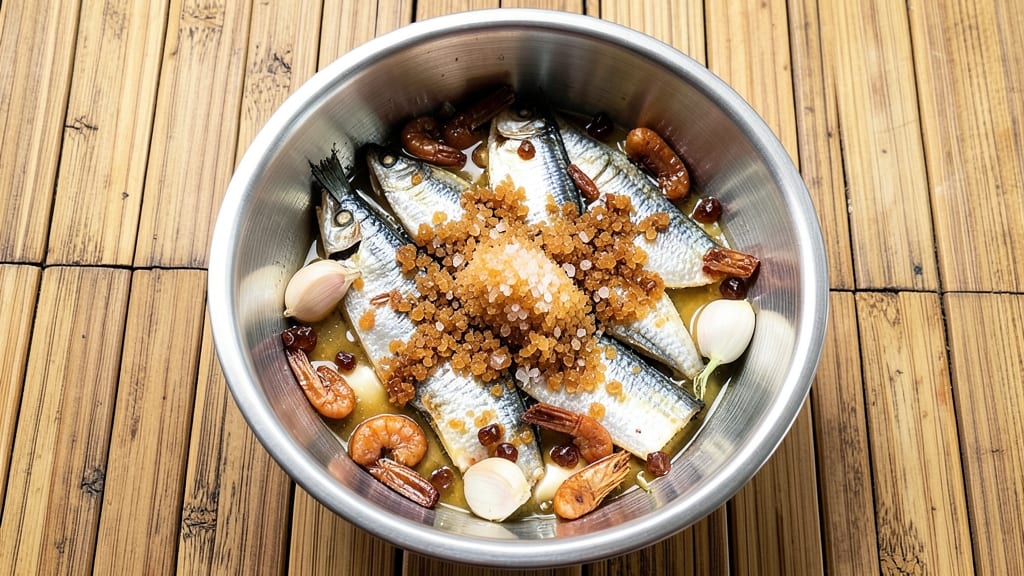
This authentic Vietnamese fish sauce recipe delivers the complex umami depth that defines nuoc mam—the fermented condiment that elevates Southeast Asian cuisine. The process transforms simple anchovies, salt, and water into a liquid gold that carries layers of savory, briny, and slightly sweet complexity.
I've perfected this traditional method through careful fermentation and straining, ensuring every drop captures the essence of Vietnamese home kitchens.
The key to authentic nuoc mam lies in patience—anchovies ferment for 6-12 months, developing their signature depth through microbial action. No shortcuts here: we use whole anchovies (not paste) and precise salt ratios to balance preservation and flavor extraction.
The result? A sauce so versatile it transforms stir-fries, soups, and even marinades into something extraordinary.
What you'll achieve is a rich, fermented fish sauce with a deep amber hue and a flavor profile that's both bold and nuanced. The anchovies contribute their natural sweetness and umami, while fermentation develops those signature funky, savory notes that make this sauce indispensable.
This isn't just a condiment—it's the backbone of Vietnamese cooking, and now you can make it at home.
Once fermented, the sauce requires careful straining to remove solids, followed by proper storage to maintain its potency. Whether you're using it to season pho, drizzle over banh mi, or elevate homemade marinades, this authentic nuoc mam will become your kitchen's most valuable ingredient.
Let's get started on creating this culinary essential.
Ingredients for authentic vietnamese fish sauce
Four pounds of anchovies and a few simple pantry staples transform into liquid umami gold.
| Ingredient | Amount | Notes |
|---|---|---|
| Fresh Anchovies 🐟 | 2 lbs | Whole, cleaned, backbones removed |
| Diamond Crystal Kosher Salt 🧂 | 1 ½ cups | Fine grain preferred for even dissolution |
| Distilled Water 💧 | 4 cups | Filtered or boiled for purity |
| Brown Sugar 🍯 | ½ cup | Light brown preferred for subtle sweetness |
| Garlic Cloves 🧄 | 6 cloves | Crushed for infusion |
| Dried Shrimp 🦐 | ¼ cup | Small, headless for texture |
| Fresh Ginger 🌿 | ½ inch | Thinly sliced, peeled |
| White Vinegar 🍶 | ¼ cup | For acidity balance |
| Coriander Seeds 🌶️ | 1 tbsp | Toasted lightly for aroma |
Anchovies are the heart of this sauce—fresh, whole fillets from a trusted Asian market or seafood counter make all the difference. Look for anchovies that smell briny but not fishy, with silvery skin intact. Trader Joe's and H Mart carry excellent frozen options if fresh aren't available. The kosher salt should be Diamond Crystal—it dissolves cleaner than table salt. For the brown sugar, Domino light variety works perfectly, but avoid dark molasses sugars that can overpower the delicate balance. Toast your coriander seeds in a dry pan for 30 seconds until fragrant—this releases oils that deepen the sauce's complexity.
No fresh anchovies? High-quality canned anchovies in oil (like Wild Planet) work in a pinch—just drain thoroughly and rinse. Swap dried shrimp for shrimp paste at half the amount, but expect a stronger funk. The vinegar can be omitted if you prefer less acidity, but it helps preserve the sauce during fermentation. For a sweeter profile, substitute date syrup for brown sugar—it caramelizes beautifully. The garlic and ginger are non-negotiable though; their aromatic compounds are essential for that authentic Vietnamese depth. If you're short on time, pre-ferment the anchovies and salt for 24 hours before adding other ingredients to jumpstart the process.
Ferment in a non-reactive container like glass or food-grade plastic. Cover loosely with a cloth—fermentation needs airflow. Store in a cool, dark place (like a pantry) for 6-12 months, stirring weekly. The sauce will develop a deep amber color and funky aroma as it matures. Once strained, transfer to sterilized bottles with airtight seals. Keeps indefinitely in the fridge once opened—it only gets better with age. For restaurant-quality results, age for 12 months if possible. The first batch will be your most potent; subsequent batches can use some of your mature sauce as a starter to jumpstart fermentation.
Why You'll Love This Recipe
- No-Fuss Fermentation: I swear, this takes less effort than waiting for takeout. Just toss the anchovies and salt in a jar, add water, and let time do the work—no stirring, no babysitting, just pure hands-off magic.
- Umami Bomb: That first taste? Chef’s kiss. The anchovies break down into this deep, salty-sweet richness, while the garlic and brown sugar add layers you won’t find in store-bought versions. It’s the kind of flavor that makes you pause mid-bite.
- Pantry Staple Power: Between us, this sauce is my secret weapon for everything—drizzled over noodles, tossed in marinades, or even mixed into dressings. Honestly, I’ve used it so often, I forget which meal it’s in until the last spoonful.
- Budget-Friendly Treasure: A jar of this costs pennies compared to imported fish sauce, and it lasts months in the fridge. I’ll be real: my first batch turned into a gift for neighbors, and now I make a fresh one every few months just to keep sharing.
Step-by-step instructions for authentic Vietnamese fish sauce
This traditional method captures the deep umami complexity of Vietnamese nước mắm—where fermented anchovies meet aromatic spices.
Prepare the Anchovy Base
In a clean, non-reactive stainless steel bowl, combine the 2 lbs fresh anchovies with 1.5 cups Diamond Crystal kosher salt. Use your hands to thoroughly mix them, ensuring every fish is coated in salt. This prevents spoilage and enhances flavor extraction during fermentation. The salt will draw out moisture, creating a brine that develops the sauce's signature depth.
Transfer the mixture to a food-safe glass jar or ceramic crock with a tight-sealing lid. Leave about 1 inch of headspace at the top—this prevents overflow as liquids develop. Place the jar in a cool, dark spot (like a pantry) and let it ferment for 7 days. You'll notice the mixture liquefy slightly and develop a pungent, fishy aroma—this is normal and essential for authentic flavor.
Infuse with Aromatics and Sweeten
After 7 days, open the jar and add the 6 crushed garlic cloves, 0.5 inch thinly sliced fresh ginger, 0.25 cup dried shrimp, and 1 tbsp lightly toasted coriander seeds. Stir everything together until the aromatics are fully incorporated. The toasted coriander seeds will release their citrusy notes, while the ginger and garlic add warmth and complexity.
Next, dissolve the 0.5 cup brown sugar in 4 cups distilled water over low heat until fully combined. Let it cool slightly, then pour this mixture into the jar. The sugar balances the saltiness while promoting fermentation. Seal the jar tightly and return it to the dark, cool place for another 14 days. You'll see bubbles form—this indicates active fermentation creating the sauce's signature umami punch.
Balance and Age for Depth
After 21 days total, open the jar and strain the mixture through a fine-mesh sieve lined with cheesecloth into a clean glass bottle. Discard the solids. To the strained liquid, add the 0.25 cup white vinegar and stir gently. The vinegar brightens the sauce and extends its shelf life by inhibiting bacterial growth. Seal the bottle and let it rest at room temperature for 7 more days to allow flavors to meld.
Finally, taste and adjust seasoning if needed. Authentic Vietnamese fish sauce should be salty, sweet, funky, and deeply umami—like a concentrated ocean in a bottle. If it tastes too harsh, add a pinch more brown sugar. If it lacks depth, let it age an additional week. The longer it sits, the more complex the flavor becomes, developing layers of caramelized sweetness and fermented richness.
Store and Use Properly
Once perfected, transfer the fish sauce to a sterilized glass bottle with an airtight seal. Store it in a cool, dark pantry—never refrigerate unless you plan to use it within 3 months. Authentic Vietnamese fish sauce improves with age, developing even more depth over 6-12 months. When using, start with 1 teaspoon and adjust to taste—it's concentrated!
This sauce is the backbone of Vietnamese cuisine, elevating everything from phở to bánh mì. Use it to season soups, marinades, or even as a finishing drizzle. The key to authenticity lies in patience—rushing this process sacrifices the complex, layered flavor that makes it irreplaceable.
Pro Tips For Making Authentic Vietnamese Fish Sauce
- USE A POT WITH A TIGHT LID: The first time I made this, I used a wide pot and lost half the liquid to evaporation—my sauce ended up too salty and concentrated. Grab a deep, narrow pot (like a Dutch oven) and keep that lid on tight. You’re not steaming a vegetable, you’re fermenting flavor, and moisture is everything.
- SALT THE ANCHOVIES FIRST: I used to toss the anchovies into the pot dry, thinking they’d dissolve on their own. Wrong. Rinse them first, then coat them in a thick layer of kosher salt (about 1 part salt to 2 parts anchovies by weight) and let them sit for 10 minutes before adding water. This kickstarts the fermentation and prevents clumping—your sauce will taste cleaner and develop faster.
- STOP WHEN IT’S CLOUDY, NOT CLEAR: After hours of simmering, I’d push until the liquid looked crystal clear, thinking that meant it was done. My grandmother stopped me: “It’s ready when it’s murky, not see-through.” That cloudiness? It’s the good stuff—fermented proteins and umami compounds. Strain it when it looks like weak tea, not distilled water.
- ADD GARLIC AT THE END: I was impatient and threw the garlic in with the anchovies, figuring it’d mellow out. Nope. It burned, turned bitter, and ruined the balance. Save the minced garlic for the last 5 minutes of simmering—just enough to infuse without overpowering. If you’re lazy, use garlic powder (½ teaspoon) instead, but fresh is worth the effort.
Essential equipment for this dish
Fermentation Vessel
Your choice of container is critical for authentic fermentation. Use a food-safe glass jar or ceramic crock—I recommend a 1-gallon mason jar for this recipe. Avoid metal containers, as they can react with the acidic environment.
The jar should have a tight-sealing lid but allow for occasional stirring and aroma release. For larger batches, a stainless steel fermentation bin (like those from Breville) works beautifully. 🌡️
Straining Tools
Straining is where the magic happens—you need a fine-mesh sieve lined with cheesecloth or muslin cloth to catch every last bit of flavor. I prefer double-layered cheesecloth for maximum filtration. A wooden spoon helps press solids through the cloth without tearing it.
For a more refined finish, consider a nut milk bag—it's designed for this exact purpose and gives restaurant-quality results.
Temperature Control
Fermentation thrives between 68-75°F. If your kitchen runs cooler, place the jar in a warm pantry or near the oven (with the oven off). For warmer climates, move it to a cooler area or use a fermentation chamber (like the OneTouch Easy Fermenter).
Consistency is key—fluctuations can create off-flavors. A digital thermometer (like the Thermoworks Thermapen) ensures precision throughout the process.
Storage Containers
Once strained, transfer your sauce to sterilized amber glass bottles—they protect from light, which can degrade flavor over time. I use 16-ounce swing-top bottles from Utopia Kitchen for easy pouring. For long-term storage, vacuum-sealed jars (like Mason Jar Vacuum Sealer) eliminate oxygen and extend shelf life.
Label each bottle with the fermentation date—this helps track aging progress and flavor development.
Safety Gear
Fermentation releases strong aromas, so protect yourself with nitrile gloves (for handling anchovies) and a face mask during straining. A small fan placed near the fermentation area helps circulate air, reducing odors in your kitchen.
For ventilation, I install a range hood or open windows during the most pungent stages. Safety first—this sauce is potent stuff! 💪
Optional Tools
For precision, a pH strip kit (like API Fresh Water Test Kit) helps monitor fermentation progress—ideal pH range is 4.0-4.5. A small scale (like OXO Good Grips) ensures accurate measurements of anchovies and salt.
For convenience, a stirring rod with a silicon handle prevents burns when handling hot mixtures. These extras elevate your process from homemade to professional-grade.
Nutrition facts
Frequently asked questions
Can I use canned anchovies instead of fresh?
You can substitute high-quality canned anchovies in oil (like Wild Planet brand), but drain and rinse them thoroughly to remove excess oil. Use 1 lb canned anchovies for every 2 lbs fresh—they're more concentrated. The texture will differ slightly, but the flavor remains authentic. For best results, opt for whole fillets rather than anchovy paste, as the bones contribute to the sauce's depth.
How do I know when the fermentation is complete?
Authentic Vietnamese fish sauce is done when it develops a deep amber color and a complex aroma—funky, sweet, and umami-rich (like a mix of soy sauce and ocean brine). After 6 months, taste it: it should be salty, sweet, and slightly tangy with no harsh fishiness. If it still smells too raw, ferment another 2-3 months. The longer it ages, the more nuanced the flavor becomes.
What if my sauce smells too strong or spoiled?
If it smells rotten, sour, or overly putrid (beyond the normal funk), discard it immediately—this indicates harmful bacteria growth. To prevent spoilage, ensure your fermentation vessel is sterilized, use distilled water, and maintain a cool, dark environment (68-75°F). If the aroma is just intense but not rotten, strain and add 1 tbsp vinegar to balance it. Patience is key—rushing fermentation risks off-flavors.
Can I speed up the fermentation process?
No—authentic nước mắm requires 6-12 months to develop its signature depth. However, you can pre-ferment the anchovies and salt for 24 hours before adding other ingredients to jumpstart the process. For a quicker (but less complex) version, use a starter culture (like 1/4 cup mature fish sauce from a previous batch) to inoculate the mixture. Even then, expect at least 3 months for decent flavor.
How should I use this fish sauce in Vietnamese dishes?
Start with 1 teaspoon and adjust to taste—this sauce is concentrated! Drizzle over phở, bún chả, or gỏi cuốn for umami depth. Use it to marinate meats (like bánh mì pork) or deglaze woks for stir-fries. For a quick sauce, mix 1 tbsp fish sauce with 1 tbsp lime juice and 1 tsp sugar. Store-bought versions lack the complexity—your homemade sauce will transform every dish!