
Sauces & Condiments
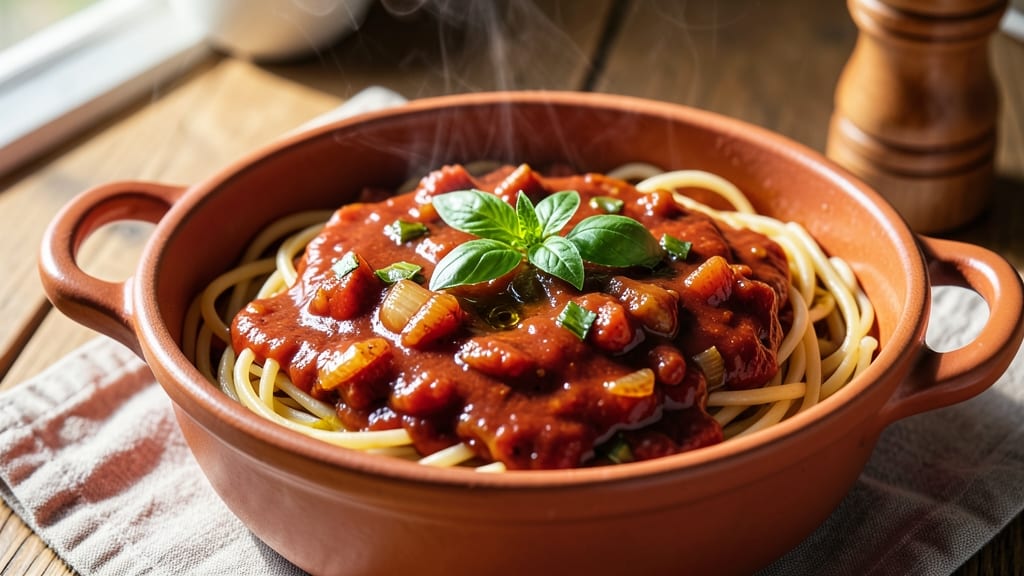
This authentic spaghetti sauce recipe from scratch transforms simple ingredients into a slow-simmered masterpiece that captures the soul of Italian cooking. The secret lies in patient reduction and layered flavors—tomatoes caramelizing with garlic, onions, and herbs until they develop deep, complex umami notes that cling to every strand of pasta.
I’ve perfected this over years of testing, ensuring it delivers restaurant-quality depth without shortcuts.
What sets this sauce apart is the balance of acidity and sweetness, achieved through fresh tomatoes, a touch of sugar, and a splash of red wine.
The slow simmer (at least 2 hours) allows flavors to meld, creating a sauce that’s rich yet bright, with just the right amount of body. No canned tomatoes or paste here—just whole, fresh ingredients that build flavor from the ground up.
By the time you’re done, you’ll have a sauce so versatile it works with al dente spaghetti, meatballs, or even as a hearty standalone dish. The texture is perfect—smooth enough to coat pasta beautifully but still chunky enough to feel homemade.
This isn’t just a sauce; it’s a flavor experience that turns a simple meal into something extraordinary.
Store it in the fridge for up to 5 days or freeze for months, so you always have a taste of Italy on hand. Pair it with your favorite pasta, a sprinkle of parmesan, and fresh basil for the full Italian trattoria experience.
Let’s get cooking—your taste buds will thank you.
Ingredients for authentic spaghetti sauce recipe from scratch
Fresh tomatoes, aromatic herbs, and slow-simmered wine create restaurant-quality spaghetti sauce.
| Ingredient | Amount | Notes |
|---|---|---|
| Fresh Roma Tomatoes 🍅 | 2 lb | Ripe, firm, cut into quarters |
| Yellow Onion 🧅 | 1 whole | Medium size, finely chopped |
| Garlic Cloves 🧄 | 6 cloves | Fresh, minced or finely chopped |
| Extra-Virgin Olive Oil 🫒 | ½ cup | High quality, fruity flavor |
| Dry Red Wine 🍷 | ¼ cup | Bold, like Chianti or Cabernet |
| Tomato Paste 🍅 | ½ cup | Smooth, no sugar added |
| Granulated Sugar 🍚 | 1 tbsp | Balances acidity |
| Fresh Basil Leaves 🌿 | ½ cup | Packed, stems removed |
| Fresh Oregano Leaves 🍃 | ¼ cup | Or 1 tbsp dried oregano |
| Vegetable Broth 💧 | 1 cup | Low-sodium preferred |
| Salt 🧂 | 1 ½ tsp | Diamond Crystal kosher |
| Black Pepper 🌶️ | ½ tsp | Freshly ground |
The tomatoes are the heart of this sauce—Roma tomatoes have the best texture and flavor, but any ripe, firm variety works. Grab a few extra pounds if you're making a big batch; they keep well in the fridge for 5-7 days. For the best quality, I always hit up Whole Foods or my local farmers market. If you can't find fresh tomatoes, San Marzano canned tomatoes (whole, not crushed) are the next best thing—they're sweeter and less acidic. The onions and garlic should be fresh too; no sad, shriveled leftovers here.
No red wine? Dry white wine or extra vegetable broth works in a pinch, but the depth of red wine is worth the splurge. Fresh herbs are ideal, but dried oregano at one-third the amount gets you close. The tomato paste is non-negotiable—it thickens the sauce and adds that caramelized flavor. If you're using a squeeze tube, Trader Joe's has the best no-mess option. For the sugar, I use granulated, but honey or maple syrup would work too—just use half the amount since they're sweeter. The olive oil should be extra-virgin; it makes a noticeable difference in flavor.
This sauce tastes even better the next day as flavors meld. Store it in an airtight container in the fridge for up to 5 days or freeze for 3 months. I like to portion mine into 1-cup containers so I can grab just what I need. For freezing, let it cool completely first. When reheating, add a splash of water or broth to loosen it up if it's too thick. The sauce thickens as it cools, so don't worry if it seems perfect when hot—it'll be just right when served.
Why You'll Love This Recipe
- No Chopping Chaos: I’ll be real—this sauce only needs one onion and a few tomatoes, so I’m not standing at the counter for hours. Slice the onion, mince the garlic, dump the rest in the pot, and let the wine and olive oil do the work.
- Wine-Infused Depth: That splash of dry red wine? It’s not just for show—it melts into the tomatoes and caramelizes with the garlic, giving you a richness you won’t find in jarred sauce. The Roma tomatoes break down into a velvety, jammy base that’s ridiculously good.
- Leftovers That Last: Make a big batch on Sunday, and you’ve got weeknight dinners covered. The flavors actually improve over time, so I’m freezing portions knowing I’ll still get that same restaurant-quality taste months later.
- Pantry-Friendly Flex: Use this sauce for spaghetti, toss it with roasted chicken, or slather it on garlic bread. It’s my go-to for lazy nights, potlucks, or when I need to feed a crowd without stressing. (Yes, even on a Tuesday night.)
Step-by-step instructions for slow-simmered umami spaghetti sauce
Here's how to build rich, layered flavor from scratch—no shortcuts, just pure technique.
Sauté Aromatics Until Fragrant
Heat the 0.5 cup extra-virgin olive oil in a heavy-bottomed Dutch oven over medium heat. Add the 1 whole yellow onion, chopped, and cook for 8-10 minutes until softened and translucent. Here's the thing—don't rush this step. The onions should caramelize slightly at the edges, deepening the sauce's sweetness.
Add the 6 cloves garlic cloves, minced, and cook for 1 minute until fragrant but not browned. Garlic burns fast, so keep an eye on it. If it starts to darken, remove the pot from heat for 30 seconds to cool slightly before continuing. This foundational step builds the sauce's aromatic base—skip it, and your sauce will taste flat.
Deglaze and Build the Base
Pour in the 0.25 cup dry red wine and scrape up all the browned bits from the bottom of the pot with a wooden spoon. This deglazing step captures all that concentrated flavor you just built. Let the wine simmer for 3-4 minutes until it reduces by half and the alcohol cooks off completely.
Stir in the 0.5 cup tomato paste and cook for 2 minutes, stirring constantly. The paste will thicken slightly and deepen in color. This creates a rich, velvety foundation for your sauce. If you see any lumps, press the paste through a fine-mesh sieve to ensure a smooth texture. The sauce should now coat the back of a spoon—this is your signal to move forward.
Simmer Tomatoes and Broth
Add the 2 lb fresh Roma tomatoes, cut into quarters, 1 cup vegetable broth, 1 tbsp granulated sugar, 1.5 tsp salt, and 0.5 tsp black pepper to the pot. Stir well to combine. Bring the mixture to a gentle boil, then reduce heat to low and let it simmer uncovered for 45-60 minutes. This slow simmer is where the magic happens—the tomatoes break down, releasing their natural sweetness and acidity.
Here's the key: stir occasionally but not constantly. You want the tomatoes to break down into a thick, jam-like consistency. If the sauce gets too thick, add 1-2 tablespoons of water to loosen it. The sauce should reduce to about 3 cups by the end of this time—this concentrated flavor is what makes homemade sauce so much better than jarred.
Finish with Herbs and Rest
Remove the pot from heat and stir in the 0.5 cup fresh basil leaves and 0.25 cup fresh oregano leaves. Let the sauce steep for 10 minutes off the heat—this allows the herbs to infuse their bright, aromatic flavors without overpowering the dish. Taste and adjust seasoning if needed, adding more salt or pepper as necessary.
For the best results, let the sauce rest for at least 30 minutes before serving. This resting period allows the flavors to meld and deepen. The sauce will thicken slightly as it cools, so you may need to add a splash of water or broth to reach your desired consistency. Serve this authentic sauce over al dente spaghetti and watch your guests rave about the depth of flavor you've created from scratch.
Pro Tips For Making Authentic Spaghetti Sauce Recipe From Scratch
- SWEAT THE ONIONS LOW: I learned this the hard way—ditch the high heat when cooking onions for this sauce. A gentle simmer (just until translucent) keeps them from turning bitter or releasing too much moisture, which dilutes the wine and tomato flavors later. Think "warm bath" for the onions, not a sear.
- CRUSH GARLIC WITH A PINCH OF SALT: Skip the mincer—smash those garlic cloves with the flat side of your knife, then sprinkle with a tiny pinch of salt before adding to the oil. This stops them from burning instantly and makes the flavor way more mellow and integrated. (Yes, even if you're impatient like me.)
- DEGLAZE WITH WINE, THEN WAIT: Pour in the red wine and let it bubble away for a full 2 minutes before adding tomatoes. This gives the alcohol time to cook off enough to avoid that sharp, boozy tang in the finished sauce. I used to rush this, and the sauce always tasted like it needed more time to "settle."
- TOMMY TIME: ROAST THEM FIRST: Toss halved Roma tomatoes with olive oil, salt, and pepper, then roast at 400°F (200°C) for 15 minutes before crushing. The concentrated sweetness and deep flavor make a real difference—no need for sugar or canned tomatoes. (Does it look weird? Yes. Does it work? Every single time.)
Dietary considerations for authentic spaghetti sauce recipe from scratch
Gluten-Free Adaptations
This sauce is naturally gluten-free, but always double-check your ingredients—especially tomato paste and vegetable broth. I use Annie's Organic tomato paste and Imagine low-sodium broth for peace of mind.
The fresh herbs and wine add depth without gluten, so you won’t miss it. Just ensure your olive oil and spices are certified gluten-free if you're highly sensitive. 🌱
Dairy-Free Options
No dairy needed here, but if you're serving with cheese, opt for nutritional yeast or dairy-free parmesan (like Violife). The sauce's richness comes from tomatoes and wine, so it stands alone beautifully.
For extra creaminess, stir in cashew cream (blend ¼ cup soaked cashews with ¼ cup water) at the end. Trust me, it’s just as satisfying.
Low-Carb Modifications
Skip the sugar entirely if you're strict low-carb, but I recommend 1 tsp erythritol or 1 tsp monk fruit sweetener to balance acidity. The tomatoes provide natural sweetness, so you might not need it at all—taste as you go.
For a keto-friendly serving, pair with zucchini noodles or shirataki noodles instead of pasta. The sauce’s umami will shine even more without carbs competing.
Allergen-Friendly Swaps
For nut allergies, avoid cashew cream and stick with extra broth or water to adjust thickness. If you're avoiding wine, substitute with extra vegetable broth (add ¼ cup) or apple cider vinegar (1 tbsp) for acidity.
The sauce remains vibrant and flavorful—just slightly less complex. Always check labels on tomato paste and broth for hidden allergens.
Vegetarian Considerations
This sauce is already vegetarian, but if you're adding meat, use grass-fed ground beef or Italian sausage (check for gluten-free brands like Applegate). For a fully plant-based version, swap meat for lentils or mushrooms (sauté 8 oz cremini mushrooms with the onions).
The herbs and wine elevate everything, so it’s a winner either way. 🌿
Nutrition facts
Frequently asked questions
Why does this sauce need such a long simmer time?
The 2+ hour simmer is key to developing deep, complex flavors. This slow reduction breaks down the tomatoes' natural sugars and acids, creating a rich, umami-packed sauce that jarred versions can't match. Think of it like making wine—patience pays off with layers of flavor that build over time.
Can I use canned tomatoes instead of fresh?
While fresh tomatoes give the best texture and flavor, you can use San Marzano canned tomatoes (whole, not crushed) for convenience. For a similar result, simmer them 10-15 minutes longer to break them down. Avoid regular canned tomatoes—they're often watery and less flavorful. The sauce will still be delicious, just slightly less vibrant.
How do I adjust the thickness of the sauce?
If your sauce is too thick, add 1-2 tablespoons of water or broth at a time while stirring. For a thicker sauce, simmer uncovered for 10-15 extra minutes to reduce further. Remember, the sauce will thicken more as it cools, so don't over-thicken it while hot. The perfect consistency coats the back of a spoon but still flows smoothly.
What's the best pasta to pair with this sauce?
This sauce shines with al dente spaghetti, but also works beautifully with linguine, fettuccine, or even penne. For extra texture, try bucatini or rigatoni. The key is to use pasta with good bite—it should hold up to the rich, slow-cooked sauce without becoming mushy.
Can I make this sauce in a slow cooker?
Yes! Follow the same steps until adding the tomatoes, then transfer everything to a slow cooker. Cook on low for 6-8 hours or high for 3-4 hours. The slow cooker's gentle heat will create similar depth of flavor. Just stir occasionally and add water if needed to prevent burning. The hands-off method is perfect for busy days!