
Sauces & Condiments
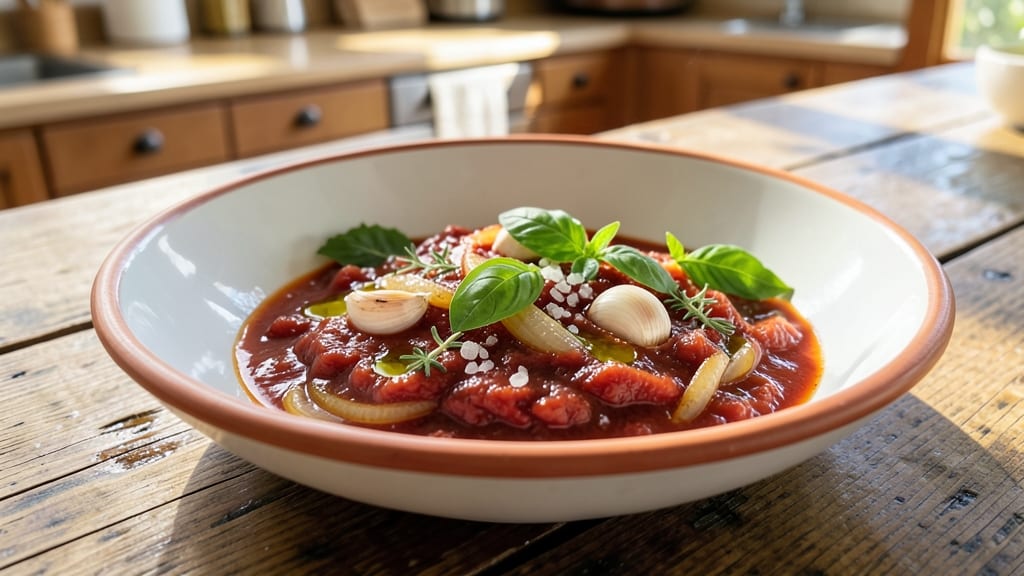
This authentic Sicilian spaghetti sauce recipe brings the bold flavors of Sicily to your kitchen, where garlic, oregano, and San Marzano tomatoes create a depth of flavor that’s impossible to resist.
The secret lies in slow-cooked onions and garlic that form a fragrant base, while fresh basil and oregano add that signature Sicilian brightness. Unlike heavy American sauces, this version stays true to its roots—simple, vibrant, and full of rustic charm.
The key to authenticity is patience. Simmering the sauce for hours allows the flavors to meld into a rich, slightly sweet tomato base with just the right balance of acidity and umami. No shortcuts here—just quality ingredients and time.
The result? A sauce that clings perfectly to spaghetti, offering layers of garlic, herbs, and tomato that sing with every bite. This isn’t just a sauce; it’s a taste of Sicily.
What makes this sauce special is its versatility. Use it as a classic spaghetti topping or let it shine as a base for other dishes like grilled chicken or roasted vegetables. The sauce thickens naturally as it cooks, creating a perfect consistency—neither too thick nor too thin.
Store it in the fridge for up to a week, or freeze for months, so you always have a taste of Italy at your fingertips.
For the true Sicilian experience, serve this sauce with al dente spaghetti and a sprinkle of fresh basil. The simplicity of the dish highlights the bold flavors, making it a staple for any Italian night. Let’s get cooking—your taste buds will thank you.
Ingredients for authentic sicilian spaghetti sauce
These ten ingredients create a sauce that tastes like Sicily in your kitchen.
| Ingredient | Amount | Notes |
|---|---|---|
| San Marzano Tomatoes 🍅 | 28 oz | Canned, whole, no salt added |
| Yellow Onion 🧅 | 1 whole | Medium, thinly sliced |
| Garlic Cloves 🧄 | 6 cloves | Fresh, peeled, minced |
| Extra-Virgin Olive Oil 🫒 | ½ cup | For slow cooking base |
| Fresh Oregano 🌿 | ¼ cup | Chopped, stems removed |
| Fresh Basil Leaves 🌿 | ¼ cup | Packed, torn by hand |
| Tomato Paste 🍅 | 2 tbsp | Smooth, no sugar added |
| Red Wine Vinegar 🍷 | 1 tbsp | For brightness |
| Sea Salt 🧂 | 1 ½ tsp | Diamond Crystal preferred |
| Black Pepper 🌶️ | ½ tsp | Freshly ground |
San Marzano tomatoes are the heart of this sauce—look for the official DOP label at Italian markets or specialty stores like Eataly. The flavor difference is night and day compared to regular canned tomatoes. Fresh oregano is ideal, but dried works at half the amount if that's what you've got. For the garlic, peel and chop it just before adding—raw garlic burns easily. The olive oil? Use something fruity and peppery—none of that bland supermarket stuff. I grab mine from Trader Joe's or Whole Foods when I can.
No San Marzano tomatoes? Crushed tomatoes in a high-quality jar work in a pinch, but you'll miss that sweet depth. Running out of fresh oregano? Mexican oregano has a different flavor profile, but regular dried oregano is fine if you reduce the amount. The tomato paste can be swapped for 1/4 cup crushed tomatoes if you're in a hurry, though it won't be as concentrated. For the red wine vinegar, balsamic vinegar is a decent substitute, but it'll add a slightly sweeter note. And if you're avoiding wine entirely, a splash of lemon juice works too.
This sauce tastes even better the next day as flavors meld. Store it in a glass jar in the fridge for up to 7 days, or freeze it in ice cube trays for single portions. The sauce thickens as it cools, so you can thin it with a splash of water or broth when reheating. I always make extra—it pairs perfectly with grilled chicken or roasted vegetables, not just pasta.
Why You'll Love This Recipe
- No-Chop Nightmare: I swear by this sauce because you only need to dice one onion—no peeling, no seedless tomatoes, no fancy techniques. The San Marzano tomatoes do all the work; just crush them with your hands and let the olive oil pull the sweetness right out. Honestly, it’s the kind of recipe that makes me feel like a lazy hero.
- Garlic-Oregano Magic: That first bite? It’s like Sicily showed up on your plate. The low-and-slow caramelization of garlic in olive oil, then the bright punch of fresh oregano—it’s the kind of flavor that lingers. I’ll be real: my husband steals bites straight from the pot before the pasta even hits the table.
- Leftovers That Lie: Between us, this sauce only gets better after day two. The flavors meld into something richer, deeper—like it’s been simmering for hours instead of minutes. I make a double batch on Sundays, freeze half, and pretend I’m some kind of meal-prep genius when I pull it out for a last-minute dinner.
- Budget-Friendly Luxury: Olive oil and San Marzano tomatoes might sound fancy, but they stretch this sauce into a week’s worth of dinners. Use it over pasta, toss it with roasted veggies, or even slather it on crusty bread—every bite feels special, but your wallet doesn’t flinch. That’s the Sicilian secret right there.
Step-by-step instructions for authentic Sicilian spaghetti sauce
Here's how to build rich, herb-forward sauce that captures true Sicilian flavor.
Build the Flavor Base with Olive Oil and Aromatics
Heat the 0.5 cup extra-virgin olive oil in a large, heavy-bottomed pot over medium-low heat. Add the 1 whole yellow onion and cook until softened and translucent, about 5-7 minutes. This slow cooking draws out natural sweetness from the onion.
Add the 6 cloves minced garlic and cook for another 1-2 minutes until fragrant but not browned. Garlic burns quickly, so keep an eye on it. Here's the thing—don't rush this step. The foundation of authentic Sicilian sauce relies on these aromatics developing deep, sweet flavors before anything else joins the party.
Develop the Sauce with Tomato Paste and Vinegar
Reduce heat to low and stir in the 2 tablespoons tomato paste, cooking for 2-3 minutes until it darkens slightly. This creates a beautiful mahogany color and intensifies the tomato flavor. Add the 1 tablespoon red wine vinegar and stir well—this brightens the sauce and cuts through the richness.
Now add the 28 oz San Marzano tomatoes, crushing them gently with your hands as you pour. The goal is to break them up but leave some texture. This step is where the sauce starts taking shape—you'll see it thicken as the tomatoes break down and release their juices.
Season and Simmer for Deep Flavor Development
Add the 1.5 teaspoons sea salt and 0.5 teaspoon black pepper, stirring to combine. Bring the sauce to a gentle simmer, then reduce heat to low and let it cook uncovered for 30 minutes, stirring occasionally. This slow simmer allows the flavors to meld and the sauce to thicken naturally.
After 30 minutes, stir in the 0.25 cup chopped fresh oregano and 0.25 cup torn fresh basil leaves. These herbs are the heart of Sicilian sauce—don't skip adding them fresh at the end. The oregano gives bold, earthy depth while the basil adds bright, fresh contrast. Let the sauce simmer uncovered for another 15-20 minutes until it reaches your desired consistency.
Finish and Adjust for Perfect Texture
Taste the sauce and adjust seasoning if needed—you might need a touch more salt or pepper. The sauce should be thick enough to coat the back of a spoon but still have some body. If it's too thick, add 1-2 tablespoons water at a time until it reaches the right consistency.
Remove from heat and let it sit for 10 minutes before serving. This resting time allows the flavors to settle and the sauce to thicken slightly more. Serve immediately over freshly cooked spaghetti with a sprinkle of fresh basil. The sauce should be vibrant, aromatic, and packed with that signature Sicilian depth.
Pro Tips For Making Authentic Sicilian Spaghetti Sauce
- Sweat the Onion Slowly: I learned this the hard way—dicing onions and frying them on medium-high heat just makes them bitter. For Sicilian sauce, use a heavy pot, cut the onion into ¼-inch pieces, and cook it in olive oil over low heat until translucent but not browned. This takes 8-10 minutes, but it’s the foundation of flavor—skip it, and your sauce will taste flat.
- Crush Garlic Lightly: Whole cloves burn fast and leave a harsh taste. Instead, smash them with the flat side of your knife before adding to the pot—this releases their flavor without turning acrid. Add them in the last 5 minutes of cooking so they perfume the sauce rather than dominate it.
- Salt the Tomatoes Early: San Marzano tomatoes are sweet but still need seasoning. Add a generous pinch of salt (about ½ teaspoon) as soon as you crush or chop them, then let them sit for 10 minutes before cooking. This breaks down their texture and balances their natural acidity—no need to over-salt later.
- Simmer, Don’t Boil: After adding tomatoes, reduce heat to a gentle simmer—you should see tiny bubbles, not a rolling boil. High heat destroys the delicate flavors of fresh oregano and olive oil. Cover the pot and let it cook uncovered for 20-25 minutes, stirring occasionally, until the sauce thickens naturally. Patience here makes all the difference.
Creative variations of this dish
Sicilian-Inspired Twists
Add 1 tablespoon of capers during the final 15 minutes of simmering for a briny, Mediterranean touch that reminds me of the coastal flavors of Sicily.
I also love adding 1 teaspoon of fennel seeds toasted in the olive oil at the very beginning—they add a subtle anise-like warmth that pairs beautifully with the tomatoes. 🌟
Spicy Variations
For a kick, stir in 1-2 dried chili peppers (like 'Nduja or Calabrian) when adding the tomatoes, or add 1 teaspoon of red pepper flakes at the end. I prefer the dried peppers because they give a slow, smoky heat that lingers.
If you want something fresher, add 2-3 thin slices of fresh chili like 'Nduja's cousin, the 'Arancia di Sicilia'.
Vegetarian-Friendly Upgrades
Boost the umami with 2 tablespoons of soy sauce or 1 tablespoon of balsamic vinegar> (in addition to the red wine vinegar) for depth.
I also love adding 1/2 cup of mushrooms>, finely chopped, when sautéing the onions—they soak up the flavors beautifully and add a meaty texture. 🍄
Protein-Integrated Sauces
For a one-pot meal, add 1 lb of ground pork or Italian sausage> when you add the tomatoes. Cook it through first, then proceed with the recipe. I prefer sweet Italian sausage> because it doesn’t overpower the delicate tomato and herb flavors.
For a lighter option, try chickpeas> (1/2 cup) added at the end—they absorb the sauce beautifully.
Seasonal Adaptations
In summer, add 1/2 cup of cherry tomatoes>, halved and lightly crushed, during the final 10 minutes> of cooking for a fresh, vibrant twist.
In winter, stir in 1/4 cup of roasted red peppers> (from a jar) when adding the herbs—they add a deep, smoky sweetness that’s perfect for cold weather. 🍅
Global Fusion Twists
For a Middle Eastern touch, add 1 teaspoon of ground cumin> with the tomato paste and a pinch of cinnamon when adding the herbs. I also love adding 1/4 cup of pine nuts>, lightly toasted, at the end for a nutty crunch.
For a Mexican-inspired version, swap the oregano for 1 tablespoon of Mexican oregano> and add 1/2 teaspoon of smoked paprika>** with the tomato paste.
Nutrition facts
Frequently asked questions
Why does authentic Sicilian sauce use San Marzano tomatoes?
San Marzano tomatoes are the gold standard for Italian sauces because of their sweet, low-acid flavor and thick flesh. These tomatoes grow near Mount Vesuvius in Italy, where the volcanic soil gives them a unique depth. Their natural sweetness balances the bold oregano and garlic, creating that signature Sicilian taste you can't get with regular canned tomatoes.
Can I make this sauce without fresh herbs?
Yes, but the flavor won't be as authentic. Use 1 teaspoon dried oregano (instead of 0.25 cup fresh) and 1 teaspoon dried basil (instead of fresh). For best results, add the dried herbs with the tomato paste at the beginning—this lets their flavors infuse longer. Fresh herbs add brightness, but dried works in a pinch if you're short on time.
How do I prevent the sauce from being too acidic?
If your sauce tastes too tangy, balance it by adding 1 teaspoon of sugar or 1 tablespoon of tomato paste at the end. The slow simmer should naturally mellow the acidity, but some San Marzano tomatoes can be slightly sweeter than others. Taste as you go—you can always adjust, but you can't take acidity out once it's there.
What's the best way to store leftover sauce?
Store in a glass jar in the fridge for up to 7 days, or freeze in ice cube trays for single portions. The sauce thickens as it cools, so add a splash of water or broth when reheating. For best texture, don't freeze for more than 3 months—the herbs lose some freshness over time.
Can I use this sauce for dishes other than spaghetti?
This versatile sauce works perfectly with grilled chicken, roasted vegetables, or as a base for lasagna. The rich tomato-herb flavor pairs well with proteins and veggies. For a Sicilian twist, try it with crispy polenta or as a marinade for fish fillets before baking.