
Sauces & Condiments
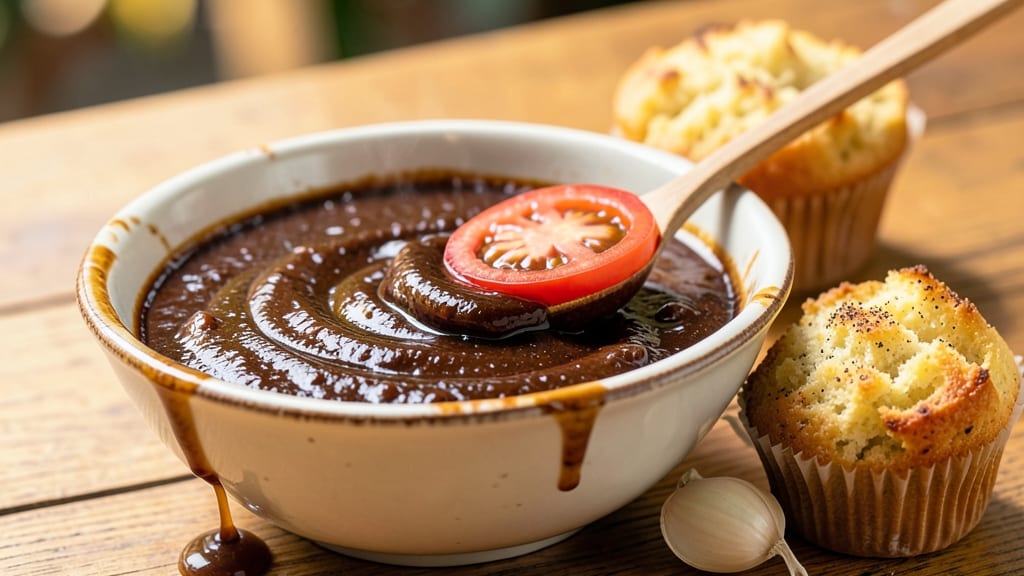
This authentic barbecue sauce recipe delivers the perfect balance of smoky depth, tangy brightness, and caramelized sweetness that defines classic American BBQ. 🔥 The secret lies in a slow-simmered tomato base infused with vinegar, molasses, and a precise blend of spices that build complex layers of flavor without overpowering the natural richness.
I've refined this over years of testing—it's the sauce that turns simple grilled chicken into a competition-worthy centerpiece.
The foundation starts with a rich tomato base (ketchup or crushed tomatoes work equally well), which we balance with apple cider vinegar for that signature tang. A touch of molasses adds depth, while brown sugar and black pepper create the signature caramelized sweetness and subtle heat.
The spices—garlic powder, onion powder, and smoked paprika—infuse the sauce with that unmistakable smoky aroma that makes it truly authentic.
What sets this sauce apart is its versatility. Use it as a glaze for ribs, a marinade for pulled pork, or a dipping sauce for fried chicken—each application brings out different layers of flavor.
The slow simmering process (about 30 minutes) allows the ingredients to meld into a thick, glossy sauce with just the right consistency, neither too thin nor cloyingly sweet.
Once you taste the difference between this homemade version and store-bought, you'll never go back. The sauce keeps well in the refrigerator for up to 2 weeks or can be frozen for months, making it the perfect make-ahead condiment for any BBQ enthusiast.
Let's get started on creating your signature sauce!
Ingredients for authentic barbecue sauce
Nine essential ingredients for a sauce that rivals the best BBQ joints.
| Ingredient | Amount | Notes |
|---|---|---|
| Ketchup 🍅 | 1 cup | High-quality, no artificial additives |
| Apple Cider Vinegar 🍏 | ¼ cup | Raw, unfiltered for best tang |
| Molasses 🍯 | ¼ cup | Unsulphured for deeper flavor |
| Brown Sugar 🍚 | ½ cup | Light or dark, packed |
| Smoked Paprika 🌶️ | 2 tbsp | High-quality, not cayenne |
| Garlic Powder 🧄 | 1 tbsp | Freshly ground preferred |
| Onion Powder 🧅 | 1 tbsp | No added anti-caking agents |
| Black Pepper 🌶️ | 1 tsp | Freshly cracked, coarse grind |
| Ground Mustard 🌿 | 1 tbsp | Dijon-style preferred |
| Salt 🧂 | 1 tsp | Diamond Crystal kosher |
The ketchup is your base—Heinz or Hunt's are solid choices, but if you can find a small-batch brand at Whole Foods or a local market, it's worth the splurge. Apple cider vinegar should be raw and unfiltered (like Bragg) for that bright, complex tang. Molasses is non-negotiable for depth—unsulphured is key. I grab mine from Trader Joe's because it's affordable and consistent. The smoked paprika? Penzeys or McCormick are my go-tos—avoid the cayenne-mixed varieties unless you want heat. Toast your spices lightly before mixing for extra aroma, but don't burn them.
No ketchup? Crushed tomatoes (San Marzano if you're fancy) work perfectly—just add a splash of tomato paste to thicken. Vinegar substitute? Red wine vinegar at half the amount gives similar acidity. Brown sugar too expensive? Maple syrup or honey (if not vegan) can stand in, but the molasses depth will be missing. The mustard adds that subtle tang—Dijon-style is best, but yellow mustard in a pinch works. For the spices, if you're out of garlic powder, minced garlic at double the amount (1/2 tsp) will work, but the flavor won't be as consistent. Always taste as you go—this sauce builds flavor as it simmers, so don't rush it.
This sauce keeps beautifully—2 weeks in the fridge in a sealed jar, 6 months in the freezer8-ounce jars for easy grab-and-go use at BBQs. The flavor actually improves after the first day as everything melds together. If it gets too thick, just add a splash of water or vinegar to loosen it up. Trust me, you'll want to make extra—it disappears fast.
Why You'll Love This Recipe
- Pantry Magic: The second I grab ketchup, vinegar, and molasses from my cupboard, I know this sauce is happening. No specialty shopping—just stuff you already have, simmered down until it’s rich and glossy.
- Smoky Sweet Crunch: That first taste of smoked paprika and brown sugar hitting your tongue? It’s like a hug for your ribs or pulled pork. The molasses deepens it, while the vinegar keeps it bright—no one ingredient overpowers the other.
- Weekend Leftovers: I make a double batch every Sunday because it’s that good. Use it on brisket one night, slather it on baked beans the next, or even drizzle it over grilled cheese. The vinegar keeps it fresh for days without getting cloying.
- Budget-Friendly Flex: Honestly, this sauce costs me pennies per serving. A splash of vinegar and a spoon of molasses stretch my grocery budget further than any store-bought bottle ever has—plus, I control the heat and sweetness exactly how I like it.
Step-by-step instructions for authentic barbecue sauce
Here's how to craft a sauce that captures true smoky depth and perfect sweet-spicy balance.
🍳 Step 1: Combine Wet Ingredients for Flavor Foundation
In a medium saucepan, combine the 1 cup ketchup, 0.25 cup apple cider vinegar, and 0.25 cup molasses. Stir gently to integrate these liquids—the vinegar will start to cut through the molasses' richness immediately, creating a complex base. I always use unsulphured molasses here; it delivers that authentic caramel depth without any bitter aftertaste.
Place the pan over medium heat and bring the mixture to a gentle simmer. Let it bubble softly for 3-4 minutes until you notice the aromas intensifying—this is when the vinegar's tang begins to mellow and the molasses starts to caramelize slightly. The sauce should reduce just enough to coat the back of a spoon but still maintain a loose consistency.
🍳 Step 2: Sweeten and Develop Complexity
Reduce heat to low and whisk in the 0.5 cup brown sugar. This is where the sauce transforms from tangy to properly balanced. Stir continuously for 5-7 minutes until the sugar fully dissolves and the mixture thickens noticeably. You'll see the color deepen to a rich amber—this indicates proper caramelization and the development of those complex molasses notes.
Here's the thing—don't rush this step. The sugar needs time to fully integrate and develop flavor. If you see the sauce starting to bubble too vigorously, reduce heat slightly to maintain a gentle simmer. You're aiming for a consistency where it coats a spoon but still flows freely—about the thickness of heavy cream.
🍳 Step 3: Build Depth with Dry Seasonings
With the sauce still simmering gently, add the 2 tbsp smoked paprika, 1 tbsp garlic powder, 1 tbsp onion powder, 1 tsp black pepper, 1 tbsp ground mustard, and 1 tsp salt. Stir vigorously to distribute these dry ingredients evenly throughout the sauce. The smoked paprika will immediately infuse that characteristic barbecue aroma—you'll smell it intensify within seconds.
Simmer for another 8-10 minutes until the sauce thickens to a glossy, syrupy consistency. You're looking for a sauce that coats the back of a spoon but still has enough body to cling to meats. The mustard will add that subtle tangy depth, while the garlic and onion powders provide aromatic complexity. Taste as you go—this is where you can adjust seasoning if needed, though with these precise measurements, you should be very close.
⏰ Step 4: Rest and Perfect the Texture
Remove the sauce from heat and let it rest for 10-15 minutes at room temperature. This resting period allows all the flavors to meld completely and the sauce to reach its ideal consistency. I know it's tempting to taste it immediately, but patience here makes all the difference—it gives the molasses and sugar time to fully integrate their flavors.
After resting, give the sauce one final taste. If it needs more tang, add a splash of apple cider vinegar. If it needs more depth, a touch more molasses or smoked paprika works wonders. The sauce should have that perfect balance of sweet, smoky, and tangy flavors with just a hint of heat from the black pepper and ground mustard. This authentic barbecue sauce is now ready to elevate any smoked, grilled, or slow-cooked dish.
Pro Tips For Making Authentic Barbecue Sauce
- SIMMER LOW AND SLOW: I used to rush this sauce on high heat, and it’d turn cloying or even burn before the flavors melded. Drop the heat to a bare simmer—just enough to see tiny bubbles—and let it cook for at least 20 minutes. That’s when the vinegar mellows, the molasses deepens, and the smoked paprika stops tasting like dust.
- STRAIN THE MOLASSES: Store-bought molasses is often gritty, and you don’t want that scraping your teeth. Pour it through a fine-mesh strainer into a measuring cup before adding it to the pot. Yes, it’s an extra step, but your sauce will taste smoother—no one wants a mouthful of sediment when they’re going for that rich, glossy finish.
- BALANCE THE SWEETNESS: Brown sugar and molasses are both sweet, but they behave differently in heat. Taste the sauce after 15 minutes and adjust: if it’s cloying, splash in an extra tablespoon of vinegar to cut through it. If it’s too sharp, add a pinch more sugar. The goal? A sauce that’s complex, not just syrup with spices.
- SKIP THE PRE-MIXED KETCHUP: Cheap ketchup turns your sauce into a sad, one-dimensional glaze. Use a high-quality, vinegar-forward ketchup (like Heinz or a small-batch brand) for depth. Or, for a shortcut that actually upgrades the dish, blend 1 cup tomato paste with ½ cup water and a pinch of salt—it’s cheaper, fresher, and gives you control over the acidity.
Storing and reheating this authentic barbecue sauce
Refrigerator Storage
Store your homemade barbecue sauce in an airtight glass jar—I prefer 8-ounce mason jars for portion control. Keep it refrigerated at 40°F or below for up to 2 weeks, though I find the flavor actually improves after 3-4 days as the spices meld.
The glass preserves the sauce's rich color and prevents any off-flavors from plastic containers. Label your jars with the date to track freshness.
Before storing, let the sauce cool completely to room temperature—hot sauce in the fridge can create condensation and dilute flavors. Once cooled, seal tightly and store in the back of your fridge where it's consistently cold.
If you notice any mold or off smells, discard immediately—this sauce shouldn't last that long if properly made! 🌡️
Freezer Preservation
For long-term storage, freeze your sauce in small batches (I use 8-ounce jars or silicone molds). Leave ½ inch headspace to prevent expansion cracks. The sauce will thicken slightly when thawed, so add 1-2 teaspoons of apple cider vinegar to restore consistency.
It keeps for up to 6 months without losing quality, though I recommend using it within 3 months for peak flavor.
Thaw overnight in the fridge—never microwave directly from frozen, as this can break down the sauce's texture. For quick use, place the sealed jar in warm water for 10-15 minutes to soften.
The sauce will be slightly thicker after freezing, but a quick stir with a splash of vinegar brings it back to perfection. 🧊
Reheating Methods
For stove-top reheating, transfer sauce to a small saucepan and warm over low heat for 5-7 minutes, stirring constantly. Add 1-2 teaspoons of water or vinegar if it becomes too thick.
Never boil—just gently warm until it reaches 165°F, which takes about 3-4 minutes. This method preserves all the delicate flavors and prevents scorching.
Microwave reheating works in a pinch: place sauce in a microwave-safe bowl, cover loosely, and heat on 50% power for 1-2 minutes. Stir well and check temperature—it should reach 165°F within 30 seconds of reheating.
If it separates, whisk vigorously to restore its glossy texture. The sauce will be slightly thinner after reheating, so adjust consistency before using. ⚡
Sauce Consistency Fixes
If your sauce thickens too much after storage, thin it with 1 teaspoon of apple cider vinegar or water at a time. Stir well and let it sit for 5 minutes to rebalance.
For a thicker sauce, simmer unseasoned for 5-10 minutes to reduce excess liquid. Never add cornstarch—it changes the sauce's authentic texture and can make it taste artificial.
If the sauce separates after freezing, whisk vigorously while reheating. The natural pectin in tomatoes will gradually re-emulsify as it warms. For extra insurance, add ½ teaspoon of Dijon mustard while reheating—it helps bind the ingredients back together.
The key is patience: let the sauce sit for 5 minutes after reheating before using, as it continues to thicken slightly. 💫
Nutrition facts
Frequently asked questions
What makes this barbecue sauce different from store-bought versions?
This recipe uses unsulphured molasses and raw apple cider vinegar for deeper, more complex flavors, plus a precise blend of spices that mimics traditional pitmaster techniques. Store-bought sauces often contain artificial additives and excessive sugar. Our slow-simmered method develops rich caramelized notes that mass-produced versions can't match.
Can I make this sauce without ketchup?
Replace the 1 cup ketchup with 1 cup crushed tomatoes (San Marzano for best results) and add 1 tablespoon tomato paste to thicken. The acidity will be slightly different, so you may need an extra ½ teaspoon of vinegar to balance the flavors. The texture will be chunkier but still delicious for grilling.
How spicy should the sauce be?
This recipe includes only 1 teaspoon black pepper for subtle heat—no cayenne or chili flakes. The smoked paprika provides smokiness without spice. For more heat, add ½ teaspoon cayenne pepper or a dash of hot sauce. Taste as you simmer to adjust to your preference.
What's the best way to use this sauce?
This versatile sauce works as a glaze for ribs (apply in 2-3 layers during cooking), a marinade for chicken or pork (mix with ¼ cup olive oil and marinate 4+ hours), or a dipping sauce for fried chicken. For pulled pork, brush on during the last 30 minutes of smoking. The key is patience—let it caramelize on the heat source.
Why does my sauce taste too sweet?
If your sauce tastes overly sweet, it likely needs more acidity. Add 1-2 teaspoons apple cider vinegar and simmer for 5 minutes to balance. The molasses and sugar should be half the acidity by volume. For future batches, reduce brown sugar to ¼ cup and increase vinegar to ⅓ cup if you prefer less sweetness.