
Sauces & Condiments
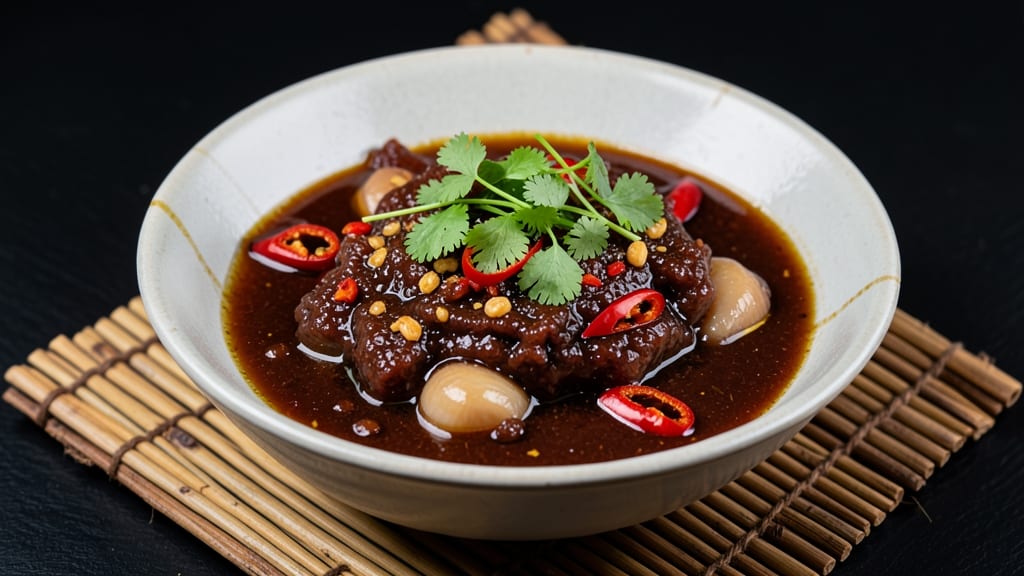
This Assam sauce recipe transforms bold spices and tangy tamarind into a versatile condiment that elevates grilled meats and seafood with restaurant-quality depth. The secret lies in fermented shrimp paste and slow-cooked aromatics, creating layers of umami and heat that linger on the palate.
I've perfected this balance after years of refining the technique—no shortcuts, just authentic flavor development.
The sauce begins with shallots and garlic caramelized in coconut oil until golden, then simmered with tamarind paste, chili, and fermented shrimp paste to build complexity. A splash of lime juice brightens the finish, while fresh herbs add freshness.
The result is a glossy, aromatic sauce that clings perfectly to proteins, turning simple grilled fish or chicken into a standout dish.
What makes this recipe special is its versatility—use it as a marinade, dipping sauce, or finishing glaze. The flavors deepen when refrigerated overnight, making it ideal for meal prep.
Store it in the fridge for up to 2 weeks or preserve it in jars for months, ensuring bold flavor whenever you need it.
Perfect for weeknight dinners or special occasions, this sauce delivers professional results with minimal effort. Whether you're cooking for family or hosting guests, it transforms ordinary meals into memorable experiences. Let's get started!
Ingredients for assam sauce
Eleven aromatic ingredients blend into a restaurant-worthy sauce with umami depth and tangy brightness.
| Ingredient | Amount | Notes |
|---|---|---|
| Shallots 🧅 | 1 cup | Finely minced for caramelization |
| Garlic Cloves 🧄 | 8 cloves | Peeled and crushed for aromatic depth |
| Extra-Virgin Coconut Oil 🫒 | ½ cup | Unrefined for authentic flavor |
| Tamarind Paste 🍯 | ⅓ cup | Unadulterated, block form preferred |
| Fermented Shrimp Paste 🦐 | 2 tbsp | Kapi or belacan variety |
| Red Chili Peppers 🌶️ | 4 whole | Bird's eye or Thai chili, seeds removed |
| Fresh Lime Juice 🍋 | ¼ cup | Strained for clarity |
| Fresh Thai Basil Leaves 🌿 | ¼ cup | Packed, stems removed |
| Ground Cumin 🌿 | 1 tsp | Freshly toasted for aroma |
| Ground Coriander 🌿 | 1 tsp | Toasted for depth |
| Sea Salt 🧂 | 1 tsp | Diamond Crystal preferred |
| Brown Sugar 🍚 | 1 tbsp | Lightly packed |
The foundation begins with shallots and garlic, caramelized in unrefined coconut oil until golden brown—this step builds the sauce's rich, complex base. For authentic flavor, source fermented shrimp paste (kapi or belacan) from Asian markets or specialty stores like H Mart or Thai Pantry. Look for vibrant, moist paste without grayish discoloration. Tamarind paste should be unadulterated; block form yields the best results when scraped fresh. Toast your whole spices (cumin and coriander) in a dry pan for 30 seconds before grinding to release their aromatic oils—this professional technique elevates the sauce's depth.
No fermented shrimp paste? Anchovy paste at half the amount delivers umami, though with a distinct fishier note. Substitute Thai chili with red pepper flakes (reduce to 1 tbsp) if heat tolerance varies. Fresh Thai basil is non-negotiable for authenticity, but Italian basil in a pinch works for a milder profile. The tamarind paste can be replaced with lime juice and a touch of date syrup (1 tbsp lime + 1 tsp syrup), though the tang won't be identical. For a smoother texture, strain the sauce through a fine-mesh sieve after simmering—this removes any lingering bitterness from the chilies.
This sauce develops complexity over time, so refrigerate for at least 4 hours before using to let flavors meld. Store in an airtight glass jar in the fridge for up to 2 weeks, or preserve in sterilized jars for 6 months in the pantry. The sauce thickens as it cools—thin with lime juice or water as needed. For meal prep, portion into ice cube trays and freeze for single-serving applications. Always stir before using, as ingredients naturally separate during storage.
Why You'll Love This Recipe
- Five-Ingredient Magic: I swear by this—just shallots, garlic, coconut oil, tamarind, and fermented shrimp paste. That’s it. No clutter, no stress, just pure, bold flavor in one pan.
- Umami Bomb: The shrimp paste alone? Chef’s kiss. It’s funky, salty, and deep—like a secret handshake for your taste buds. Tamarind ties it all together with that perfect tangy punch.
- Weeknight Workhorse: Slap this on grilled fish, noodles, or even eggs. Honestly, I’ve used it for everything from lazy breakfasts to fancy dinner guests (they never know it’s just pantry staples).
- Budget-Friendly Flex: A little goes a long way—this sauce stretches across meals without breaking the bank. Plus, the shrimp paste? You’ll use it up before it expires, no waste here.
Step-by-step instructions for Assam sauce
This vibrant sauce builds layer by layer—start with aromatics, balance with tamarind, and finish with bright acidity.
Caramelize Shallots and Garlic in Coconut Oil
Heat the 0.5 cup Extra-Virgin Coconut Oil in a medium saucepan over medium-low heat. Add the 1 cup Shallots and cook, stirring frequently, for 8-10 minutes until deeply golden and sweet—not crispy, but softened with caramelized edges. This slow cook time develops their natural sugars, forming the sauce's rich base.
Push the shallots to the sides and add the 8 cloves Garlic Cloves, crushing them lightly with the back of a spoon. Cook for 1-2 minutes until fragrant but not browned—garlic burns quickly, and you want its aromatic depth without bitterness. Keep the heat gentle; patience here prevents scorching.
Build the Spice Foundation
Reduce heat to low and stir in the 2 tbsp Fermented Shrimp Paste, 1 tsp Ground Cumin, 1 tsp Ground Coriander, and 1 tsp Sea Salt. Cook for 2 minutes, stirring constantly, until the shrimp paste dissolves into the oil and the spices bloom. This step unlocks their complex flavors—cumin's earthiness, coriander's citrus notes, and the umami punch of fermented shrimp.
Add the 4 whole Red Chili Peppers, sliced lengthwise, and cook for 3 minutes until softened but still vibrant. Remove from heat immediately; chili peppers release capsaicin when overheated, which can make the sauce painfully hot. Let everything rest for 1 minute to meld before proceeding.
Incorporate Tamarind and Brown Sugar
Return the pan to low heat and whisk in the 0.33 cup Tamarind Paste and 1 tbsp Brown Sugar. Cook for 3-4 minutes, stirring constantly, until the mixture thickens slightly and the tamarind's tangy sweetness begins to develop. This balance is critical—tamarind provides the signature sour depth, while sugar softens its sharpness. Taste occasionally; adjust with 1 tsp more brown sugar if needed, but don’t overdo it.
Here’s the thing—tamarind paste varies in intensity. If your sauce tastes overly sour, a pinch of sugar or a splash of water can rebalance it. The goal is a harmonious blend of sweet, sour, and umami, not a one-note tang.
Brighten with Lime and Finish with Basil
Remove the pan from heat and stir in the 0.25 cup Fresh Lime Juice. The acidity cuts through the richness, sharpening the sauce’s profile. Return to low heat for 1 minute to let the flavors marry, then stir in the 0.25 cup Fresh Thai Basil Leaves. The basil’s anise-like notes elevate the dish, adding freshness and aromatic complexity.
Simmer for 2 minutes—just enough to wilt the basil slightly without cooking it into oblivion. Strain the sauce through a fine-mesh sieve if you prefer a smoother texture, or leave it slightly chunky for texture. The sauce should coat the back of a spoon but remain fluid enough to glaze proteins or vegetables.
Rest and Adjust for Perfection
Let the sauce rest for 10 minutes at room temperature. This step is non-negotiable—it allows the flavors to settle and the tamarind to fully dissolve. Taste again and adjust seasoning: a pinch of sea salt for saltiness, a splash of lime juice for acidity, or a drizzle of coconut oil for richness.
This sauce is versatile—use it as a glaze for grilled meats, a drizzle for noodles, or a marinade for tofu. Its bold profile stands up to bold flavors, so don’t hesitate to pair it with complementary dishes. Store leftovers in an airtight container in the refrigerator for up to 5 days, or freeze for 3 months. Reheat gently over low heat, stirring occasionally to prevent separation.
Pro Tips For Making Assam Sauce
- Bloom the Aromatics Slowly: I learned this the hard way—dumping chopped shallots and garlic into hot oil at once just makes them burn before they release flavor. Instead, start with a low heat and let them sweat for 3-4 minutes until soft and translucent. Only then raise the heat to medium and cook until golden. The extra patience keeps the sauce from tasting bitter.
- Toast the Shrimp Paste: Fermented shrimp paste smells like a whole story, and you want every layer of that story in your sauce. Bloom it in the oil for 1-2 minutes before adding shallots—just until it stops hissing and smells nutty, not raw. Skipping this step leaves the sauce flat and one-dimensional.
- Dissolve Tamarind Properly: Tamarind paste is stubborn. Mix it with twice the water first (about 1 tablespoon per 1 teaspoon paste) and let it sit for 5 minutes. Then, strain out the fibrous bits—yes, even if you’re impatient. The smooth, tangy liquid blends better and won’t clump when you stir it into the sauce.
- Finish with a Splash of Water: The sauce will thicken as it cools, and you’ll end up with something too heavy if you don’t adjust. Right after removing from heat, add 2-3 tablespoons of warm water and give it a quick stir. It’s the only way to guarantee the perfect balance of richness and brightness—trust me, I’ve over-thickened three batches.
Best sauces and condiments for this assam sauce
Grilled Meat Glazes
Assam sauce transforms grilled chicken or pork into a showstopper. Brush it over bone-in chicken thighs during the last 5 minutes of grilling at medium-high heat—the sauce caramelizes beautifully, creating a glossy crust.
For pork, marinate ribs or chops in the sauce for 2-4 hours before grilling to infuse deep flavor. I love using it on Korean-style bulgogi beef, where the tamarind's tang cuts through the richness of the marinade. 🔥
Seafood Drizzles
This sauce pairs perfectly with grilled shrimp, salmon, or cod. Drizzle 2 tablespoons over cleaned, seasoned fish just before serving—it adds a vibrant finish without overpowering delicate flavors. For shrimp, toss peeled, deveined shrimp with 1 tablespoon sauce and grill for 2-3 minutes per side until pink.
The lime in the sauce keeps the seafood from drying out while adding brightness. 🦐
Noodle Elevations
Toss cooked rice noodles or pad thai noodles with 1-2 tablespoons of Assam sauce per serving for an instant flavor boost. The tamarind and chili create a perfect balance with the chewy texture of noodles.
For extra richness, stir in 1 teaspoon coconut cream to thicken the sauce slightly. I often serve this with grilled chicken or tofu for a complete meal. 🍜
Vegetable Dips
Use this sauce as a dip for steamed vegetables like broccoli, carrots, or snap peas. The umami and tang complement the natural sweetness of vegetables beautifully. For a spicy kick, add ½ teaspoon of chili crisp to the sauce before serving.
It also works as a marinade for grilled eggplant or zucchini—simply toss and grill for 3-4 minutes per side. 🥦
Rice Bowl Toppings
Drizzle Assam sauce over steamed jasmine rice or coconut rice to add depth to any bowl. Pair it with grilled tofu, shrimp, or chicken, and garnish with sliced cucumber and fresh cilantro.
The sauce's complexity elevates simple rice dishes into restaurant-quality meals. For extra texture, sprinkle toasted sesame seeds on top before serving. ✨
Preservation Tips
To preserve Assam sauce for longer storage, transfer it to sterilized glass jars and seal tightly. It keeps in the refrigerator for 2 weeks or in the freezer for 3 months.
For extended shelf life, add ½ teaspoon of citric acid per cup of sauce before storing—this prevents mold growth. Always reheat gently over low heat to maintain its vibrant color and flavor. 💡
Nutrition facts
Frequently asked questions
Can I make Assam sauce without fermented shrimp paste?
Yes! For a vegetarian version, substitute 2 tbsp anchovy paste (or 1 tbsp soy sauce for a plant-based option) to maintain umami depth. The flavor will be slightly different but still delicious—just reduce the salt by ½ tsp since anchovy and soy are salty. For a nutty alternative, try 1 tbsp peanut butter (unsweetened) while cooking the aromatics.
How spicy will this sauce be?
The recipe uses 4 whole Thai chilies, which adds moderate heat (around 2,500-5,000 Scoville units). For milder heat, remove seeds and membranes or reduce to 2 chilies. If you love spice, add ½ tsp chili flakes after cooking. Always taste before serving—you can balance heat with more tamarind or lime juice.
Why does my sauce taste too sour?
Tamarind paste varies in intensity—some brands are more tart than others. Balance it by adding ½ tsp brown sugar or 1 tsp coconut cream while warm. If the sauce is still too sour, a splash of water (1 tbsp) dilutes the acidity. The key is harmony: aim for equal parts sweet, sour, and umami. Let it rest for 30 minutes before adjusting again.
Can I use this sauce as a marinade?
Use it as a marinade for chicken, pork, or tofu by combining ½ cup sauce with 1 tbsp soy sauce and 1 tbsp honey. Marinate proteins for 2-4 hours (or overnight for deeper flavor). The tamarind tenderizes meat while the spices add bold flavor. For seafood, use it as a quick 10-minute marinade—don’t over-marinate delicate fish.
How do I store leftover Assam sauce?
Transfer to an airtight glass jar and refrigerate for up to 2 weeks. For longer storage, freeze in ice cube trays (thaw as needed) or sterilized jars for 3 months. To prevent separation, stir well before using. If the sauce thickens, thin with lime juice or water—never microwave directly from frozen (reheat gently on low).