
Sauces & Condiments
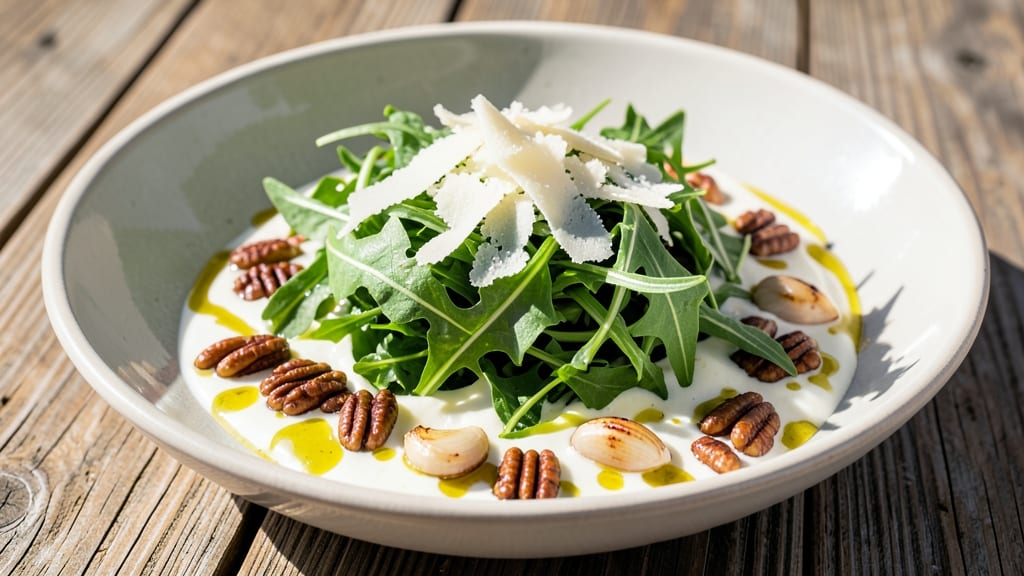
This arugula pesto sauce recipe transforms bold, peppery greens into a vibrant, nutty sauce that elevates everything from salads to grilled meats. The secret lies in balancing fresh arugula’s sharpness with creamy olive oil, garlic, and a touch of lemon—creating a sauce that’s fresh yet rich.
Unlike traditional basil pesto, this version delivers a sophisticated depth that pairs beautifully with both light and hearty dishes.
The process is simpler than you’d think: pulse arugula, garlic, nuts (or seeds), and Parmesan in a food processor until smooth, then stream in olive oil until emulsified. A squeeze of lemon brightens the flavors while keeping the sauce from turning bitter.
What you end up with is a sauce that’s versatile enough for drizzling over pasta, spreading on toast, or tossing with grilled chicken—all while staying fresh-tasting and full of texture.
What sets this sauce apart is its ability to adapt to any meal. Use it as a bold dressing for grain bowls, a creamy pasta sauce, or a tangy dip for crusty bread.
The nutty crunch from toasted pine nuts or walnuts adds dimension, while the arugula’s peppery kick ensures it’s never boring. Best of all, it keeps beautifully in the fridge for up to a week, making it a go-to for quick, flavorful meals.
For an extra layer of richness, stir in a spoonful of Greek yogurt or a splash of cream—this turns it into a luxurious, spreadable sauce perfect for brunch or as a veggie dip.
The possibilities are endless, but the base recipe stays true to its bright, herb-forward roots. Let’s make it!
Ingredients for arugula sauce
Nine simple ingredients transform peppery arugula into a vibrant, nutty sauce perfect for any dish.
| Ingredient | Amount | Notes |
|---|---|---|
| Fresh Arugula Leaves 🌿 | 2 cups | Packed, stems removed |
| Pine Nuts 🥜 | ½ cup | Toasted for richness |
| Garlic Cloves 🧄 | 3 cloves | Peeled, roughly chopped |
| Parmesan Cheese 🧀 | ¾ cup | Freshly grated, high-quality |
| Extra-Virgin Olive Oil 🫒 | ¾ cup | High-quality, fruity |
| Lemon Juice 🍋 | 1 tbsp | Freshly squeezed |
| Sea Salt 🧂 | ½ tsp | Fine grain preferred |
| Freshly Ground Black Pepper 🌶️ | ¼ tsp | Freshly cracked |
| Greek Yogurt 🥛 | 2 tbsp | Plain, full-fat preferred |
The arugula is the star here—pick the freshest, most vibrant leaves you can find, ideally from a farmers market or well-stocked grocery store like Whole Foods. Look for leaves that are deep green with a slight purple tint, not wilted or yellowing. The Parmesan should be real Parmigiano-Reggiano, freshly grated from a block—pre-grated cheese lacks the depth of flavor. Pine nuts can be pricey, but Trader Joe's and Costco often have them at reasonable prices. If you're watching your budget, walnuts or pecans work beautifully as a substitute, though they'll add a slightly different texture and flavor profile.
No pine nuts? Walnuts or pecans are excellent substitutes—they add a richer, earthier flavor. Running low on Parmesan? Pecorino Romano works just as well, though it's saltier, so reduce the added salt slightly. Fresh arugula unavailable? Baby spinach can be used in a pinch, but the peppery kick will be milder. The Greek yogurt adds a luxurious creaminess, but if you're avoiding dairy, cashew cream or vegan cream cheese will work beautifully. For extra brightness, add a splash of white wine vinegar instead of lemon juice, though lemon keeps the sauce fresh and vibrant.
This sauce keeps beautifully in the fridge for up to 5-7 days, stored in an airtight container with a thin layer of olive oil poured on top to preserve its vibrant color. For longer storage, freeze it in ice cube trays—just thaw and whisk before using. The texture will be slightly thicker after freezing, so add a splash of olive oil or water to restore its creaminess. The Greek yogurt version is best used within 3-4 days due to its dairy content, but the base recipe without yogurt will last the full week. Portion it out in small containers for easy use on toast, pasta, or as a salad dressing.
Why You'll Love This Recipe
- No-Chop Nightmare: I swear by this—just tear the arugula, no knife skills required. The leaves break down fast in the food processor, and those pine nuts? Toast them in the same bowl while you wait. Five minutes, zero stress, and you’ve got something restaurant-worthy.
- Umami Bomb: That garlic and Parmesan combo? It’s the kind of flavor that makes you pause mid-bite. The arugula’s peppery kick softens just enough to let the nutty, salty richness shine through. Honestly, I’ve used it as a dip, a pasta sauce, and even a sandwich spread—it’s that good.
- Pasta’s New BFF: Between us, this sauce is my lazy-but-impressive weeknight go-to. Toss it with al dente spaghetti, a sprinkle of black pepper, and you’ve got a meal that feels fancy without the effort. (Yes, even on a Tuesday night when you’d rather be binge-watching than cooking.)
- Leftovers That Don’t Suck: Most sauces turn sad in the fridge, but this one? It actually gets better. Store it for up to three days, and the flavors meld into this deeper, richer version of itself. Use it on eggs, stir it into soup, or drizzle it over grilled chicken—it’s the kind of leftovers you’ll actually eat.
Step-by-step instructions for arugula pesto sauce
Transform vibrant arugula into a luscious, nutty pesto with this simple method.
Toast the Pine Nuts
Heat a dry skillet over medium-low heat and add the 0.5 cup pine nuts. Toast them for 3-4 minutes, stirring constantly, until they turn a rich golden brown and release their nutty aroma. Watch carefully—they burn quickly once they start to color. Remove from heat immediately when toasted and transfer to a small bowl to cool slightly.
This step is crucial for developing the nutty depth in your sauce. If you skip toasting, the pine nuts will remain raw and bland. Let them cool for just 1 minute before proceeding—they'll be hot to the touch and need to temper before blending.
Blend the Herb Base
In a high-speed blender, combine the 2 cups fresh arugula leaves, 3 cloves garlic cloves, 0.5 tsp sea salt, and 0.25 tsp freshly ground black pepper. Pulse briefly to chop the arugula, then add the toasted pine nuts. Blend on high for 10-15 seconds until the mixture forms a coarse paste. Stop occasionally to scrape down the sides with a silicone spatula—this ensures even blending.
You're building the flavor foundation here. The arugula should be finely chopped but not completely liquid yet. If your blender struggles, add 1-2 tablespoons of the extra-virgin olive oil to help the blades move freely. The mixture should look like finely ground herbs with visible nut pieces.
Incorporate the Cheese and Oil
With the blender running on low speed, slowly drizzle in the 0.75 cup extra-virgin olive oil in a thin, steady stream. This gradual addition prevents the oil from splattering and allows it to emulsify properly. After the oil is fully incorporated, add the 0.75 cup freshly grated Parmesan cheese and blend again until completely smooth, about 20-30 seconds.
The sauce should now have a vibrant green color with a thick, creamy consistency. If it's too thick, add 1-2 teaspoons of water or lemon juice to reach your desired texture. This is where the sauce comes together—proper emulsification creates that signature pesto smoothness.
Finish with Yogurt and Acid
Transfer the pesto to a serving bowl and stir in the 2 tbsp Greek yogurt and 1 tbsp lemon juice. Mix thoroughly until fully combined. Taste and adjust seasoning with additional salt or pepper if needed. The yogurt adds a subtle tang that balances the richness, while the lemon juice brightens the entire sauce.
For best results, use the sauce immediately. If storing, cover the surface with plastic wrap pressed directly against the pesto to prevent oxidation. This vibrant sauce pairs beautifully with pasta, grilled meats, or as a sandwich spread—its fresh, herby brightness elevates any dish.
Pro Tips For Making Arugula Sauce
- WILT THE ARUGULA FIRST: Toss the arugula in a hot pan with a splash of water for 30 seconds—just until the edges soften. This kills the bitterness and makes the sauce smoother without wilting it into a sad pile. (Yes, even if you're impatient like me.)
- TOAST PINE NUTS LOW: Cook pine nuts on low heat in a dry pan, stirring constantly, until they’re golden—not brown. I learned this the hard way: burned nuts taste like cardboard, and you’ll waste a fortune. A minute max, and keep your eye on them.
- GRATE PARMESAN FRESH: Skip the pre-grated cheese—it’s full of anti-caking agents that make the sauce grainy. Use a microplane or fine grater and grate it right before mixing. The difference in texture is night and day.
- PULSE GARLIC WITH OIL: Smash the garlic cloves flat with the side of your knife, then pulse them in a mini food processor with 1 tablespoon of olive oil first. This creates a silky base before you add the arugula—no clumps, no raw garlic chunks. (Your future self will thank you.)
Pro cooking tips for this recipe
Blender Mastery
Use a high-speed blender like the Ninja BN600 or Vitamix 5200—they handle tough herbs like arugula effortlessly. Pulse in short bursts (3-5 seconds) to avoid overheating the motor. If your blender struggles, add 1 tbsp olive oil to help emulsify.
For extra smoothness, strain through a fine-mesh sieve after blending—this removes any fibrous bits while keeping the vibrant green color. 💡
Emulsification Secrets
The key to creamy pesto is slow oil incorporation. Drizzle the 0.75 cup olive oil in a thin, steady stream while blending on low speed. Stop blending every 10 seconds to scrape the sides—this prevents oil buildup and ensures even texture.
If the sauce breaks (separates), whisk vigorously or add 1 tsp lemon juice to re-emulsify. The goal is a silky, cohesive texture that clings beautifully to pasta or meats.
Nut Toasting Tips
Toast pine nuts in a dry skillet over medium-low heat—high heat burns them quickly. Stir constantly for 3-4 minutes until golden brown and fragrant. For extra flavor, add 1/8 tsp red pepper flakes while toasting.
Let them cool completely before blending to prevent splattering. If you're short on time, use pre-toasted nuts from the store, but they won’t have the same depth of flavor. 🥜
Acid Balance
The lemon juice balances the richness of olive oil and cheese. Start with 1 tbsp and adjust to taste—too little makes the sauce flat, while too much can overpower. For a tangier twist, swap lemon for white wine vinegar (use 1/2 tbsp).
If using Greek yogurt, add it last to maintain creaminess without thinning the sauce. Taste as you go—this is where the sauce’s brightness shines.
Storage Hacks
Store pesto in an airtight container with a thin layer of olive oil on top to preserve color and freshness. In the fridge, it keeps for 5-7 days, but the texture may thicken. To restore creaminess, whisk in 1 tsp olive oil or warm water.
For freezing, portion into ice cube trays—thaw and whisk before using. The yogurt version freezes well but is best used within 3-4 days for optimal texture. ❄️
Texture Control
Want a chunkier sauce? Pulse the arugula for 5-7 seconds instead of blending fully. For a smooth finish, blend until no visible bits remain. If the sauce is too thick, thin with 1 tsp water or lemon juice.
Too thin? Stir in 1 tbsp grated Parmesan** or toasted nuts. The ideal consistency should coat the back of a spoon but still cling to food. Adjust as you go—this sauce is all about flexibility!
Nutrition facts
Frequently asked questions
Can I make this sauce without a food processor?
Yes! You can use a mortar and pestle for a rustic texture or a sharp knife to finely chop the arugula, garlic, and nuts. However, the sauce may be slightly less smooth. For the best results, pulse in a blender or food processor to achieve that signature creamy consistency.
Why does my arugula sauce turn bitter?
Overblending arugula releases its natural bitterness. Stop blending as soon as it forms a coarse paste (about 10-15 seconds). The Greek yogurt and lemon juice also help balance any bitterness—add them last to preserve freshness. If it's still too strong, stir in an extra 1/2 tbsp lemon juice.
What are the best ways to use this sauce?
This versatile sauce works with everything! Drizzle it over grilled chicken or fish, toss with whole wheat pasta, or spread on toasted baguette slices. It also elevates grain bowls, wraps, and even roasted vegetables. The nutty crunch pairs especially well with creamy textures like mashed potatoes or polenta.
Can I substitute walnuts for pine nuts?
Walnuts add a richer, earthier flavor and are more budget-friendly. Toast them for 3-4 minutes until fragrant, just like pine nuts. For extra texture, leave a few walnut pieces whole. Pecans also work well but have a slightly sweeter profile. Just reduce the toast time to 2 minutes to prevent burning.
How do I fix a broken (separated) sauce?
If your sauce separates, whisk vigorously to re-emulsify. Add 1 tsp lemon juice or a splash of warm water to help bind it back together. For stubborn separation, blend again with 1 tbsp olive oil** while running the blender on low. The key is patience—don't rush the oil incorporation during blending.