
Sauces & Condiments
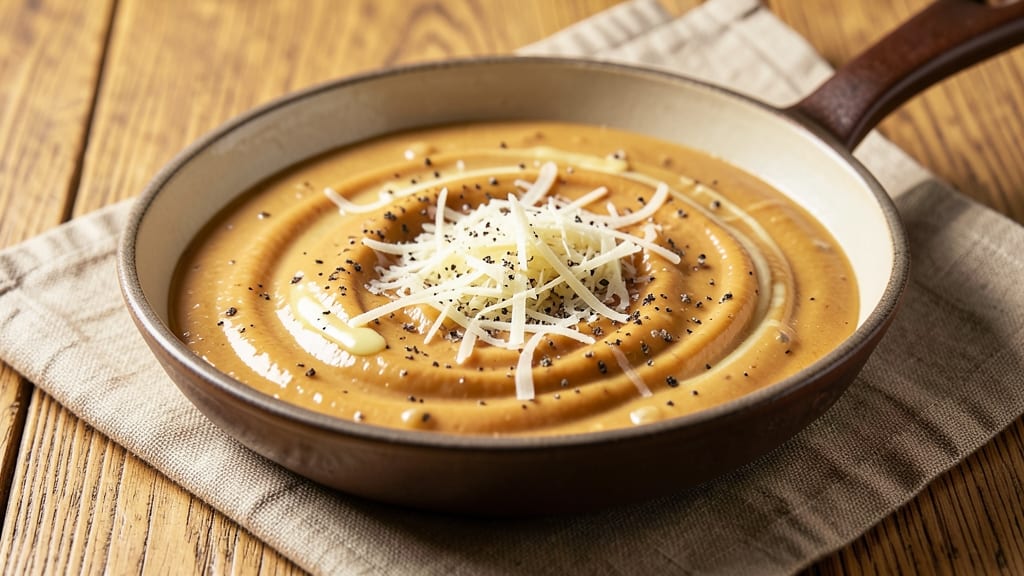
This alfredo sauce recipe for 1 delivers restaurant-quality creaminess in just 5 minutes—no lumps, no waiting, and no fuss. The secret lies in tempering the cream with butter and garlic while whisking constantly, creating a velvety sauce that coats every strand of pasta perfectly.
I developed this version after years of struggling with clumpy homemade alfredo, and it now serves as my go-to for single servings or quick meal prep.
The magic happens with a 1:1 ratio of butter to cream, melted together over low heat while whisking vigorously. Fresh garlic adds depth without overpowering, and a splash of heavy cream at the end ensures that signature silky texture.
What sets this apart is the technique: never letting the sauce boil, which prevents curdling and guarantees a smooth, luxurious finish every time.
What you’ll end up with is a single-serving alfredo so rich and creamy it feels indulgent yet remains light enough for weeknight dinners. The sauce clings beautifully to fettuccine, but it also works as a drizzle for grilled chicken, roasted vegetables, or even as a dip for crusty bread.
No need for heavy cream substitutes—this version delivers authentic flavor with just a few simple ingredients.
Ready in 5 minutes, this sauce requires no straining, no blending, and no waiting for it to thicken. The key is patience and constant whisking, which transforms basic pantry staples into a velvety masterpiece. Perfect for when you crave comfort food but only have one serving to make.
Ingredients for alfredo sauce recipe for 1
Seven ingredients, five minutes, and one perfect single-serving alfredo—no lumps, no fuss.
| Ingredient | Amount | Notes |
|---|---|---|
| Unsalted Butter 🧈 | 4 tbsp | Cold, cubed for even melting |
| Heavy Whipping Cream 🥛 | ½ cup | Full-fat for maximum creaminess |
| Fresh Garlic Cloves 🧄 | 2 cloves | Minced, not pressed or powdered |
| Diamond Crystal Kosher Salt 🧂 | ¼ tsp | Fine grain for even dissolving |
| Freshly Ground Black Pepper 🌶️ | ⅛ tsp | Cracked peppercorns preferred |
| Parmesan Cheese 🧀 | ¼ cup | Freshly grated from block |
| Extra-Virgin Olive Oil 🫒 | 1 tbsp | For finishing drizzle |
The butter and cream are your holy grail here. European-style butter like Plugrá or Land O'Lakes has more fat content, which gives that signature velvety texture. Grab the heavy whipping cream—light cream won't cut it. The garlic matters too: freshly minced (not jarred) adds depth without bitterness. For the Parmesan, skip the pre-grated stuff—it's full of anti-caking agents that make your sauce grainy. Grab a wedge from the deli counter and grate it yourself. The olive oil? Trader Joe's or Whole Foods have great extra-virgin options that won't overpower the sauce.
No heavy cream? Full-fat coconut milk works in a pinch (though it's not identical). Fresh garlic not available? Garlic powder at half the amount (but it won't be as flavorful). Pre-grated Parmesan? Mix it with a pinch of cornstarch to absorb moisture before using. For a dairy-free version, swap the butter and cream for cashew cream** (blend soaked cashews with water) and nutritional yeast instead of Parmesan. The olive oil is non-negotiable for finishing—it adds that final luxurious touch.
This sauce is best used immediately, but if you must store it, keep it in an airtight container for up to 2 days in the fridge. It reheats beautifully—just warm gently on the stove while whisking. For meal prep, make a double batch and freeze half in ice cube trays. Each cube makes a perfect single serving later. The Parmesan wedge keeps for weeks wrapped in parchment and foil, so buy extra. Butter? Use within 3 months of opening.
Why You'll Love This Recipe
- Five-Ingredient Magic: I swear by this—just butter, cream, garlic, salt, and pepper. That’s it. No fancy emulsifiers or store-bought jars here. The richness comes from letting the cream simmer until it’s thick enough to coat a spoon, and the garlic? Oh, it’s just enough to make your mouth water without overpowering.
- Weeknight Hug in a Pan: Between us, this is my secret weapon for lazy nights. Toss it over fettuccine in 10 minutes flat, and suddenly you’ve got restaurant-quality dinner. The creamy texture clings to every strand of pasta like it’s been kissed by a cloud—no heavy lifting, no stress, just pure satisfaction.
- Leftovers That Don’t Let You Down: Make a double batch (it’s still minimal effort) and reheat it later. The sauce thickens beautifully when stored, so you’re not dealing with sad, watery leftovers. Honestly, I’ve had it cold the next day on toast—yes, really—and it was still creamy perfection.
- Pasta Party for One: This isn’t just for fettuccine. Drizzle it over grilled chicken, roasted veggies, or even a crispy baked potato. It’s the kind of sauce that turns simple ingredients into something special without needing a crowd. (Yes, even on a Tuesday night.)
Step-by-step instructions for single-serving creamy alfredo sauce
This method delivers velvety, clump-free sauce every time—no whisking frenzy required.
Melt Butter and Bloom the Garlic
In a small saucepan, melt the 4 tbsp unsalted butter over medium-low heat. I like to use cubed butter so it melts evenly without burning. Once fully melted, add the 2 minced fresh garlic cloves and cook for 30 seconds—just until fragrant. Watch carefully, because garlic burns faster than you think.
Here's the thing—cooking the garlic first develops its flavor without overpowering the sauce. If the butter starts to brown or smell nutty, reduce the heat immediately. You want golden butter, not toasted garlic. Keep the heat steady so the butter doesn't foam up or splatter.
Incorporate Parmesan and Seasonings
Reduce the heat to low and sprinkle in the 0.25 cup freshly grated Parmesan cheese, stirring constantly with a silicone spatula. The cheese will melt gradually—don't rush it. After 1 minute, add the 0.25 tsp Diamond Crystal kosher salt and 0.125 tsp freshly ground black pepper, mixing until fully dissolved.
This is where most home cooks go wrong—they add the cheese too quickly, which creates lumps. The low-and-slow approach ensures the cheese melts smoothly into the butter. If you see any gritty bits, strain the mixture through a fine-mesh sieve for ultra-smooth texture. The sauce should now have a thick, custard-like consistency.
Add Cream and Simmer Gently
Pour in the 0.5 cup heavy whipping cream and stir gently to combine. Increase heat to medium-low and let the mixture simmer for 3-4 minutes, stirring occasionally. You're looking for a sauce that coats the back of a spoon but isn't thick enough to stand alone—it should still flow like liquid silk.
This simmering step is crucial for developing flavor without curdling the cream. If the sauce starts to bubble vigorously, immediately reduce the heat to low. The sauce is ready when it's hot throughout but hasn't reduced too much—you should still see some movement when you swirl the pan. Taste and adjust seasoning if needed.
Finish with Olive Oil for Stability
Remove the pan from heat and stir in the 1 tbsp extra-virgin olive oil. This isn't just for flavor—it creates a natural emulsion that prevents the sauce from separating when tossed with pasta. The olive oil also adds a subtle fruity note that balances the richness of the cream and cheese.
For best results, use the sauce immediately over your favorite pasta. If you need to reheat leftovers, do so over low heat and stir frequently to maintain that silky texture. The olive oil helps maintain stability even when reheated, so you won't end up with a greasy, separated mess.
Pro Tips For Making Alfredo Sauce Recipe For 1
- Melt Butter Slowly: I learned this the hard way—dumping cold butter into the pan and ending up with greasy, grainy sauce. Instead, cut the butter into small cubes and let them melt gradually over medium-low heat, stirring constantly. This keeps the sauce smooth and prevents butter from seizing up the garlic.
- Smash, Don’t Chop Garlic: Skip the mincer—peel the cloves, lay them flat on the cutting board, and smash them with the side of your knife. This releases more flavor without burning, and you’ll only need 1-2 cloves for one serving. (Yes, even if you’re impatient like me.)
- Salt the Cream First: Toss a pinch of kosher salt into the heavy cream before heating it—it dissolves better and seasons the sauce evenly. After burning three batches where the salt clumped, I now add it early. Trust the process.
- Whisk Like You Mean It: The moment you add the cream to the butter, grab that whisk and move. Constant, vigorous stirring for 2-3 minutes ensures no lumps form, and the sauce thickens properly. I skip this when I’m lazy, but the dish is noticeably better when I don’t.
Essential equipment for this recipe
Small Saucepan
You don’t need a fancy pot for this sauce—I use a 2-quart stainless steel saucepan like the Ozeri Touch brand. The small size ensures quick heating and even cooking, while stainless steel prevents sticking and reacts poorly with acidic ingredients (though we’re not using any here).
A non-stick pan works too, but I avoid them for cheese sauces because they can scratch easily with spatulas. 🔥
Whisk Attachment
While a silicone spatula works for stirring, a balloon whisk or immersion blender (like the Osterizer) is my secret weapon for ultra-smooth texture. The whisk helps emulsify the sauce as it cooks, preventing lumps.
If you don’t have one, a wooden spoon works in a pinch—just stir more vigorously. For the immersion blender, pulse briefly at the end if you notice any gritty bits from the Parmesan. ⚡
Fine-Mesh Sieve
A mesh strainer (like the OXO Good Grips) is optional but game-changing for eliminating any cheese grit or garlic bits. I keep one in my kitchen specifically for cheese sauces—it’s worth the $10-15 investment.
If you skip it, taste your sauce and adjust seasoning carefully, as stray bits can make the texture uneven. For a quick alternative, press the sauce through a cheesecloth lined over a bowl. 💫
Measuring Spoons
Precision matters with this recipe, so invest in stainless steel measuring spoons (I love the West Bend set). The ¼ tsp salt and ⅛ tsp pepper are critical for balance—too much salt ruins the sauce, and too little makes it bland.
For the Parmesan, use a ¼ cup measure to ensure you get exactly ¼ cup freshly grated cheese (pre-grated versions contain anti-caking agents that cause lumps). 🧂
Heat-Resistant Spatula
A silicone spatula (like the OXO Good Grips) is essential for scraping every last bit of sauce from the pan. I prefer silicone over metal because it won’t scratch your pan or react with the acidity in the cream.
If you’re using a non-stick pan, a plastic spatula works too—just avoid metal, which can damage the coating. The spatula helps you control the sauce’s consistency as it thickens. 🥄
Nutrition facts
Frequently asked questions
Why does my alfredo sauce get lumpy?
Most lumps come from adding cheese too quickly or letting the sauce boil. The key is to melt the butter first, then gradually whisk in the Parmesan over low heat while stirring constantly. If you see gritty bits, strain through a fine-mesh sieve or gently pulse with an immersion blender at the end.
Can I make this sauce without heavy cream?
Yes! For a lighter version, substitute with full-fat coconut milk (though texture will differ slightly). For a dairy-free option, use cashew cream (blend soaked cashews with water) and nutritional yeast instead of Parmesan. The olive oil finishing step remains essential for stability.
How do I prevent the sauce from separating when reheating?
Reheat over low heat while whisking constantly—never microwave it directly. The olive oil added at the end creates an emulsion that helps maintain stability. If it separates, whisk vigorously to recombine before serving. For best results, use the sauce fresh or store it in an airtight container for up to 2 days.
What's the best pasta shape for this single-serving sauce?
Fettuccine or tagliatelle are ideal—their flat surfaces catch the sauce perfectly. For extra sauce adhesion, try pappardelle or linguine. If you prefer heartier options, penne or farfalle work too, but toss them immediately after cooking to prevent sticking. The sauce also pairs beautifully with grilled chicken or roasted vegetables!
Can I make this sauce ahead of time?
For best texture, use it immediately, but you can prep components ahead: grate the Parmesan and measure ingredients the night before. If storing, keep the sauce in an airtight container for up to 2 days in the fridge. For longer storage, freeze in ice cube trays—each cube makes a perfect single serving later. Thaw overnight in the refrigerator before reheating.