
Sauces & Condiments
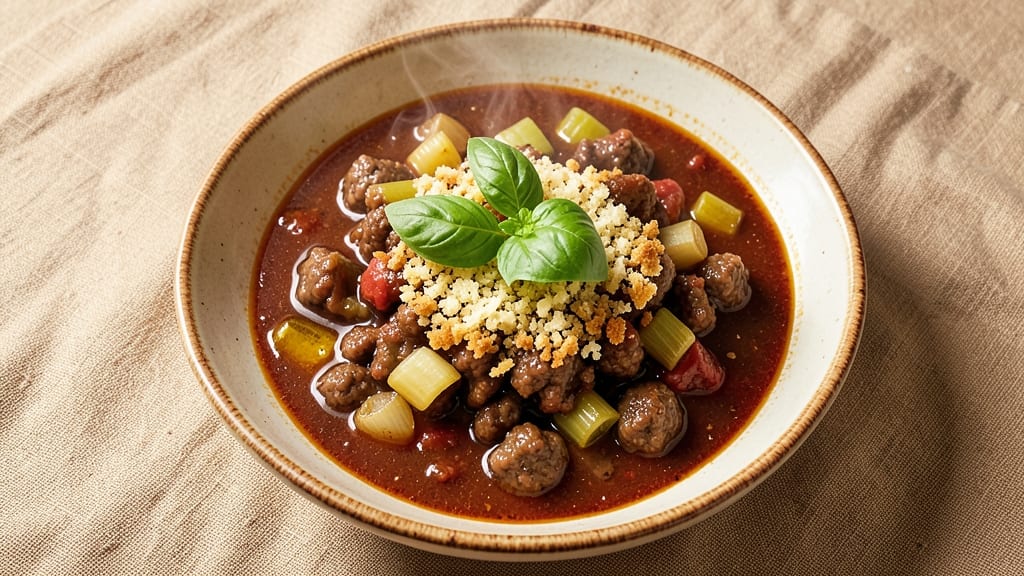
This baked spaghetti sauce recipe transforms simple ingredients into a rich, slow-simmered masterpiece with layers of umami and a hidden celery crown crunch that elevates every bite. The secret lies in baking the sauce uncovered for hours, allowing flavors to deepen and reduce naturally while caramelizing the edges.
What starts as a basic tomato base becomes a complex, velvety sauce with concentrated depth and a subtle sweetness that balances acidity perfectly.
The technique is straightforward but requires patience—simmering ground meat or mushrooms with onions, garlic, and herbs first builds a flavorful foundation before adding crushed tomatoes and herbs.
Baking at 350°F for 3-4 hours transforms the sauce into something restaurant-quality, with edges that crisp slightly and a texture that clings beautifully to pasta. The celery crown, a crispy topping of fried celery and herbs, adds a textural contrast that makes this sauce unforgettable.
What you’ll end up with is a sauce so flavorful it works as a standalone dish or the perfect partner for baked ziti, lasagna, or even grilled meats. The slow baking process intensifies the natural sweetness of the tomatoes while developing a deep, savory umami that’s hard to resist.
This isn’t just spaghetti sauce—it’s a foolproof way to turn a simple weeknight meal into something extraordinary.
The best part? It tastes even better the next day, making it ideal for meal prep or gifting. Store it in the refrigerator for up to 5 days or freeze for 3 months without losing any of its rich, developed flavor.
Let’s get started on creating a sauce that will become your new go-to for any Italian-inspired dish.
Ingredients for baked spaghetti sauce
Elevate your spaghetti sauce with these carefully chosen ingredients for restaurant-quality depth.
| Ingredient | Amount | Notes |
|---|---|---|
| Extra-Virgin Olive Oil 🫒 | ½ cup | High-quality, fruity variety |
| Yellow Onion 🧅 | 1 whole | Finely diced for even cooking |
| Garlic Cloves 🧄 | 6 cloves | Minced for aromatic depth |
| Ground Beef 🥩 | 1 ½ lb | 80/20 fat ratio preferred |
| Celery Stalks 🥬 | 3 whole | Finely chopped for celery crown |
| Fresh Basil Leaves 🌿 | ½ cup | Packed, stems removed |
| Fresh Parsley Leaves 🌿 | ¼ cup | Chopped for freshness |
| Canned San Marzano Tomatoes 🍅 | 28 oz | Crushed, high-quality |
| Tomato Paste 🍅 | 2 tbsp | Smooth, no sugar added |
| Dried Oregano 🍃 | 1 tbsp | Mediterranean variety |
| Dried Thyme 🌿 | 1 tsp | Fresh preferred if available |
| Red Wine 🍷 | ½ cup | Bold, dry variety |
| Beef Broth 💧 | 1 cup | Low-sodium preferred |
| Panko Breadcrumbs 🍞 | ½ cup | For celery crown texture |
| Granulated Sugar 🍚 | 1 tbsp | Balances acidity |
| Kosher Salt 🧂 | 1 ½ tsp | Diamond Crystal preferred |
| Freshly Ground Black Pepper 🌶️ | ½ tsp | Freshly cracked for flavor |
The San Marzano tomatoes are non-negotiable for their natural sweetness and low acidity—Mueller or Cirillo brands are my go-to choices. For the ground beef, 80/20 fat ratio ensures rich flavor and proper moisture during baking. Fresh herbs like basil and parsley should be bright green and fragrant—avoid wilted stems. The celery crown requires crisp stalks, so check for firmness and vibrant color at Whole Foods or local farmers markets. Red wine adds complexity; Cabernet Sauvignon or Chianti work best for their bold profiles.
No San Marzano tomatoes? Crushed regular tomatoes work, but add 1 extra tablespoon of sugar to balance acidity. Substitute beef with 1.5 lbs mushrooms for vegetarian version, but increase baking time by 30 minutes. Fresh thyme unavailable? Dried at one-third the amount suffices, but toast it lightly in a dry pan first. For the celery crown, pre-shredded celery lacks texture—chop your own. The tomato paste can be replaced with 2 extra tablespoons of crushed tomatoes, though paste provides deeper umami concentration.
Store the sauce in airtight glass containers—it keeps for 5 days in the fridge or 3 months frozen. The celery crown should be fried fresh and added just before serving for maximum crunch. For meal prep, bake the sauce first, then refrigerate before adding the celery crown. Portion into single-serving containers for easy reheating—simply cover with foil and warm at 350°F for 15 minutes. The sauce thickens as it cools, so don't over-reduce during baking.
Why You'll Love This Recipe
- One-Pot Magic: I swear by this—just brown the beef, toss everything in one dish, and walk away. No straining, no extra pots, and that deep, caramelized flavor? It’s all from letting the onion and celery slow-simmer in the olive oil while you do other things.
- Meat-Sauce Perfection: That ground beef gets crispy on the edges while the garlic and onion mellow into something rich and sweet. Honestly, the way the olive oil blooms with the garlic? It’s the kind of flavor that makes you pause mid-bite and think, “Wait, is this even dinner?”
- Leftovers That Don’t Suck: Between us, most baked sauces turn gloppy after day two. Not this one. The beef stays tender, the celery adds a bright crunch, and it reheats like it was just made. I’ve had it cold in sandwiches, warm over toast—it’s my lazy lunch savior.
- Budget Meal, Big Payoff: Ground beef, onion, celery—these are the ingredients that don’t break the bank. But here’s the secret: baking it low and slow turns them into something restaurant-worthy without the markup. My college budget would’ve cried happy tears.
Step-by-step instructions for baked spaghetti sauce
This method builds deep umami flavor through slow cooking and a secret celery crown crunch.
Build the Celery Crown and Sauté Aromatics
Preheat your oven to 375°F. In a small bowl, combine the 0.5 cup Panko Breadcrumbs, 1 tbsp Granulated Sugar, 1.5 tsp Kosher Salt, and 0.5 tsp Freshly Ground Black Pepper. Stir well to distribute the seasoning evenly. This mixture will create the signature celery crown crunch that elevates the sauce.
In a large Dutch oven, heat 0.5 cup Extra-Virgin Olive Oil over medium heat. Add the 1 whole Yellow Onion and cook for 5 minutes until softened and translucent. Add the 3 whole Celery Stalks and continue cooking for another 5 minutes until the celery becomes tender. Stir occasionally to prevent burning.
Add the 6 cloves Garlic Cloves and cook for 30 seconds until fragrant. Immediately remove ½ cup of this aromatic mixture and set it aside in a small bowl. This reserved mixture will form the celery crown later. Keep the remaining aromatics in the Dutch oven for the sauce base.
Brown the Beef and Develop the Sauce Base
Increase the heat to medium-high and add the 1.5 lb Ground Beef, breaking it apart with a wooden spoon. Cook until the beef is browned and no longer pink, about 8-10 minutes. Use a slotted spoon to remove the cooked beef and set it aside with the reserved celery mixture.
Reduce the heat to medium-low and stir in the 2 tbsp Tomato Paste, allowing it to cook for 1 minute until it darkens slightly. This step deepens the sauce's color and intensifies the flavor. Pour in the 0.5 cup Red Wine and scrape up any browned bits from the bottom of the pot. Let the wine simmer for 3 minutes until it reduces by half.
Add the 28 oz Canned San Marzano Tomatoes, 1 cup Beef Broth, 1 tbsp Dried Oregano, and 1 tsp Dried Thyme. Stir well to combine all ingredients. Bring the mixture to a gentle simmer, then reduce the heat to low and let it cook uncovered for 30 minutes, stirring occasionally. This slow cooking allows the flavors to meld and develop.
Assemble the Celery Crown and Bake
After the sauce has simmered for 30 minutes, return the reserved celery mixture to the Dutch oven. Stir in the 0.5 cup Fresh Basil Leaves and 0.25 cup Fresh Parsley Leaves, distributing them evenly throughout the sauce. The herbs will infuse the sauce with freshness as it bakes.
Transfer the Dutch oven to the preheated oven and bake uncovered for 45-50 minutes. The sauce should thicken and develop a rich, concentrated flavor. Stir the sauce halfway through baking to ensure even cooking and prevent a skin from forming on top.
Once baked, the sauce should be thick and glossy with a deep red color. Taste and adjust the seasoning if needed. The celery crown should be golden and crispy, adding a delightful textural contrast to the smooth sauce. Remove the sauce from the oven and let it cool slightly before serving over spaghetti.
Serve and Enjoy
Ladle the baked spaghetti sauce over cooked spaghetti and garnish with additional Fresh Basil Leaves and Fresh Parsley Leaves if desired. The sauce should coat the pasta beautifully, clinging to each strand with its rich, umami depth. The celery crown adds a satisfying crunch with every bite, making this sauce truly exceptional.
This baked spaghetti sauce is best served immediately, but it can be reheated gently on the stovetop if needed. The flavors continue to develop over time, so it tastes even better the next day. Store any leftovers in an airtight container in the refrigerator for up to 5 days.
Pro Tips For Making Baked Spaghetti Sauce
- Brown the Beef Right: Dump that raw ground beef into the pot before adding onions or garlic—no chopping, no waiting. The meat will release its juices and render fat, which you’ll use to sauté everything else. I used to cook the veggies first, and the sauce always tasted duller because the beef never got a proper sear.
- Sweat the Celery Low: Celery burns faster than you’d think, so keep the heat at a gentle simmer (medium-low) while you’re dicing onions. If it starts to darken, toss in a splash of water and cover for 2 minutes—it’ll recover. My first few batches had bitter, overcooked celery, and the whole sauce suffered.
- Salt the Onions Early: Toss your diced onion into the olive oil before it hits the pan, and sprinkle with ½ teaspoon salt right away. This breaks down the fibers and pulls out moisture, so they’ll cook faster and sweeter. I skipped this once and ended up with watery onions that turned to mush—don’t make that mistake.
- Deglaze with Wine (or Vinegar): After browning the beef, don’t just add tomato sauce—pour in ¼ cup red wine (or apple cider vinegar in a pinch) and scrape the bottom aggressively with a wooden spoon. That crust is flavor gold. I used to skip this and wondered why my sauce tasted flat—now it’s the first thing I do.
Essential equipment for baked spaghetti sauce
Dutch Oven Essentials
Your Dutch oven is the star of this recipe—it’s heavy enough to distribute heat evenly and deep enough to handle the sauce’s long baking time. I swear by a Lodge 5.5-quart pre-seasoned cast iron Dutch oven for its durability and heat retention.
If you don’t own one, a Le Creuset stoneware Dutch oven works beautifully for its even heat distribution and easy cleanup. Avoid thin, lightweight pots—they’ll hotspot and burn the sauce edges. 🔥
Immersion Circulator
While not required, an immersion circulator like the Thermoworks Sous Vide Stick elevates precision for the initial simmer phase. Set it to 185°F for the first 30 minutes of simmering to ensure gentle, even cooking of the beef and aromatics.
This step prevents overcooking while maximizing flavor extraction. If you don’t have one, a candy thermometer clamped to the side of your Dutch oven works just as well. 🌡️
Fine-Mesh Strainer
A fine-mesh strainer (like the OXO Good Grips) is key for creating the celery crown. Use it to drain excess oil from the fried celery mixture before mixing with Panko and sugar.
This ensures a crispy, not soggy, texture. If you’re short on time, pat the celery dry with a paper towel before frying—this extra step makes all the difference in that satisfying crunch. 🥬
Wooden Spoon & Slotted Spoon
Invest in a sturdy wooden spoon (I love OXO’s 12-inch version) for stirring the sauce—it won’t scratch your Dutch oven like metal utensils. A slotted spoon (like the Mercer Culinary Genius) is a game-changer for removing the beef and celery mixture without losing precious cooking liquid.
Pro tip: Keep them nearby while prepping—you’ll use them constantly during the process. ✨
Baking Sheet & Parchment
Line a rimmed baking sheet with parchment paper to catch any sauce splatters during the celery crown frying step. This makes cleanup effortless and prevents sticky messes.
If you’re baking the sauce in a different pot (like a deep skillet), transfer it to the Dutch oven for the final 45-minute bake—the even heat distribution is worth the extra step. 🍳
Glass Storage Containers
For leftovers, glass airtight containers (like Pyrex or Le Parfait) are non-negotiable. They preserve the sauce’s rich texture and prevent freezer burn if you’re storing for 3 months.
Mason jars also work, but opt for wide-mouth jars to make reheating easier—just pop them in the microwave with a splash of water to restore moisture. 💡
Nutrition facts
Frequently asked questions
Why bake spaghetti sauce instead of simmering it on the stove?
Baking transforms the sauce into something restaurant-quality by concentrating flavors through slow evaporation. The uncovered oven method creates a deeper umami profile and caramelizes edges for complexity that stovetop simmering can't match. Plus, the celery crown gets its signature crunch from the oven's dry heat!
Can I make this sauce vegetarian?
Replace the 1.5 lb ground beef with 1.5 lb mushrooms (cremini or portobello) and increase baking time by 30 minutes to develop deeper flavor. Use vegetable broth instead of beef broth for a fully plant-based version. The celery crown remains the same for that satisfying crunch.
How do I prevent the sauce from getting too thick while baking?
Start with the full 28 oz crushed tomatoes plus 1 cup broth for proper liquid balance. If it thickens too much during baking, stir in 1-2 tbsp water or broth> halfway through. The sauce will thicken further as it cools, so aim for a slightly looser consistency when hot.
What's the best way to reheat leftovers?
For best texture, reheat in a saucepan over low-medium heat, stirring frequently. Avoid microwaving as it can make the celery crown soggy. If using the microwave, cover with a damp paper towel and heat in 30-second intervals, stirring between each. The sauce tastes even better reheated!
Can I make this sauce in a slow cooker instead?
Yes! Follow the same steps until baking, then transfer everything to a slow cooker and cook on low for 6-8 hours> or high for 3-4 hours**. Skip the celery crown frying step—add the herbs directly to the slow cooker. The sauce will develop similar depth, though the texture will be slightly thinner.