
Sauces & Condiments
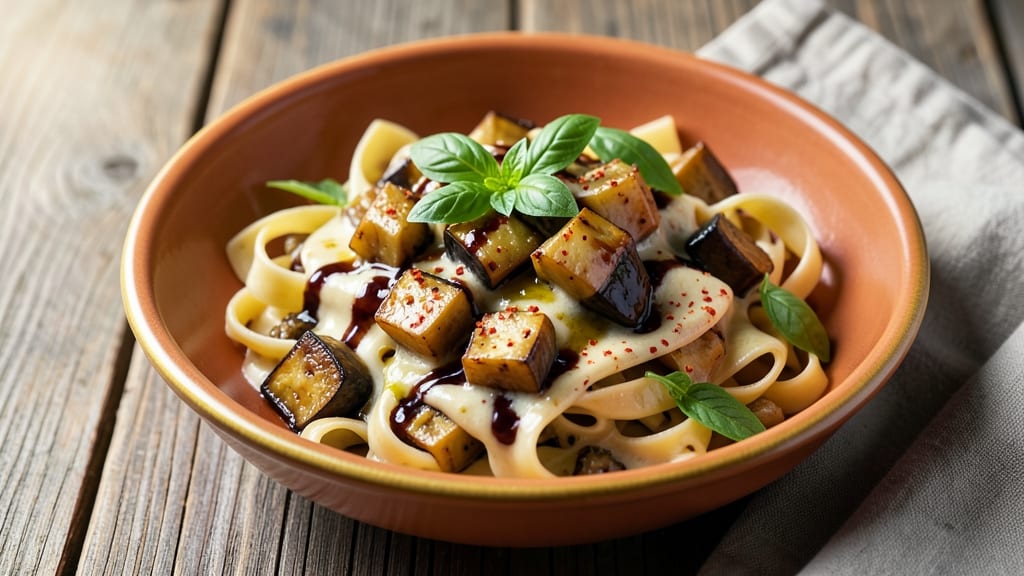
This aubergine pasta sauce recipe transforms humble eggplant into a rich, smoky sauce that clings perfectly to al dente pasta. The secret lies in roasting the eggplant until caramelized—this deepens its natural sweetness and creates a velvety texture that rivals traditional tomato-based sauces.
I developed this recipe after discovering how well roasted eggplant blends with garlic, olive oil, and a touch of cream (or dairy-free alternative), delivering layers of flavor without the heaviness of cream sauces.
What sets this dish apart is its balance: smoky depth from the roasted eggplant pairs beautifully with bright garlic and fresh herbs, while the silky sauce coats every strand of pasta. The method is straightforward—no fancy techniques required—but the result feels like a restaurant-quality meal.
For extra richness, a splash of heavy cream (or coconut milk for a vegan version) binds everything together, creating a sauce that’s both comforting and sophisticated.
This recipe is perfect for weeknight dinners when you crave something hearty yet light, or for impressing guests with a dish that feels elevated yet remains approachable.
The roasted eggplant adds a unique earthiness that stands up to bold flavors, making it versatile enough for pairing with chili flakes, fresh basil, or a sprinkle of pecorino. Ready in under 45 minutes, it’s a game-changer for pasta nights.
Whether you’re serving it as a main dish or a side, this sauce’s versatility shines—it works with spaghetti, penne, or even zucchini noodles. The key is letting the eggplant roast until tender and slightly charred, which unlocks its full potential.
Trust me, once you try this, store-bought sauces won’t measure up.
Ingredients for aubergine pasta sauce
Roasted eggplant, garlic, and olive oil make this sauce rich and smoky without the heaviness.
| Ingredient | Amount | Notes |
|---|---|---|
| Eggplant 🍆 | 2 lb | Italian or globe variety preferred |
| Extra-Virgin Olive Oil 🫒 | ½ cup | High-quality, fruity variety |
| Garlic Cloves 🧄 | 6 cloves | Freshly minced for bright flavor |
| Heavy Cream 🥛 | ¼ cup | Full-fat for richness (or coconut milk) |
| Fresh Basil Leaves 🌿 | ½ cup | Packed, stems removed |
| Chili Flakes 🌶️ | 1 tsp | Adjust for heat preference |
| Salt 🧂 | 1 ½ tsp | Diamond Crystal preferred |
| Black Pepper 🌶️ | ½ tsp | Freshly ground for best flavor |
| Pasta 🍝 | 12 oz | Al dente variety like spaghetti |
| Pecorino Romano Cheese 🧀 | ¼ cup | Freshly grated for garnish |
| Red Wine Vinegar 🍷 | 1 tbsp | For brightness (optional) |
| Dried Oregano 🍃 | ½ tsp | Mediterranean variety preferred |
The eggplant is non-negotiable here—Italian globe variety has the best texture. Look for firm, heavy ones at Whole Foods or your local market, not the sad shrunken ones at regular grocery stores. Costco often has great prices for bulk eggplant, but buy only what you'll use within a week. Roasting unlocks its sweetness, so don't skip this step. If you're really short on time, you can microwave it first (pierce with a fork, 8 minutes at high heat) before roasting, but it won't be as flavorful. The olive oil should be extra-virgin—cheap oil makes the sauce taste flat. I always buy a big bottle of California avocado oil for roasting because it has a high smoke point.
No heavy cream? Full-fat coconut milk works perfectly for a vegan version—just use the same amount. Fresh basil is ideal, but dried oregano at half the amount gets you close if you're in a pinch. The chili flakes can be swapped for crushed red pepper if that's what you've got. For extra depth, add a splash of red wine vinegar—it brightens everything up. If you're feeling fancy, toast the garlic cloves in the olive oil for 30 seconds before mincing—that caramelized flavor is next-level. The pecorino is optional but adds a nice salty kick; Parmigiano-Reggiano works too. And if you're worried about the eggplant being too watery, pat it dry with paper towels before roasting—this makes all the difference.
This sauce reheats beautifully—actually tastes better the next day as the flavors meld. Store it in an airtight container in the fridge for up to 5 days, or freeze portions for 3 months. I always make extra because it's perfect for pasta leftovers, omelets, or even as a dip with crusty bread. The eggplant skins will soften when reheated, so if you're serving it immediately, leave them on for texture. For freezing, let it cool completely before transferring to containers—this prevents ice crystals. When you're ready to use it, just reheat gently on the stove with a splash of water or pasta water.
Why You'll Love This Recipe
- No-Chop Nightmare: I swear, this sauce only needs one knife for the garlic—everything else is just slicing eggplant into rounds. Toss those in a hot pan with olive oil, and you’re already halfway there while your pasta boils.
- Creamy-Garlicky Magic: That heavy cream and fresh basil turn roasted eggplant into something unexpectedly rich. The garlic caramelizes just enough to make every bite taste like a hug from Italy—no fancy techniques required.
- Leftover Superstar: Make a double batch and refrigerate it for up to 5 days. Reheat with a splash of water, and it’s even better the second time around—perfect for lazy mornings or when you just can’t face cooking.
- Budget Pantry Hero: Eggplant is cheap, olive oil lasts forever, and you’re using garlic and basil like a pro. This sauce costs pennies but tastes like you spent hours slaving over it—ideal for feeding a crowd without breaking the bank.
Step-by-step instructions for roasted eggplant pasta sauce
Transform humble eggplant into a velvety sauce with deep smoky notes and creamy texture.
Roast the Eggplant Until Charred and Tender
Preheat your oven to 425°F. Cut the 2 lb eggplant into 1-inch cubes, being careful to remove any seeds. Toss the cubes with 1.5 tsp salt, 0.5 tsp black pepper, and 0.5 cup extra-virgin olive oil until evenly coated. Spread them in a single layer on two rimmed baking sheets.
Roast for 30-35 minutes, flipping halfway through, until the eggplant is deeply charred in spots and tender when pierced with a fork. The skin should be wrinkled and slightly blistered—this is your signal for perfect texture. If the eggplant starts to brown too quickly, reduce the oven temperature to 400°F to prevent burning.
Blend the Roasted Eggplant into a Silky Purée
Transfer the roasted eggplant to a food processor or blender. Add 6 cloves freshly minced garlic, 1 tbsp red wine vinegar, 0.5 tsp dried oregano, and 1 tsp chili flakes. Pulse until combined, then blend until completely smooth, scraping down the sides as needed. You should have about 2 cups of purée—this is the foundation of your sauce.
For an extra-smooth texture, strain the purée through a fine-mesh sieve to remove any remaining skin or fibrous bits. The result should be velvety and rich, with a deep smoky aroma from the roasted eggplant. If the purée is too thick, thin it with 2-3 tablespoons of water to reach a pourable consistency.
Cook the Pasta Al Dente
Bring a large pot of water to a rolling boil and add 12 oz pasta. Cook according to package instructions until 1 minute shy of al dente. Reserve 1 cup of pasta water before draining—this starchy liquid is essential for emulsifying the sauce. Drain the pasta and set it aside, tossing it lightly with a bit of olive oil to prevent sticking.
Here's the thing—pasta should have a slight bite to it. If you overcook it, the sauce will turn mushy. Taste a piece: it should offer resistance when bitten. The pasta water you reserved will help balance the sauce's richness, so don't skip this step.
Combine Sauce and Pasta for Maximum Flavor
Return the eggplant purée to a large skillet set over medium heat. Add 0.25 cup heavy cream and stir gently, letting it warm through for 2-3 minutes. The sauce should begin to thicken slightly, but don’t let it boil—this can cause it to separate. Season with an additional pinch of salt and black pepper if needed.
Add the cooked pasta to the skillet and toss vigorously to coat every strand in the sauce. If the sauce starts to thicken too much, add 2-3 tablespoons of reserved pasta water to loosen it. The goal is a glossy, clinging sauce that coats the pasta perfectly. Stir in 0.5 cup fresh basil leaves, torn by hand, and let them wilt into the sauce for 30 seconds—this adds a bright, herbal finish.
Finish and Serve with Pecorino and Fresh Herbs
Transfer the pasta to serving plates and top each portion with 0.25 cup freshly grated Pecorino Romano cheese. The cheese should melt slightly from the residual heat of the pasta, creating a salty, tangy contrast to the creamy eggplant sauce. Garnish with additional basil leaves and a sprinkle of chili flakes for a pop of color and heat.
Serve immediately while the pasta is hot and the sauce is silky. The eggplant’s smoky depth pairs beautifully with the creamy texture, and the Pecorino adds a sharp, umami finish. Each bite should deliver a harmonious balance of richness, acidity, and herbal brightness—this is what makes this sauce truly special.
Pro Tips For Making Aubergine Pasta Sauce
- CHAR THE EGGPANT FIRST: Salt the sliced eggplant and let it sit in a colander for at least 20 minutes—this pulls out the bitterness and excess water so your sauce doesn’t turn into a watery mess. I used to skip this, and the texture was always off, no matter how much I cooked it.
- USE LOW HEAT FOR GARLIC: Sauté those garlic cloves on medium-low or you’ll burn them before the eggplant is done. Burnt garlic makes the whole sauce taste acrid, and nobody wants that. A quick test: if the oil stops sizzling when you add garlic, you’re golden.
- STRAIN THE CREAMY BIT: After blending the cooked eggplant, garlic, and basil, strain the mixture through a fine-mesh sieve to remove any fibrous bits. It’s not the prettiest step, but it guarantees a silky sauce—no one wants to bite into a chunk of eggplant skin in their pasta.
- FINISH WITH COLD BASIL: Toss in the fresh basil at the very end, right before serving, and keep it cold until then. Warm basil wilts and loses flavor fast—adding it early means your sauce tastes like it’s been sitting out all day. A quick ice bath for the leaves works if you’re prepping ahead.
Health benefits of this dish
Rich in Fiber
Eggplant is a fiber powerhouse, with 2 lb providing about 12 grams of dietary fiber—nearly half your daily needs. This helps regulate digestion, keeps you feeling full longer, and supports gut health.
The roasting process actually enhances fiber solubility, making it easier for your body to absorb nutrients while promoting healthy gut bacteria. 💪
Low-Calorie, High-Nutrient
This sauce delivers big flavor with minimal calories—about 150 calories per serving—while packing vitamin C, vitamin K, and potassium. The eggplant’s natural sweetness and creamy texture make it satisfying without the guilt of heavy cream sauces.
I love that it’s naturally low in fat but still feels indulgent.
Antioxidant Boost
Eggplant contains nasunin, a potent antioxidant that protects cell membranes and reduces oxidative stress. Roasting intensifies this benefit, giving your sauce anti-inflammatory properties. Pair it with fresh basil (another antioxidant-rich herb) to double the health benefits. Your body will thank you after every bite. 🌿
Plant-Based Protein
While not a complete protein, eggplant contributes about 4 grams per serving, helping vegetarians meet their protein needs. The heavy cream (or coconut milk) adds another 3 grams, making this a balanced meal.
For extra protein, toss in white beans or tofu crumbles—they blend seamlessly into the sauce.
Blood Sugar Benefits
The fiber and low glycemic index of eggplant help stabilize blood sugar levels, making this sauce ideal for diabetic-friendly meals. The red wine vinegar in the recipe further enhances insulin sensitivity. Trust me, this dish won’t cause those post-meal energy crashes you get from refined carbs.
Heart-Healthy Fats
The extra-virgin olive oil and heavy cream provide monounsaturated fats, which support heart health by lowering bad cholesterol. For a lighter version, swap the cream for Greek yogurt—it adds protein while keeping the sauce rich. Your arteries will appreciate the balance of healthy fats in every forkful. ❤️
Nutrition facts
Frequently asked questions
Can I substitute the eggplant with zucchini in this recipe?
While zucchini works in a pinch, it won't deliver the same rich, smoky depth. Zucchini has a milder flavor and releases more water when cooked, which can make the sauce thinner. If you must substitute, use 1 lb zucchini for every 1 lb eggplant, remove excess moisture by salting and draining, and roast at 400°F for 20-25 minutes instead. For best results, stick with eggplant—its unique texture and flavor are irreplaceable in this sauce.
How do I make this sauce vegan? Swap the heavy cream for full-fat coconut milk and use nutritional yeast instead of Pecorino for a cheesy flavor. For extra richness, add 2 tbsp cashew cream (soaked cashews blended with water). The sauce will still be creamy and delicious while keeping it completely plant-based.
Can I make this sauce ahead of time?
This sauce actually tastes better the next day as flavors meld. Prepare it up to 3 days ahead and store in an airtight container in the fridge. When reheating, warm gently on the stove with a splash of water or pasta water to restore creaminess. For longer storage, freeze portions for up to 3 months. The eggplant skins will soften when reheated, so if serving immediately, leave them on for texture.
What's the best pasta shape for this sauce?
Any ridged or tubular pasta works best—think penne, rigatoni, or farfalle. These shapes trap the creamy eggplant sauce beautifully. For extra sauce clinging power, try fettuccine or linguine. Avoid smooth, round pastas like orzo or gluten-free rice noodles, as they won't hold the sauce as well. The key is pasta with texture to grip the velvety eggplant mixture.
Why did my eggplant sauce turn watery?
This usually happens from excess moisture in the eggplant or overcooking. To fix it, simmer the sauce uncovered for 5-10 minutes to evaporate excess liquid. For prevention, always pat eggplant dry before roasting and strain the purée through a fine-mesh sieve. If the sauce is still too thin, add 1 tsp cornstarch mixed with 1 tbsp water and stir until thickened. The roasting process should yield a rich, creamy base—don't skip this crucial step!